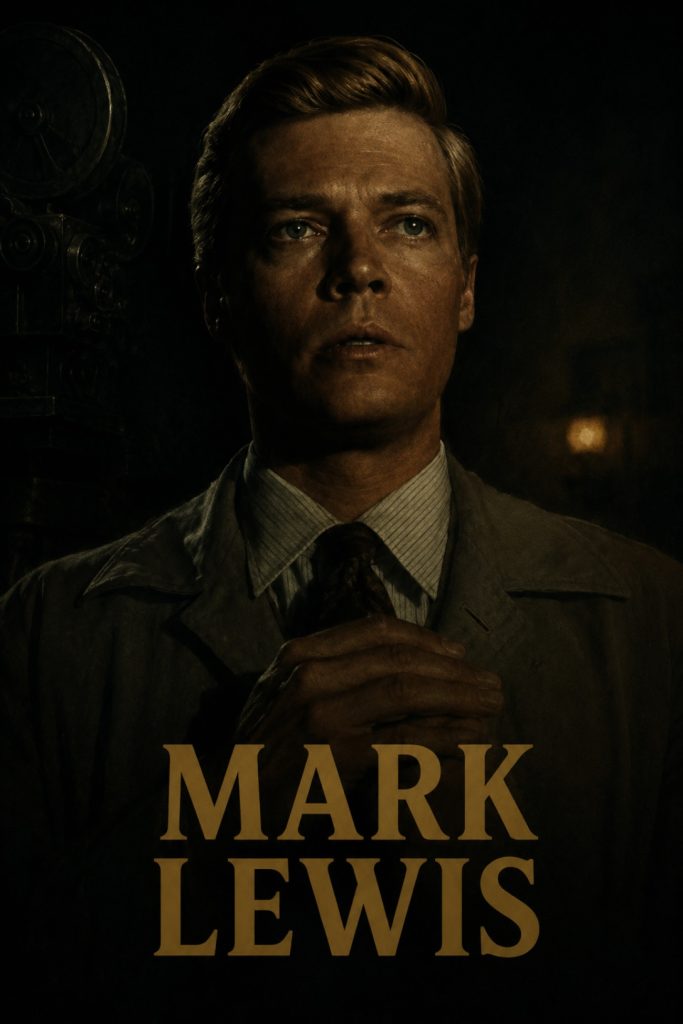
First Appearance: Peeping Tom (1960)
Portrayed By: Carl Boehm
Kill Count: 4+ confirmed victims
Tier: Premier Class
Long before Michael Myers stalked Haddonfield and Norman Bates became a household name, there was Mark Lewis.
A deeply disturbed cameraman whose obsession with fear, voyeurism and cinema itself made him one of horror’s most psychologically complex killers, Mark Lewis remains one of the most important figures in genre history. While audiences in 1960 were shocked by the film’s subject matter, modern viewers can clearly see why Peeping Tom has become recognised as a masterpiece and one of the foundational works of psychological horror and the slasher genre.
Unlike many killers who seek power, revenge or chaos, Mark kills for a far more unsettling reason: he wants to capture the exact moment fear appears on a victim’s face as they die.
Film Appearance
Peeping Tom (1960)
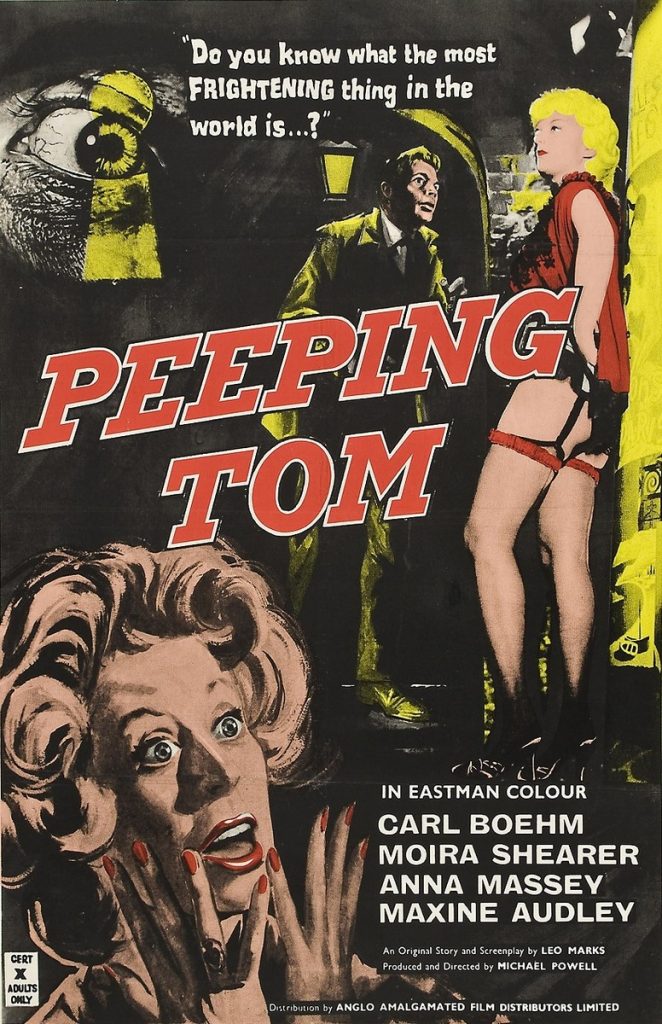
Directed by legendary British filmmaker Michael Powell, Peeping Tom follows Mark Lewis, a quiet and seemingly polite focus puller working at a film studio in London.
Beneath his shy exterior lies a deeply damaged man haunted by childhood trauma. Mark’s father was a scientist obsessed with studying fear and used his young son as a test subject, subjecting him to cruel psychological experiments while filming his reactions. These experiences leave permanent scars that shape Mark’s adult life.
As a grown man, Mark becomes obsessed with cameras and recording human behaviour. He lives alone surrounded by filmmaking equipment and secretly films women as part of a disturbing personal project.
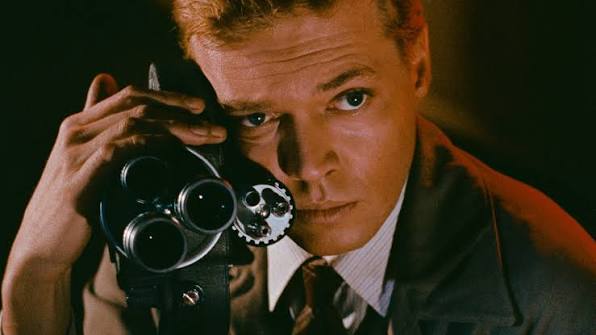
His murders are meticulously planned. Using a modified tripod concealed within his camera equipment, Mark kills his victims while simultaneously filming their final moments. A mirror attached to the apparatus forces them to see their own terrified expressions at the instant of death, allowing Mark to capture what he believes is the purest form of fear.
Among his victims are a sex worker he films in the opening sequence, a stand-in actress from the film studio, and others who unknowingly become subjects in his twisted documentary.
As the film progresses, Mark develops a relationship with his neighbour Helen Stephens, who begins to see the vulnerable man beneath the surface. For a brief moment it appears he may escape his destructive path. However, the weight of his trauma and compulsions prove too powerful.
Realising his crimes are about to be uncovered, Mark decides to become the final subject of his own film. In one of horror cinema’s most memorable endings, he turns the camera on himself and records his own death, completing the project that has consumed his entire life.
Why Mark Lewis Was So Controversial
Today, Peeping Tom is celebrated as a classic, but its original release in 1960 caused outrage.
Critics attacked the film for its disturbing themes and many considered it morally repulsive. The backlash was so severe that it effectively damaged Michael Powell’s career in Britain for years.
What audiences struggled with at the time was the film’s perspective. Instead of viewing events from the safety of a hero’s viewpoint, viewers are frequently forced to experience the story through Mark’s camera lens. The audience becomes complicit in his voyeurism.
This was decades ahead of its time.
Modern horror fans are accustomed to stories told from a killer’s perspective, but Peeping Tom was one of the first major films to explore this approach so directly.
Character and Legacy
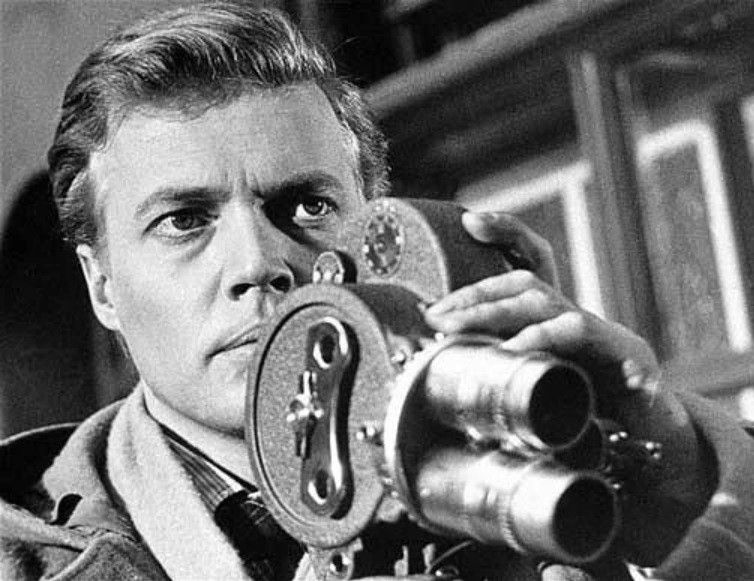
Mark Lewis is often cited as one of the earliest true proto-slasher killers.
His combination of childhood trauma, sexual repression, voyeurism and ritualistic murder would influence countless horror villains that followed. Elements of Mark can be seen in Norman Bates, Buffalo Bill, Francis Dolarhyde and numerous later slasher antagonists.
What makes Mark especially fascinating is that he is not portrayed as an unstoppable monster. He is intelligent, articulate and painfully aware of his own condition. The audience understands how he became what he is, even while being horrified by his actions.
Carl Boehm’s performance remains extraordinary. He portrays Mark as awkward, lonely and sympathetic while never excusing the terrible things he does. Few horror villains have ever inspired such conflicting emotions.
The film itself has undergone one of cinema’s greatest critical re-evaluations. Once condemned, it is now regularly ranked among the greatest British films ever made and one of the most influential horror films in history.
Directors including Martin Scorsese, Edgar Wright, Brian De Palma and many others have praised its impact on cinema.
Why He Belongs in Premier Class
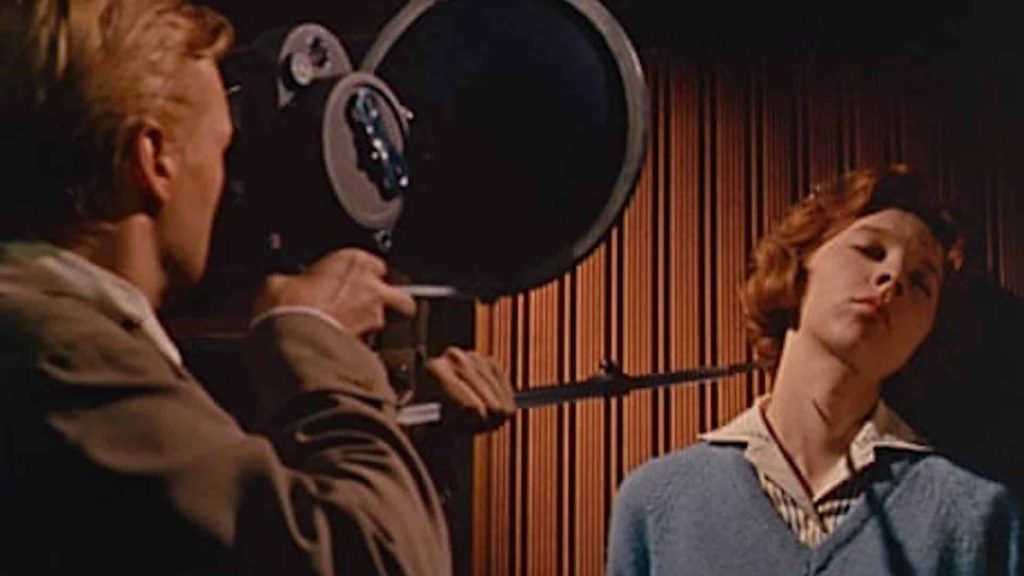
Mark Lewis may not possess the body count of Freddy Krueger or Jason Voorhees, but influence matters just as much as numbers.
Without Mark Lewis, the modern slasher genre might look very different.
His obsession with recording death, his psychological complexity and the film’s pioneering exploration of the killer’s perspective helped lay the groundwork for decades of horror cinema. More than sixty years after his debut, filmmakers are still borrowing ideas first explored in Peeping Tom.
Few killers can claim to have changed horror history.
Mark Lewis can.
Hall of Killers Ranking
Premier Class Tier
One of horror’s most influential murderers, whose disturbing fascination with fear and voyeurism helped shape the psychological horror and slasher genres for generations.