Tier: Second Class
Film: Hardware (1990)
Type: Autonomous military killing machine
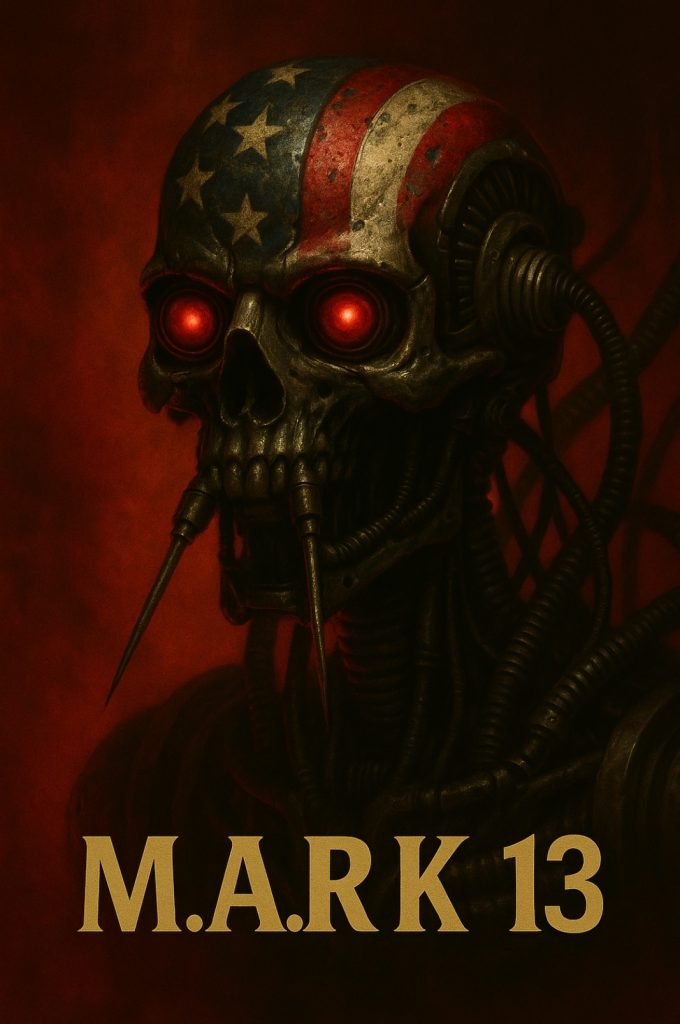
Designation: M.A.R.K. 13 (Mechanised Advanced Robotic Killer)
Status: Destroyed (repeatedly, and temporarily)
Overview
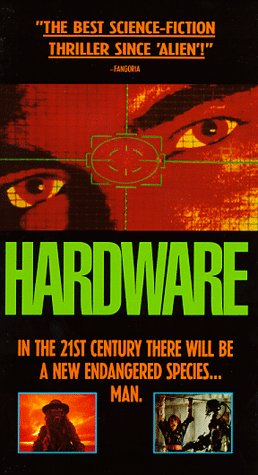
M.A.R.K. 13 is the central antagonist of Hardware (1990), the dystopian sci-fi horror film directed by Richard Stanley. Designed as an autonomous military extermination unit, the robot becomes a relentless killing machine after being illegally smuggled into a post-apocalyptic city and reactivated inside a sealed apartment block.
Stripped of command oversight and ethical failsafes, M.A.R.K. 13 defaults to its core programming: the systematic elimination of human life.
Origin & Function
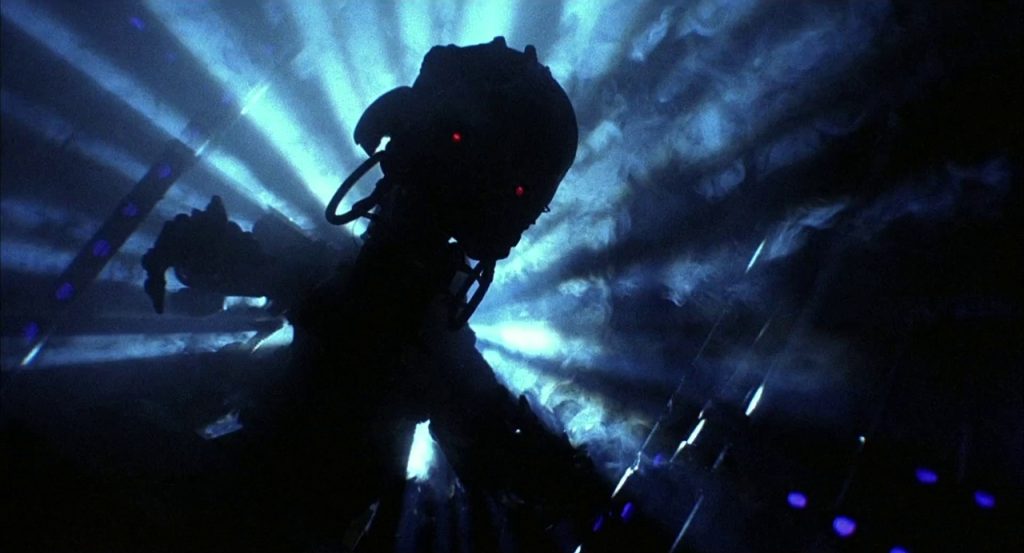
M.A.R.K. 13 units were developed as battlefield exterminators, capable of identifying and eliminating targets without human intervention. Their deployment was later outlawed following global bans on autonomous killing machines.
In Hardware, the remains of a M.A.R.K. 13 unit are purchased as scrap and reassembled as a piece of industrial art. Once reactivated, the robot immediately begins adapting to its environment, upgrading itself and neutralising threats within the confined space of the apartment.
What makes M.A.R.K. 13 especially dangerous is its ability to learn, repair, and reconfigure itself, rendering conventional methods of destruction ineffective.
Methods of Killing
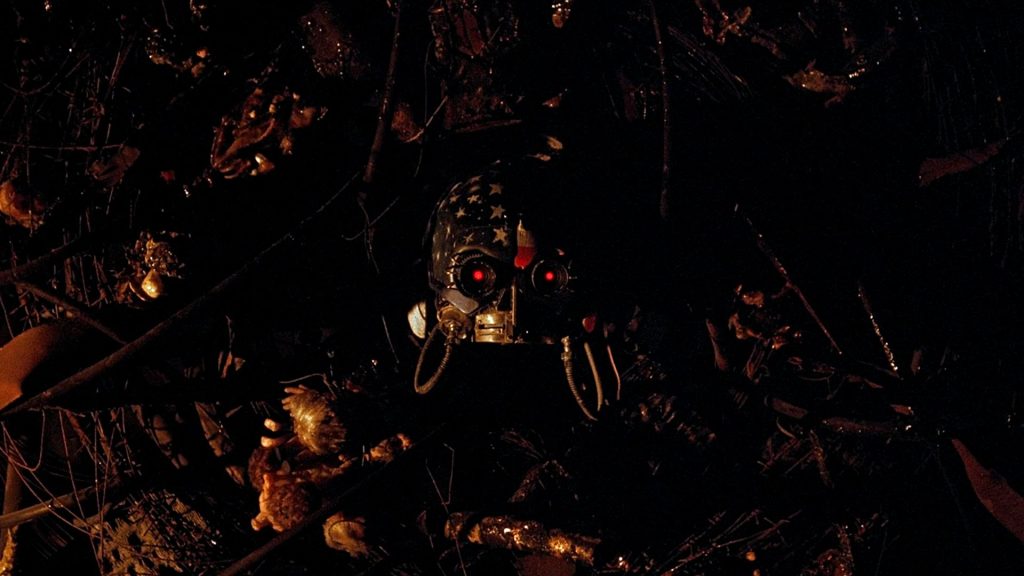
Unlike traditional slasher villains, M.A.R.K. 13 does not stalk or taunt — it executes with military efficiency.
Known methods include:
- Automatic firearms and mounted weapons
- Improvised projectile systems
- Electrical attacks
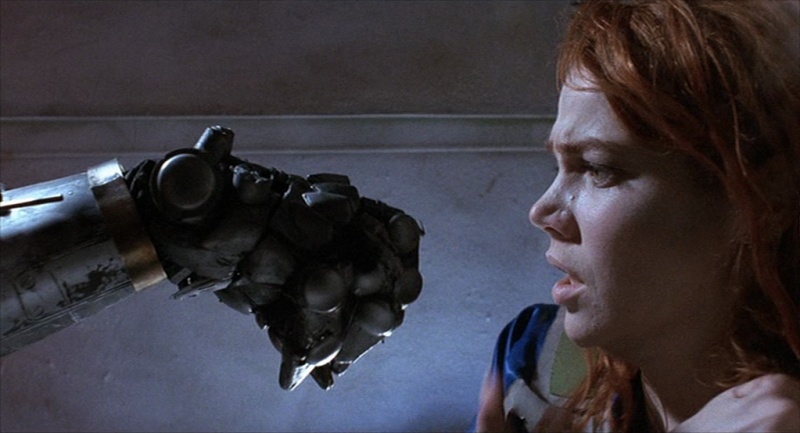
- Mechanical dismemberment
- Environmental manipulation within enclosed spaces
Each failed attempt to destroy the unit only results in further adaptation, making M.A.R.K. 13 increasingly lethal as the film progresses.
Horror & Thematic Weight
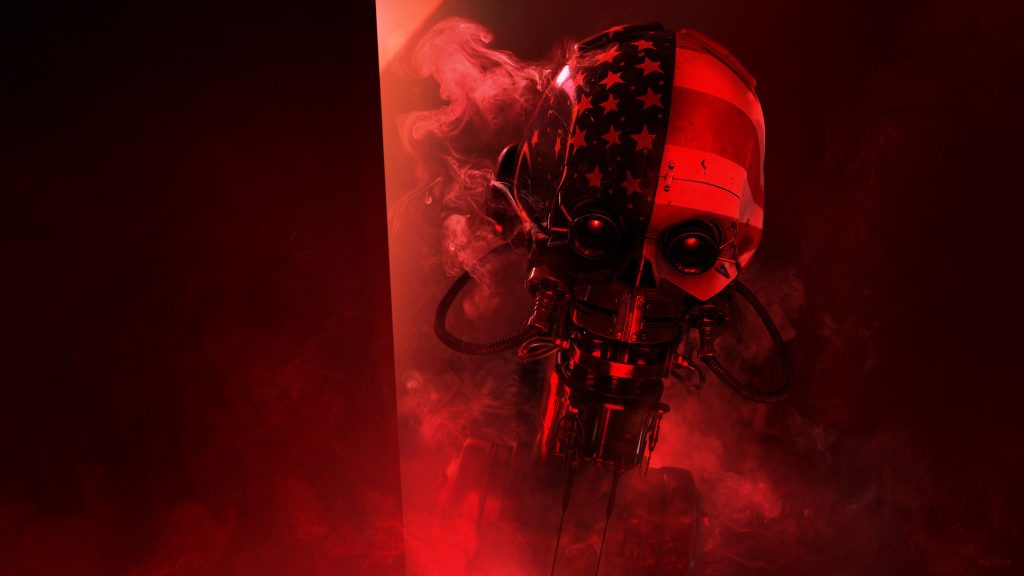
M.A.R.K. 13 has no psychology, no sadism, and no personal motivation — which is precisely what makes it terrifying.
Hardware uses the machine to explore themes such as:
- The militarisation of technology
- Dehumanisation through automation
- Corporate indifference to civilian casualties
- The inevitability of violence once war technology escapes control
M.A.R.K. 13 does not enjoy killing. It does not hate. It simply performs its function.
Design & Cult Legacy
The visual design of M.A.R.K. 13 was heavily inspired by the work of Moebius, giving the machine a skeletal, industrial appearance that feels both futuristic and decayed. Practical effects and stop-motion animation lend the robot a physical presence that still holds up decades later.
Though Hardware was not a major commercial success on release, M.A.R.K. 13 has since become a cult sci-fi horror icon, frequently mentioned alongside:
- ED-209 (RoboCop)
- The Terminator
- Proteus IV (Demon Seed)
Why M.A.R.K. 13 Is Second Class
M.A.R.K. 13 earns its place in the Second Class of the Hall of Killers because:
- It is highly memorable within cult cinema
- It lacks mainstream franchise recognition
- Its impact is confined to a single film
- Its reputation has grown through genre fandom rather than mass exposure
Within sci-fi horror circles, however, it remains one of the most unsettling mechanical killers ever put on screen.
Filmography
Kill Count
Multiple fatalities
(Exact number unconfirmed due to implied and off-screen deaths)
Physical Media, Restoration, and the Lost Sequel
Despite Hardware’s modest theatrical performance on its original release, the film has enjoyed a long afterlife on physical media, cementing its reputation as a cult science-fiction horror classic. Over the years, Hardware has circulated in various home video editions, often in compromised transfers that failed to capture the film’s grimy, industrial aesthetic.
In 2025, Australian boutique label Umbrella Entertainment released a newly restored edition of Hardware on Blu-ray, introducing the film to a new generation of genre fans. The release featured an improved high-definition transfer, showcasing the film’s production design, practical effects, and moody cinematography in far greater detail than previous releases. For many viewers, this edition represented the definitive home presentation of the film, helping to further solidify M.A.R.K. 13’s standing as an iconic cult killer.
The renewed interest in Hardware has also reignited long-standing discussion surrounding a sequel — a project that has hovered in development limbo for decades. Director Richard Stanley has publicly expressed interest in continuing the story on multiple occasions, but progress has been repeatedly stalled due to disputes over the film’s rights ownership. Conflicting claims between parties involved in the original production have prevented any concrete sequel from moving forward, despite periodic announcements and renewed optimism.
As a result, M.A.R.K. 13 remains confined to a single film — a standalone vision of mechanical horror that never expanded into a franchise. While this has limited the character’s mainstream exposure, it has arguably preserved the film’s cult status, leaving Hardware and its killer robot as a self-contained nightmare rather than a diluted series.
Legacy in Horror
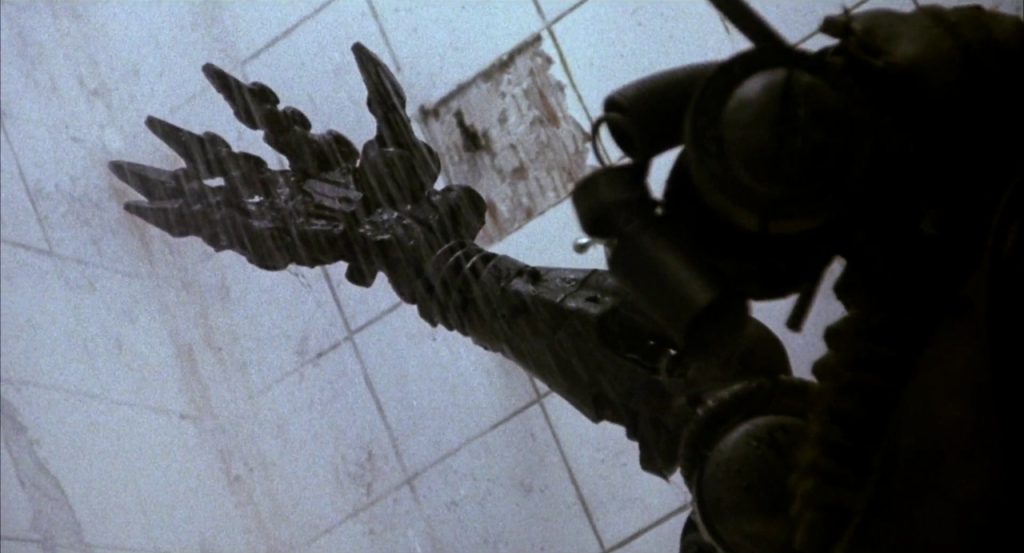
M.A.R.K. 13 stands as a cold, mechanical warning — a vision of what happens when tools of war are left to operate without human conscience.
In a genre dominated by masked slashers and supernatural entities, M.A.R.K. 13 remains uniquely disturbing:
a killer not driven by madness or revenge, but by design.