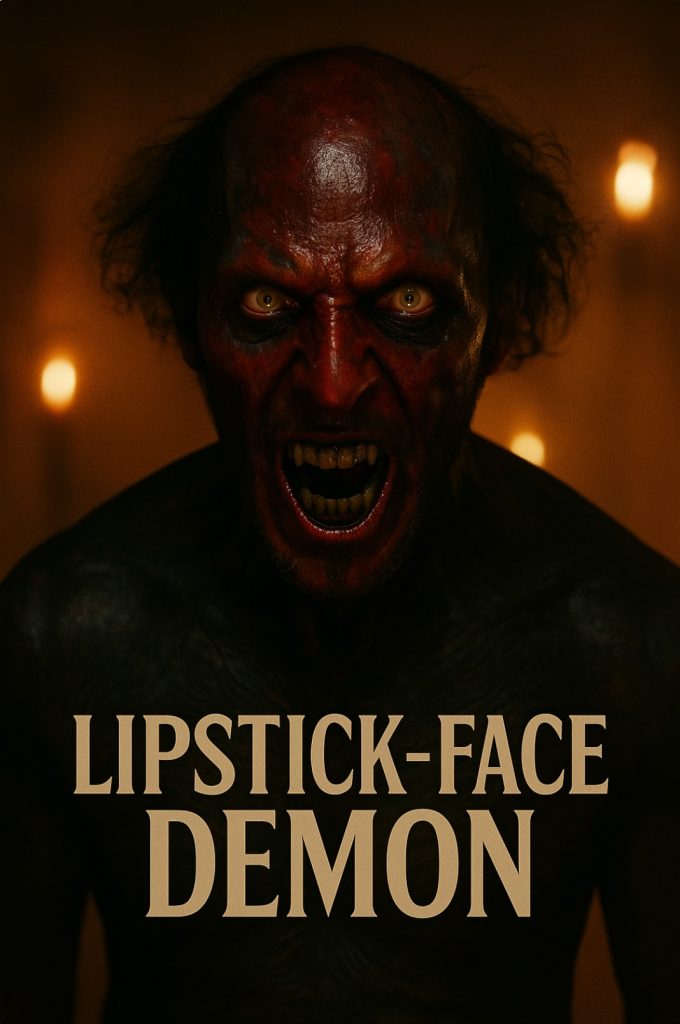
Also Known As: The Lipstick-Face Demon, The Man with Fire on His Face, The Red Faced Demon, The Fiend from The Further
First Appearance: Insidious (2010)
Most Iconic Form: A clawed red and black demon with burning eyes, dwelling within the shadows of The Further and haunting the dreams of astral travellers
Kill Count: Indeterminate (feeds on souls, not physical bodies)
Portrayed by: Joseph Bishara
Tier: First Class Tier
Insidious (2010)
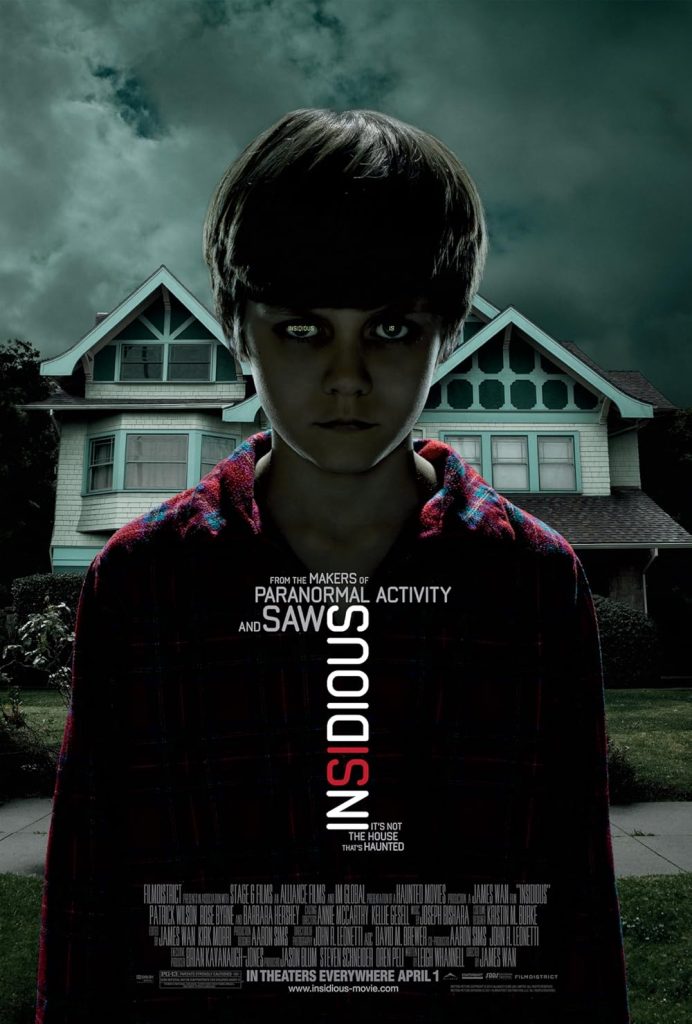
Directed by James Wan and written by Leigh Whannell, Insidious redefined modern supernatural horror through atmosphere rather than gore. Its core concept, The Further, is a spectral realm of lost souls and malevolent entities that provided fertile ground for one of the most enduring monsters of the decade, The Lipstick-Face Demon.
The story follows the Lambert family, whose young son Dalton falls into a mysterious coma. It is revealed that Dalton possesses the ability to astral project and has wandered too far into The Further, a space between the living and the dead. There, the demon finds him and seeks to use his body as a vessel to enter the physical world.
Unlike many cinematic demons, this creature has no religious origin or mythology. His strength lies in mystery. He does not speak, reason, or bargain. He waits, hunts, and takes. His domain is a twisted reflection of domestic life, a distorted attic filled with flickering lamps, creaking toys, and a record player that repeats the haunting tune “Tiptoe Through the Tulips”.
The demon’s brief appearances are among the most iconic of modern horror. His red face, sharp claws, and sudden movements burn into the viewer’s memory. The image of him lurking behind Patrick Wilson’s shoulder in full daylight became an instant cinematic legend.
When Dalton’s father Josh Lambert enters The Further to retrieve his son, the demon becomes the ultimate obstacle, a silent predator who personifies possession itself. His movements are animalistic, his stare unbroken. By the end, the barrier between human and infernal collapses entirely, creating a haunting conclusion that set the tone for the series to follow.
Insidious: Chapter 2 (2013)
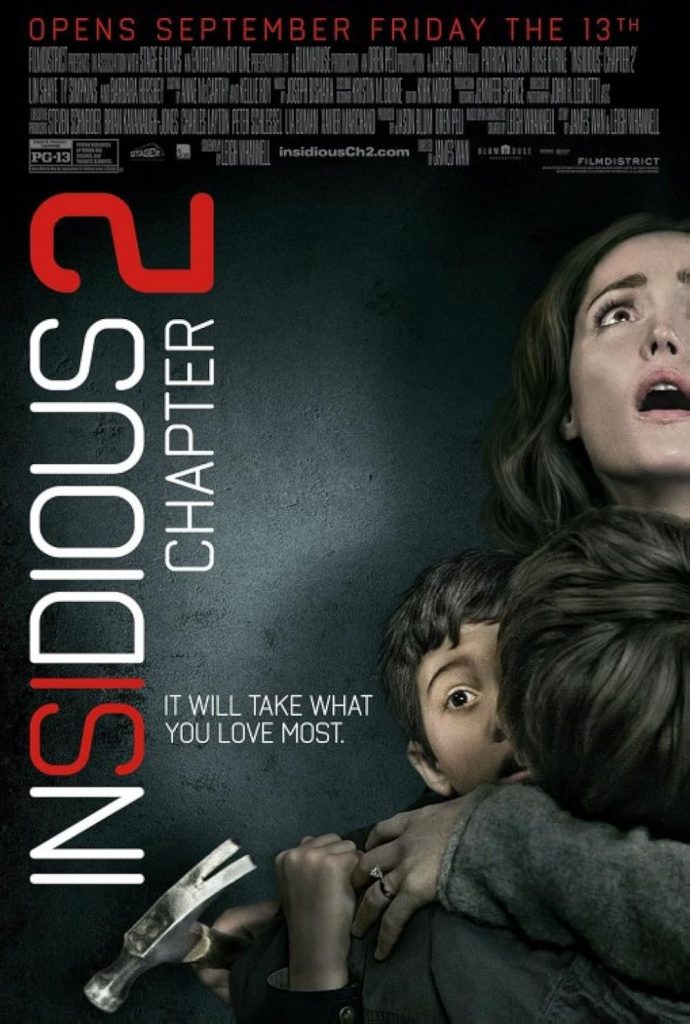
The sequel expands the mythology of The Further while keeping The Lipstick-Face Demon ever present. Though he rarely appears, his essence is felt in every shadow. His possession of Josh at the end of the first film creates unease throughout, showing how darkness can infect a family long after the physical threat has passed.
He becomes less a visible creature and more a lingering curse, a symbol of unresolved trauma. His presence is felt in whispers, creaks, and echoes that invade the Lambert home. By withholding his form, the film transforms him into something more insidious — an absence that haunts rather than a monster that attacks.
Insidious: The Red Door (2023)
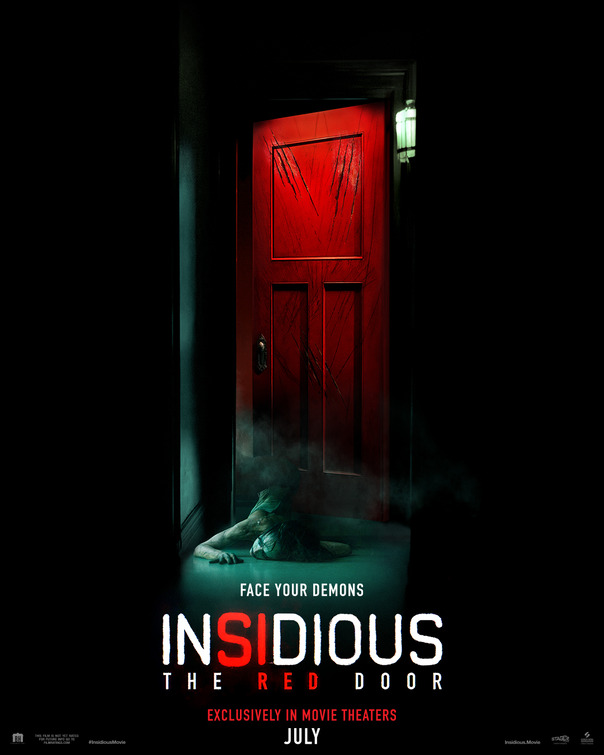
More than a decade after the first haunting, The Red Door returned to the Lambert family’s story. Dalton, now an adult, has repressed the memories of his childhood ordeal, but his art and nightmares begin to betray him. The red faced figure he once feared starts to return.
The Lipstick-Face Demon reappears, unchanged and eternal, still lurking in the corners of The Further. He is not defeated by time, only forgotten. His presence mirrors the nature of trauma itself, waiting beneath the surface until acknowledged.
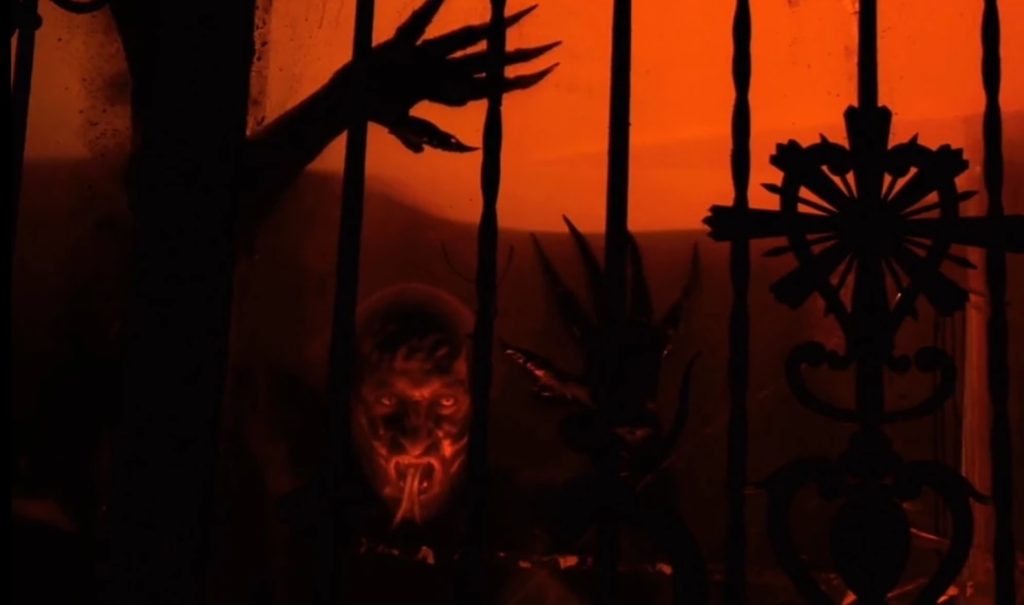
When Dalton crosses into The Further again, the demon is waiting for him in the same lair, lit by the same orange glow. Their confrontation is less about defeating evil than accepting the shadow that once consumed them both. The red door is finally sealed, a symbolic closure to years of buried fear.
Nature and Symbolism
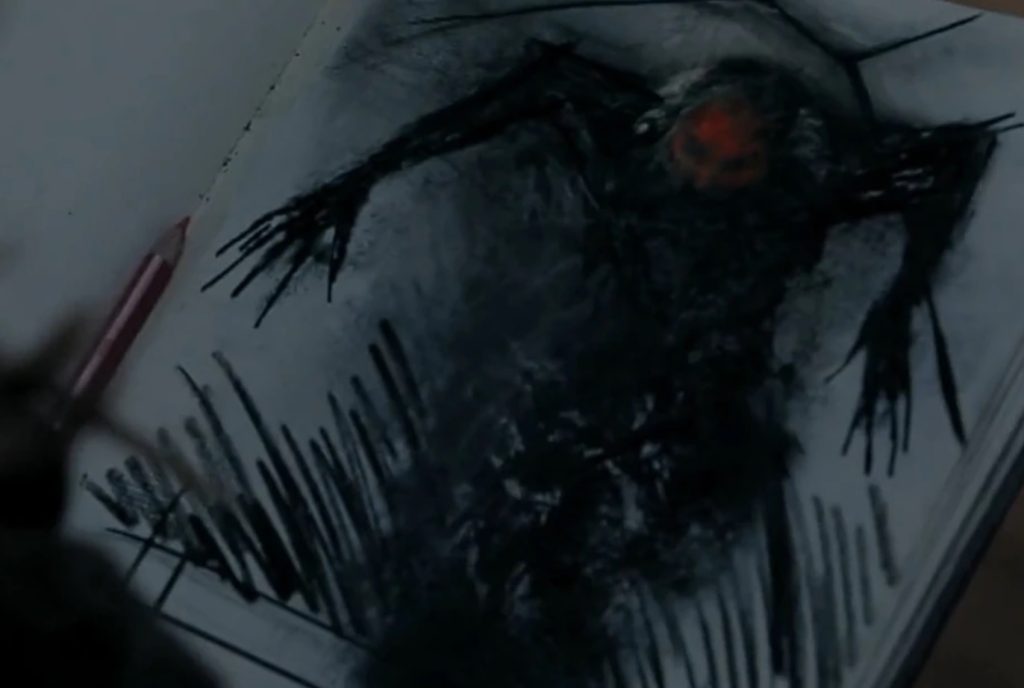
The Lipstick-Face Demon embodies the terror of possession and intrusion. He represents the primal fear of losing control of the body, the home, and the self. His red and black design evokes both fire and decay, suggesting creation and destruction at once.
He does not conform to religious definitions of evil. He exists as a manifestation of fear and corruption, closer to nightmare than theology. His world is a warped version of the familiar, where innocence becomes monstrous. The Further is less hell than a psychic reflection of human suffering, and the demon its most powerful inhabitant.
The resemblance of his lair to a child’s room carries deep symbolism. It mirrors the fear of childhood corrupted, of imagination turned into terror. The Lipstick Face Demon is not a tempter, but a parasite that feeds on the forgotten corners of the mind.
Cultural Impact
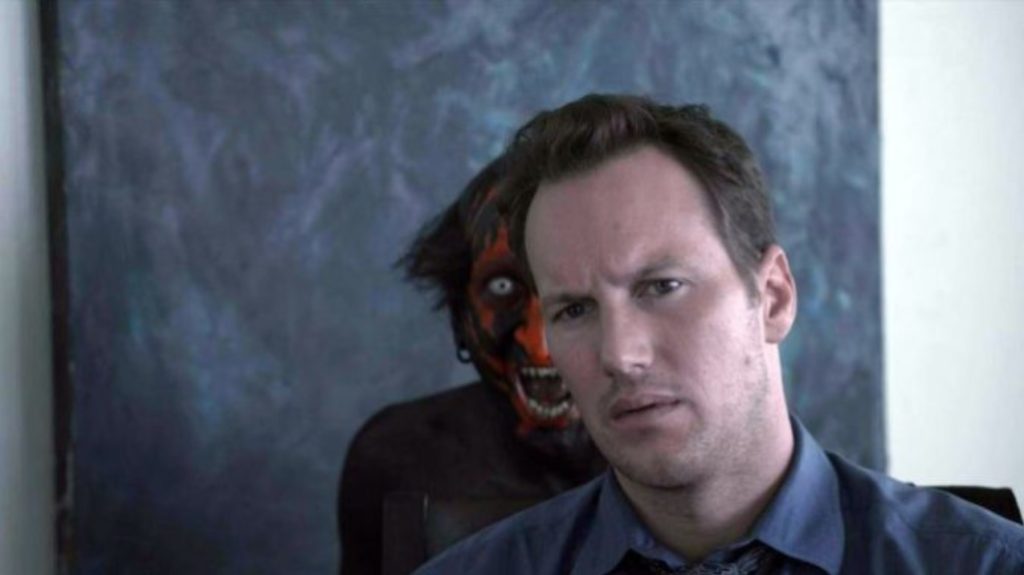
Since his first appearance, the Lipstick-Face Demon has become a defining image of twenty first century horror. His visual design, created by Joseph Bishara, combines simplicity with grotesque intensity. The stark contrast of crimson and shadow evokes gothic art and primal nightmare.
His most famous appearance, the daylight jump scare behind Josh Lambert, became one of the most discussed scenes of the decade. It demonstrated that horror could still frighten without reliance on gore or shock for its own sake.
Beyond Insidious, his influence can be felt across media. From haunted house attractions to fan reinterpretations, he embodies a new era of horror imagery built on atmosphere and suggestion. Alongside The Nun and Valak from The Conjuring universe, he represents the modern evolution of demonic horror — one that is psychological rather than theological, intimate rather than apocalyptic.
League Placement
The Lipstick-Face Demon belongs in the First Class Tier. He stands as a symbol of psychological terror and the modern renaissance of supernatural horror. Not a destroyer of worlds, but a personal nightmare that infects the imagination. His existence bridges dream and waking fear, ensuring his place among the most haunting creations of contemporary cinema.