Film: Anthropophagus (1980)
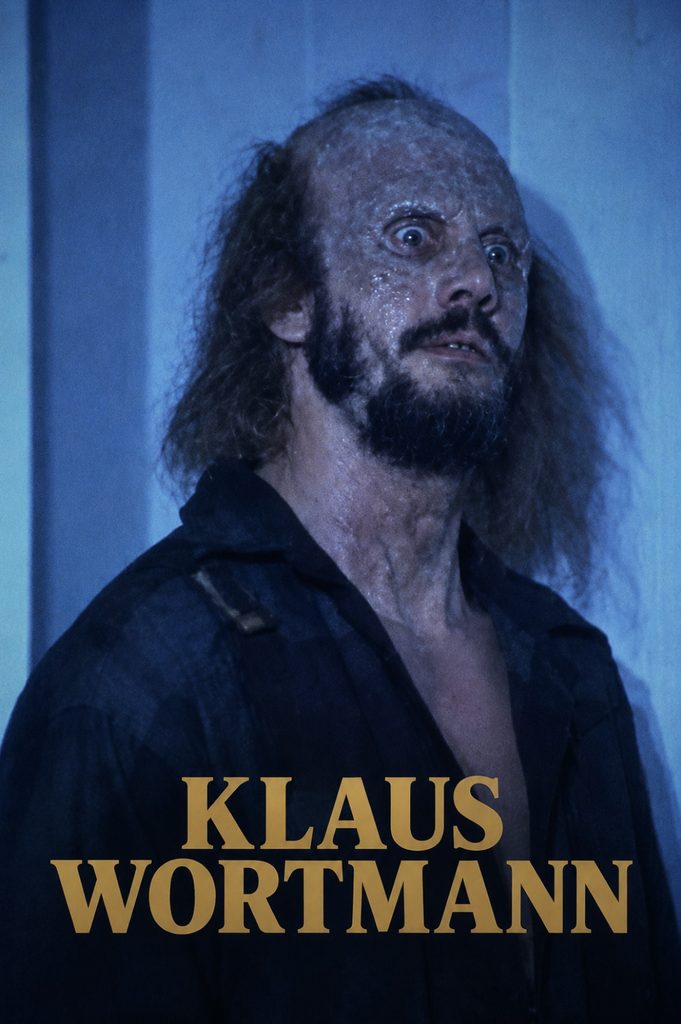
Character: Klaus Wortmann
Portrayed By: George Eastman
Classification: Human / Cannibal
Tier: Third Class
Film Directed By: Joe D’Amato
Written By: Joe D’Amato and George Eastman
Klaus Wortmann
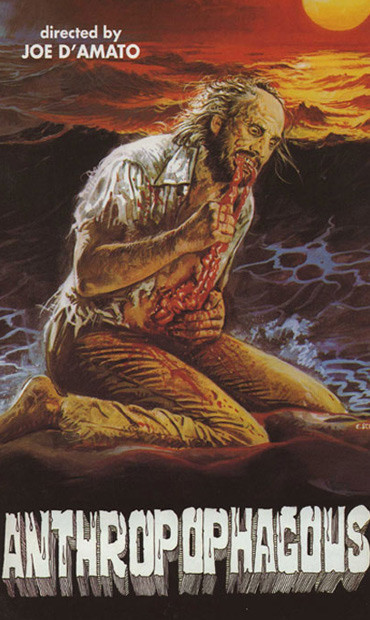
Italian horror has produced its share of grotesque killers, but few are quite as physically repellent as Klaus Wortmann, the cannibalistic monster stalking the deserted island in Joe D’Amato’s Anthropophagus. Played by the imposing George Eastman, who also co-wrote the film with D’Amato, Klaus is initially presented as an almost inhuman creature lurking among abandoned buildings, tunnels and ruins. The truth behind him is ultimately more tragic and disturbing: he was once an ordinary family man whose descent into cannibalism began following a disastrous shipwreck.
Released in 1980, Anthropophagus became notorious for its extreme violence, particularly two sequences that would follow the film throughout its subsequent history. At the centre of both is Klaus, a gaunt, bloodied and disfigured figure whose appearance makes him seem closer to a creature than a conventional human killer. Despite the film sometimes presenting him almost like a supernatural monster, there is no supernatural explanation for Klaus. He is a human being who has been driven into madness and cannibalism.
The Monster on the Island
Anthropophagus follows a group of travellers who arrive on a Greek island and discover that something is terribly wrong. The settlement appears deserted, supplies have been abandoned and the few clues they encounter suggest that the inhabitants have either fled or suffered something much worse. A frightened blind girl named Henriette is among the few people remaining, and she warns of a blood-soaked maniac prowling the island.
The group’s situation becomes increasingly desperate as members begin disappearing or turning up dead. Klaus moves through the island largely unseen, attacking suddenly before retreating into its abandoned spaces. Daniel is killed when Klaus breaks into the house where the group has taken shelter, while the pregnant Maggie, who had remained behind on the boat, is abducted. The tourists gradually realise that the empty island has effectively become the hunting ground of a cannibal.
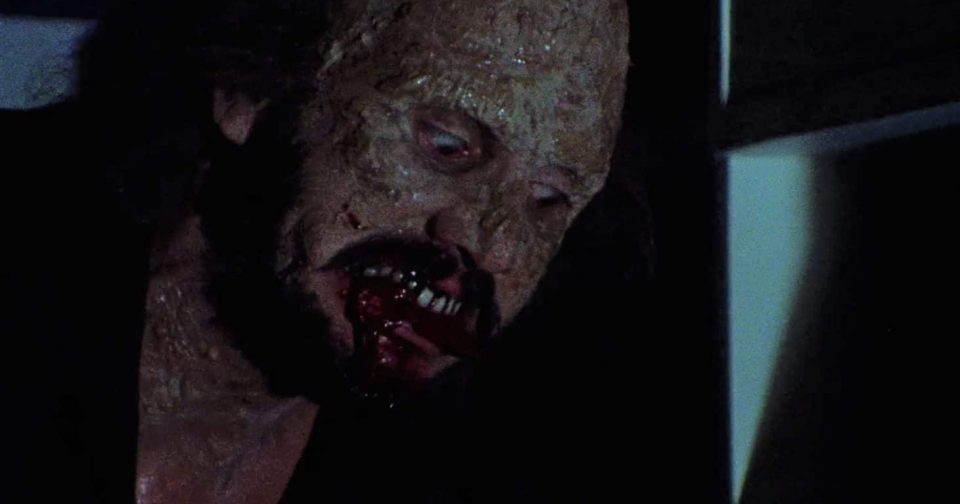
Unlike many slashers of the period, Anthropophagus spends considerable time withholding a clear view of its killer. Klaus is treated almost as a local monster, with the deserted streets and evidence of previous violence establishing his presence before the film fully explains who he is. George Eastman’s considerable height and the character’s filthy, decaying appearance help sell the illusion that the tourists are being pursued by something barely human.
The Truth About Klaus Wortmann
The group eventually reaches the Wortmann family home and begins uncovering what happened. Klaus, his wife and their young son had been believed dead following a shipwreck. His sister Ruth survived on the island, but the disappearance of her family and the horrors that followed left her deeply traumatised. The discovery of diaries and other evidence eventually identifies the cannibal stalking the island as Klaus himself.
A flashback reveals the event that destroyed him. Klaus, his wife and their child were stranded at sea following the wreck, with no food and little hope of rescue. Their son eventually died from starvation. Faced with the possibility of dying himself, Klaus wanted to use the child’s body as food, but his horrified wife resisted him. During their struggle, Klaus accidentally stabbed her.
Klaus subsequently ate from the bodies of his dead family. The experience shattered what remained of his sanity and transformed cannibalism from an act committed under extreme circumstances into the behaviour that would define him. By the time the tourists arrive, Klaus is no longer eating human flesh simply because starvation has left him with no alternative. He has become a predatory killer who hunts other people for food.
This background gives Klaus slightly more dimension than the anonymous monster the film initially suggests. Anthropophagus does not excuse what he becomes, but it does provide a specific point at which the man who existed before the shipwreck was destroyed. The cannibal haunting the island is the result of an unimaginable survival situation followed by complete psychological collapse.
A Cannibal Hunting Humans
Once Klaus’s identity has been revealed, Anthropophagus abandons much of its mystery and pushes its killer directly towards the remaining characters. His victims are not merely obstacles to be removed. The discovery of human remains makes clear that Klaus has been feeding upon the people he kills, turning the island into a place where anyone unfortunate enough to encounter him can become his next meal.
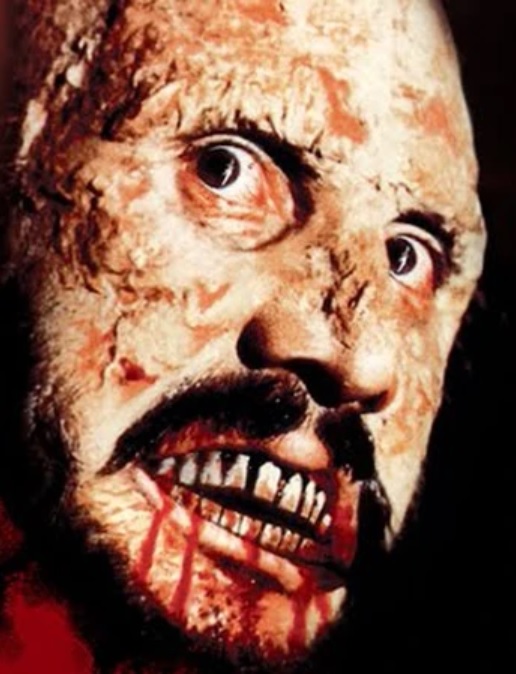
George Eastman’s physical presence is enormously important to the character. At well over six feet tall, Eastman towers over many of his co-stars, while the make-up gives Klaus a corpse-like appearance. His darkened eyes, damaged face, ragged clothing and lumbering movements make him visually distinct without requiring the mask that would become standard equipment for many horror killers of the era.
Klaus is also notably different from the sophisticated cannibals that would later become famous in horror cinema. There is nothing controlled or refined about him. He is presented as appetite stripped of civilisation, living among death and decay and attacking his victims with a combination of brute force and animalistic hunger.
The Film’s Most Notorious Murder
Klaus’s most infamous act involves Maggie, the pregnant woman he abducted earlier in the film. Arnold eventually discovers her and is attacked by Klaus. During this sequence, the film intercuts Klaus’s present-day violence with the flashback revealing what happened following the shipwreck, directly connecting his original act of cannibalism with the killer he has become.
The sequence culminates in the moment for which Anthropophagus became notorious: Klaus tears the unborn child from Maggie and bites into it. The effect was created for the film and no actual baby was involved, but the imagery was deliberately designed to shock. It remains the scene most commonly associated with Anthropophagus and played a major role in the film’s controversial reputation.
The moment is extreme even by the standards of Italian exploitation horror of the period. It also takes Klaus beyond being simply another cannibal killer. D’Amato and Eastman deliberately push the character towards a taboo image that audiences were unlikely to forget, regardless of whether they admired or despised the film.
The Final Hunt
As the remaining characters discover more bodies and understand what has happened on the island, Klaus closes in on them. Carol is found with her throat cut, while Julie and Henriette attempt to escape from him. Klaus pursues them into the upper reaches of the house, eventually breaking through the ceiling as they desperately try to remain beyond his reach.
Henriette, who has already survived the massacre around her and lived in fear of the cannibal, is ultimately killed during Klaus’s attack. Julie manages to fight back and sends Klaus falling from the roof into a well, apparently bringing the nightmare to an end. As is often the case with horror killers, however, the fall isn’t enough to stop him.
When Julie looks into the well, Klaus attacks again. Andy arrives and drives a pickaxe into Klaus’s abdomen, inflicting the wound that finally proves fatal. Yet even this produces one last act of grotesque defiance.
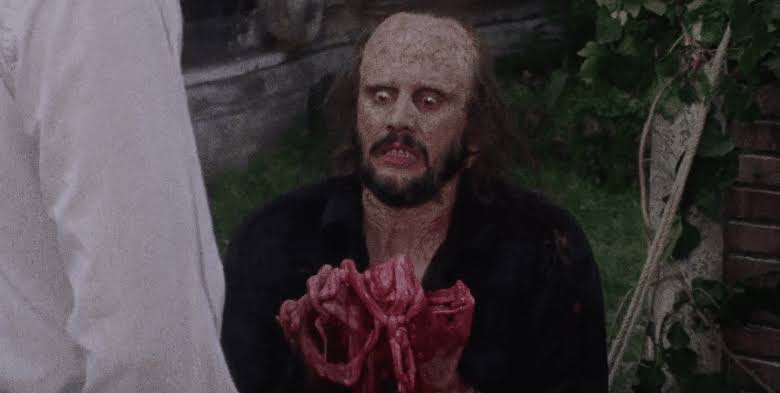
With his intestines exposed, Klaus grabs his own entrails and bites into them.
The man whose descent began when starvation drove him to consume his family consequently dies attempting to consume his own body. It is an appropriately revolting conclusion to the character and one of the most infamous final images in Italian horror.
George Eastman
Klaus Wortmann is inseparable from George Eastman, the professional name of Italian actor and screenwriter Luigi Montefiori. Eastman didn’t merely portray the killer. He co-wrote Anthropophagus with director Joe D’Amato and was also credited as a producer, making his contribution to the film considerably greater than simply appearing as its monster.
Eastman’s unusual height made him particularly effective as physically intimidating villains, and Anthropophagus takes full advantage of it. Klaus often dominates the frame when he finally emerges from the shadows, giving the impression of something considerably larger and stronger than the people trying to escape him.
There are some differences in the character’s name between versions and sources. He is widely identified as Klaus Wortmann in English-language materials, while some credits and versions identify Eastman’s character as Nikos Karamanlis. Sources therefore differ on the character’s precise name depending upon the version being referenced, but Klaus Wortmann is firmly established as one of the names used for Eastman’s cannibal.
Character and Legacy
Anthropophagus emerged during a particularly prolific period for Italian horror, when filmmakers were pushing gore and exploitation cinema into increasingly graphic territory. Klaus Wortmann became memorable largely because D’Amato and Eastman were willing to take their cannibal killer considerably further than audiences might have expected.
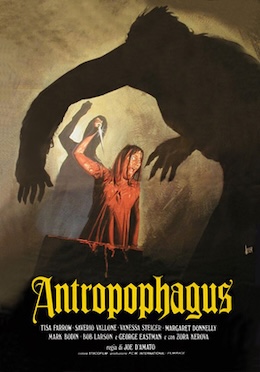
The film itself accumulated several English-language titles, including Anthropophagus: The Beast and The Grim Reaper, and developed a reputation that extended far beyond its original Italian release. Its notoriety was strengthened in Britain when it became associated with the early-1980s “video nasty” controversy. The film’s most extreme imagery ensured that Klaus remained familiar to exploitation and cult-horror audiences even when Anthropophagus itself was difficult to see in an uncut form.
What distinguishes Klaus from many killers of the period is the combination of slasher mechanics and cannibal horror. He stalks isolated victims, appears unexpectedly and methodically reduces a group of potential survivors in a manner recognisable from contemporary slashers, but his motivation and imagery belong to cannibal cinema. The result is a villain positioned somewhere between a human serial killer and the almost feral monsters of survival horror.
His two defining images are difficult to separate from the film’s reputation. One is the attack on the pregnant Maggie. The other is Klaus, mortally wounded, attempting to eat his own intestines. These scenes helped make Anthropophagus notorious, but Eastman’s enormous, corpse-like cannibal remains an effective visual presence even outside those moments.
Klaus never became a mainstream horror icon and does not possess the franchise longevity of the killers occupying the upper reaches of the Hall of Killers. Within Italian exploitation horror, however, his appearance and excesses have ensured that he has never completely disappeared.
League Placement
Klaus Wortmann belongs in the Third Class Tier because his reputation rests overwhelmingly on one cult film rather than a substantial series or wider franchise. Anthropophagus gave him a memorable appearance, a disturbing origin and two scenes that became notorious in the history of extreme horror, but the character’s reach remains concentrated within cult and exploitation audiences.
That makes Third Class an appropriate home rather than a dismissal of his impact. Klaus is exactly the kind of character the tier exists to recognise: a killer who may sit outside horror’s mainstream pantheon but whose film, appearance and acts have earned a lasting place among genre devotees.
A shipwreck turned Klaus Wortmann into a cannibal, but by the time the tourists arrive on his island, survival is no longer the explanation. He has become the thing everyone else must survive. Klaus Wortmann enters the Hall of Killers in Third Class.