Also Known As: John Doe, The Preacher of Sin, The Seven Deadly Sins Killer
First Appearance: Se7en (1995)
Most Iconic Form: A calm, pale man in a white shirt, speaking softly of sin and punishment while drenched in rain and regret
Kill Count: Seven victims, each representing one of the deadly sins
Portrayed by: Kevin Spacey
Tier: Premier Class Tier
Se7en (1995)
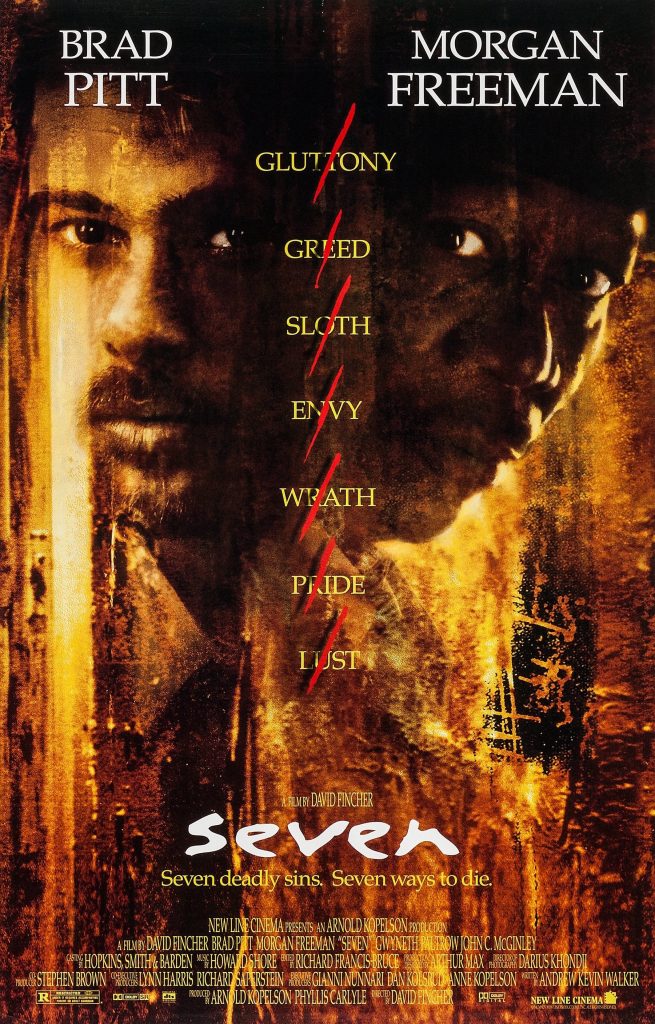
David Fincher’s Se7en is a grim parable about moral decay and spiritual exhaustion. Set in a nameless city that feels soaked in despair, it follows detectives Somerset and Mills as they investigate a series of murders linked by a single idea. Each crime mirrors one of the seven deadly sins, and each scene carries the mark of a mind that believes itself chosen to punish a corrupt world. That mind belongs to John Doe.
At first, he is invisible. Only his work is seen. Victims are discovered in tableaux of horror that resemble religious art turned inside out. A man forced to eat until his body gives out. A lawyer left to bleed as payment for greed. A woman mutilated so that she can no longer take pride in her beauty. The precision of each act is terrifying. There is no chaos, no pleasure, only purpose.
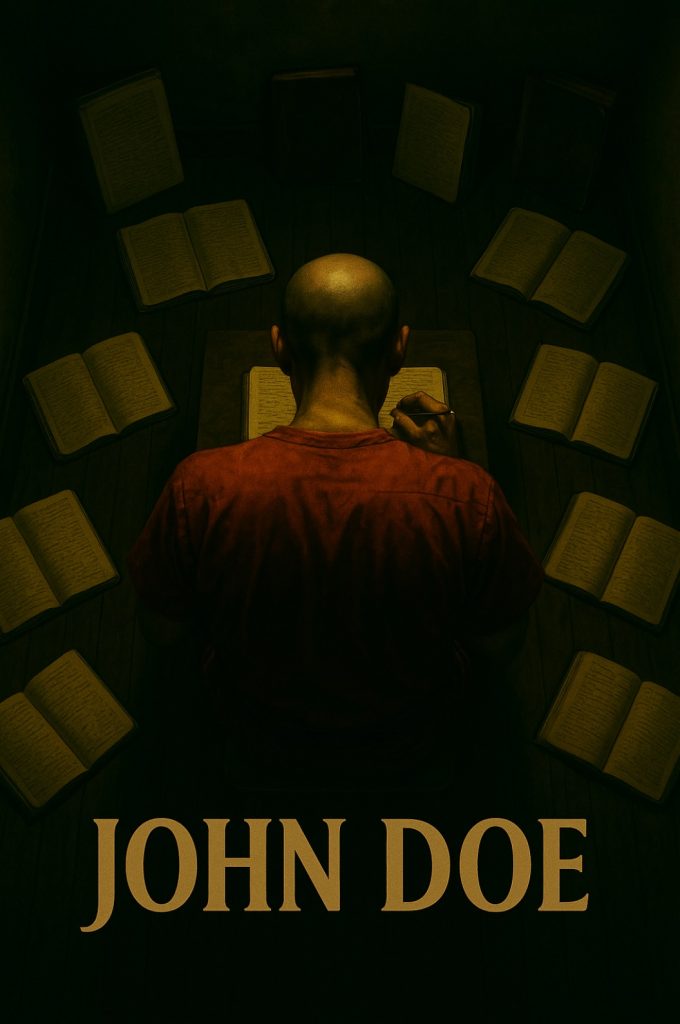
When the detectives discover Doe’s apartment, it is a sanctum of obsession. Hundreds of notebooks fill the walls, each page covered in small, perfect handwriting that catalogues years of observation and contempt. No decoration, no warmth, just relentless focus. The life of a man who has removed himself from humanity to judge it.
Doe does not appear in person until the final act. He simply walks into a police station, covered in blood, announcing his surrender. His calmness unsettles everyone in the room. He does not beg or explain. He only says that his work is not yet finished. From that moment, he controls the story. The detectives are no longer hunters but instruments in his plan.
The journey to the desert that follows is one of the most chilling sequences in modern cinema. Somerset and Mills drive with Doe handcuffed in the back, listening as he speaks in a voice devoid of doubt. He claims that the world has forgotten sin and that his murders are an act of teaching. When a delivery arrives, Somerset opens a box and realises the truth. Inside is the head of Mills’s wife, completing the sin of envy and setting in motion the sin of wrath. Doe’s plan ends exactly as intended. He dies by Mills’s hand, becoming both executioner and martyr in his own twisted sermon.
Psychology and Motivation
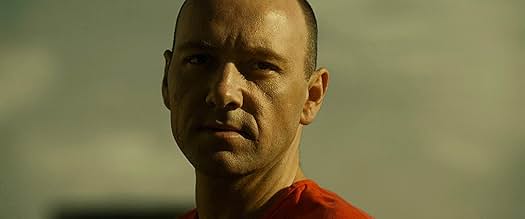
John Doe’s crimes are shaped by intellect, not emotion. He kills to make people see, not to feel power or pleasure. Each murder is a message, each body a paragraph in his argument against the moral emptiness of the modern world.
He believes that his victims have invited judgement through their sins. His sense of justice is absolute and merciless. The horror lies not only in what he does but in how certain he is that it is right. His calm voice and measured speech make his philosophy more frightening than rage ever could.
What makes Doe truly terrifying is his purity of intent. He has no past, no distractions, no weakness. His life is an idea made flesh, a crusade without emotion. Yet his plan reveals his hypocrisy. In punishing sin, he becomes its vessel. His envy and pride complete the cycle he claims to condemn, proving that his search for moral perfection is only another form of vanity.
Symbolism and Design
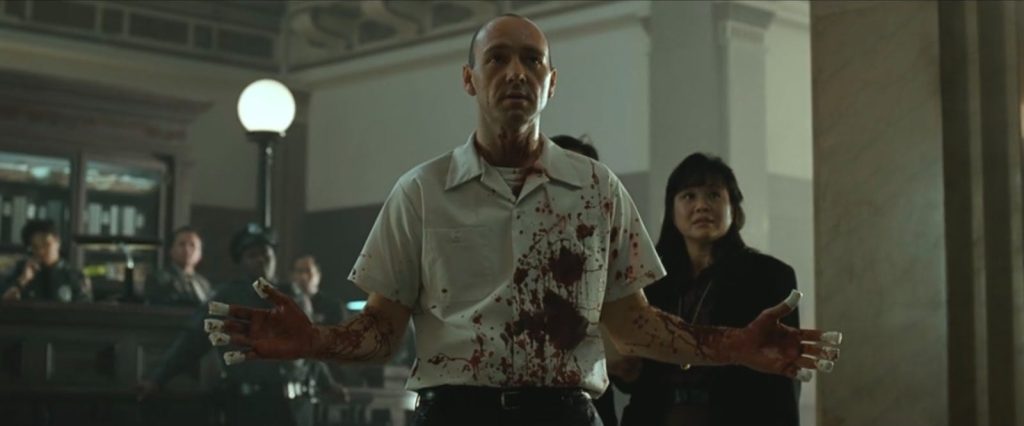
The world Doe inhabits is a reflection of his own mind. Fincher’s vision of the unnamed city is perpetually soaked in rain, choked by noise and shadow. It feels neither alive nor dead but trapped in eternal penance. Doe’s apartment mirrors this world. Bare walls, dim light, and endless journals filled with accusations. It is the cell of a monk who worships punishment instead of redemption.
Every murder is constructed with ritualistic precision. The obese victim of gluttony chained to his table surrounded by food that has become poison. The lawyer of greed bled dry, his wealth turned into a weapon. The prostitute punished for lust, her death a cruel inversion of desire. These scenes are not chaos but composition. Each one carries the order of an artist at work.
The box in the desert completes the circle. It is both object and symbol, the proof that evil can disguise itself as truth and that those who claim to punish sin are often its purest form.
Cultural Impact
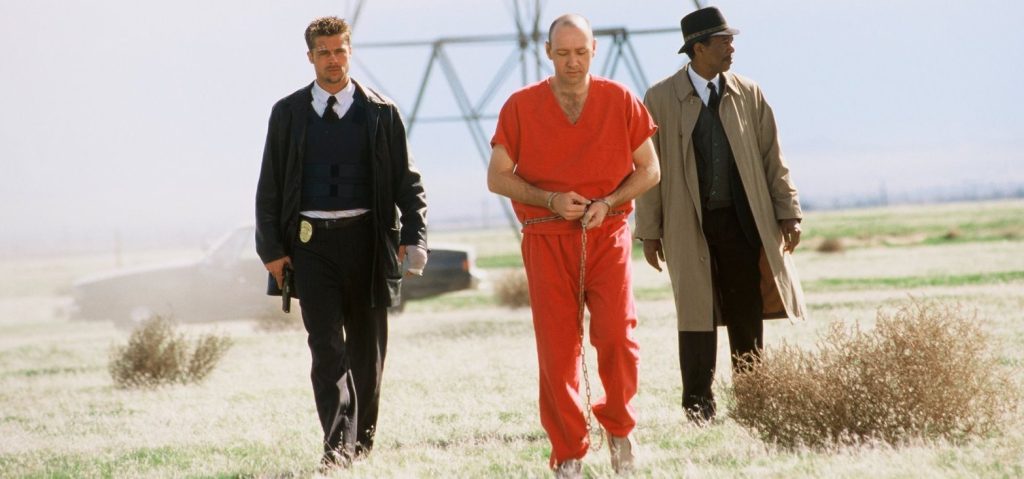
John Doe is one of the defining figures of psychological horror. His influence stretches far beyond Se7en, shaping characters and films that followed, from Saw and Zodiac to The Bone Collector and The Batman. He introduced a new kind of killer to cinema — one whose power lies not in strength or madness but in thought.
Kevin Spacey’s portrayal remains chilling in its control. Every line is delivered with precision, every glance considered. His performance turns Doe into something larger than a man. He becomes the embodiment of obsession, logic, and despair.
The film’s conclusion, which refuses comfort or closure, solidified Se7en as one of the most important thrillers of its time. Doe’s name, deliberately blank and meaningless, became the ultimate irony — an anonymous man who became unforgettable.
League Placement
John Doe belongs in the Premier Class Tier. He is not a creature of violence but of belief, a man who builds his own religion from sin and blood. Calm, precise and unrepentant, he remains one of cinema’s most disturbing reflections of human conviction.