
First Appearance: The Invisible Man (1933)
Played By: Claude Rains (1933), Vincent Price (1940 sequel), Chevy Chase (1992), Kevin Bacon (2000), Oliver Jackson-Cohen (2020)
Kill Count: Varies widely — from 4 in the original film to dozens in later versions
The Invisible Man (1933)
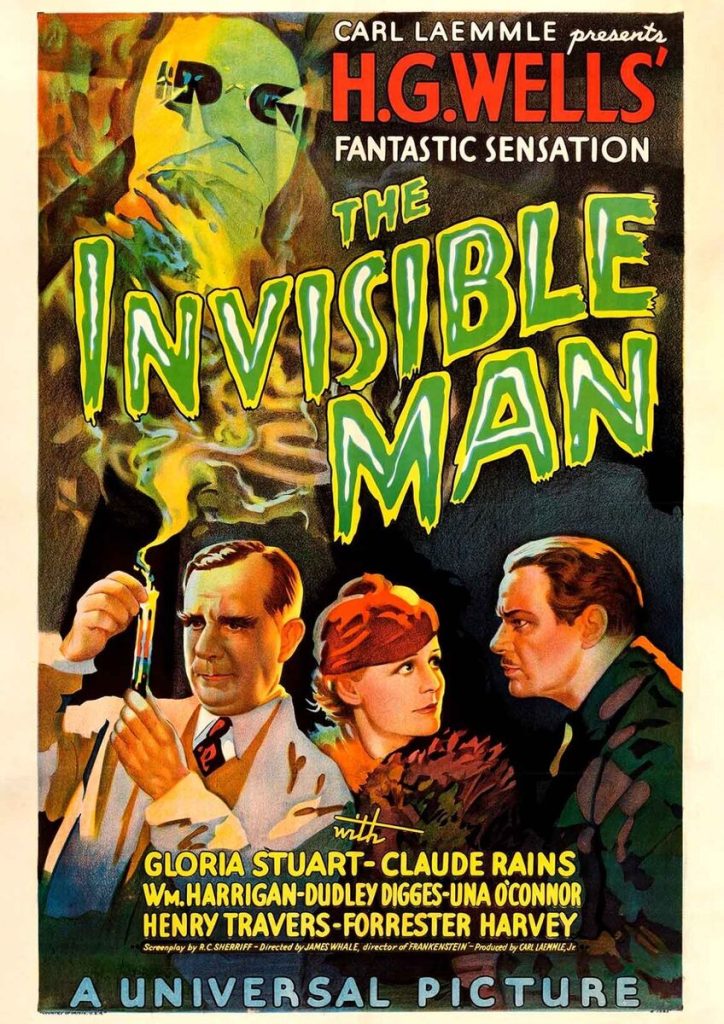
Based on H.G. Wells’ groundbreaking novella, Universal’s 1933 adaptation introduced audiences to Dr. Jack Griffin, a brilliant chemist who discovers a way to render himself invisible using a mysterious drug called monocane. But invisibility comes at a cost — monocane drives Griffin insane. His descent into megalomania is rapid, and terrifying.
Played with chilling theatricality by Claude Rains, Griffin begins by tormenting locals with pranks and threats, but his actions quickly escalate. He derails a train, kills a policeman, and plots a reign of terror, all while remaining unseen. His voice — haunting, arrogant, and sardonic — carries the horror of someone who’s both invulnerable and entirely untethered from humanity.
The film is remembered for its groundbreaking visual effects and its psychologically disturbing lead — not a monster from legend, but one from within science and man’s own ego. Griffin isn’t cursed — he chooses madness, believing that power justifies cruelty.
The Invisible Man Returns (1940)
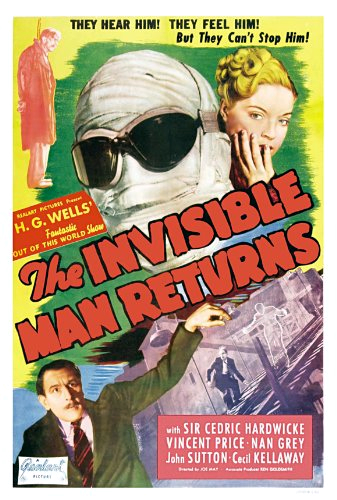
In this sequel, Vincent Price plays Sir Geoffrey Radcliffe, who inherits the invisibility formula and uses it to escape a wrongful death sentence. Unlike Griffin, Radcliffe begins with noble intentions — but the side effects of the serum once again take hold, pushing him toward paranoia and violence. The film expands the universe of the formula and its uncontrollable side effects, reinforcing the danger not just of the serum, but of humanity under its influence.
The Invisible Man’s Revenge (1944)
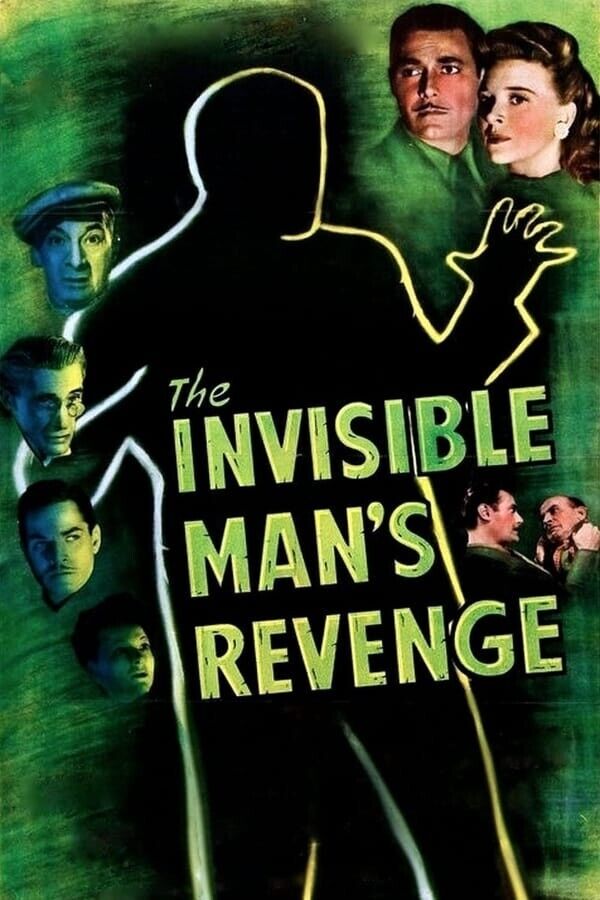
This darker entry centers on Robert Griffin, a fugitive who uses the invisibility formula for personal vengeance. This time, the violence is more direct: beatings, murders, and theft. The film sheds the sympathetic angle and returns to the villain-as-monster structure, highlighting the formula as a corrupting force — or simply a tool for revealing what’s already broken.
Memoirs of an Invisible Man (1992)
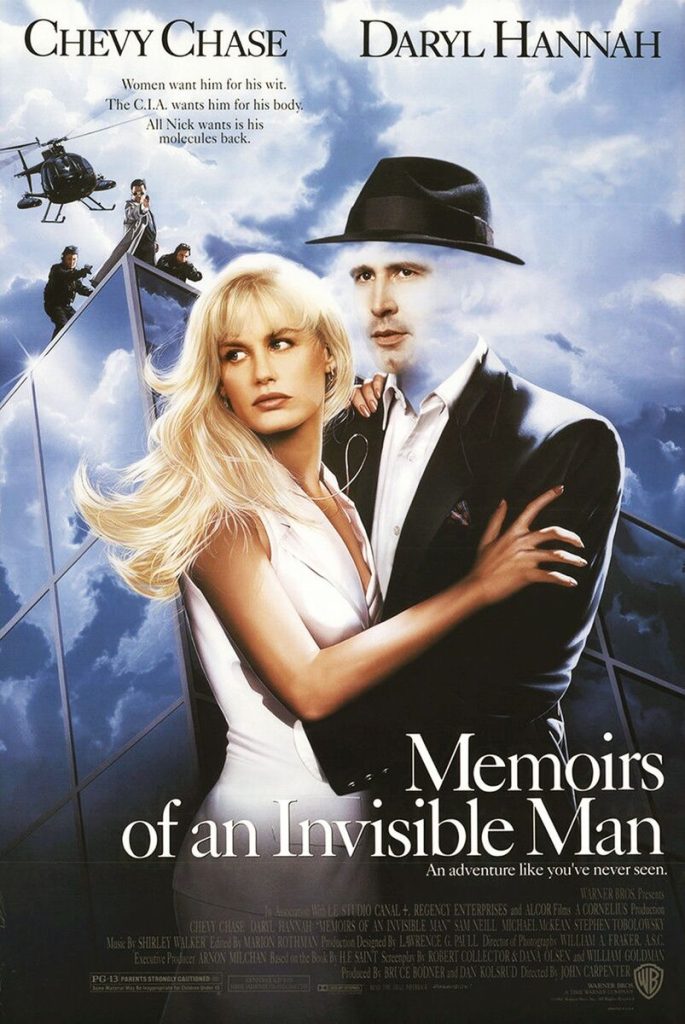
In this satirical twist, Chevy Chase plays a more comedic — but still tragic — invisible man. Caught in a lab accident, he’s hunted by the government and experiences the emotional toll of being unseen and unwanted. Though lighter in tone, the film underscores the isolation and alienation that invisibility inevitably brings.
Hollow Man (2000)
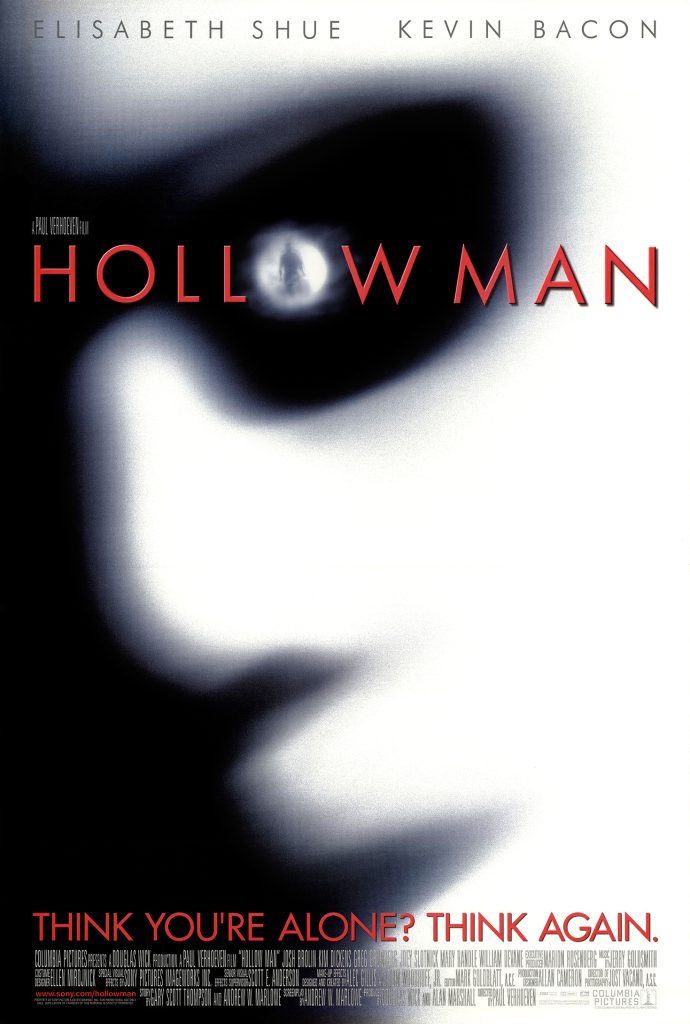
A far more sinister iteration, this version stars Kevin Bacon as Sebastian Caine, a scientist who becomes invisible and immediately loses all moral restraint. He stalks, assaults, and murders colleagues, representing the pure unchecked id once freed from consequences. The transformation isn’t just physical — it’s psychological. This Invisible Man is a predator, and one of the most violent renditions of the concept ever brought to screen.
The Invisible Man (2020)
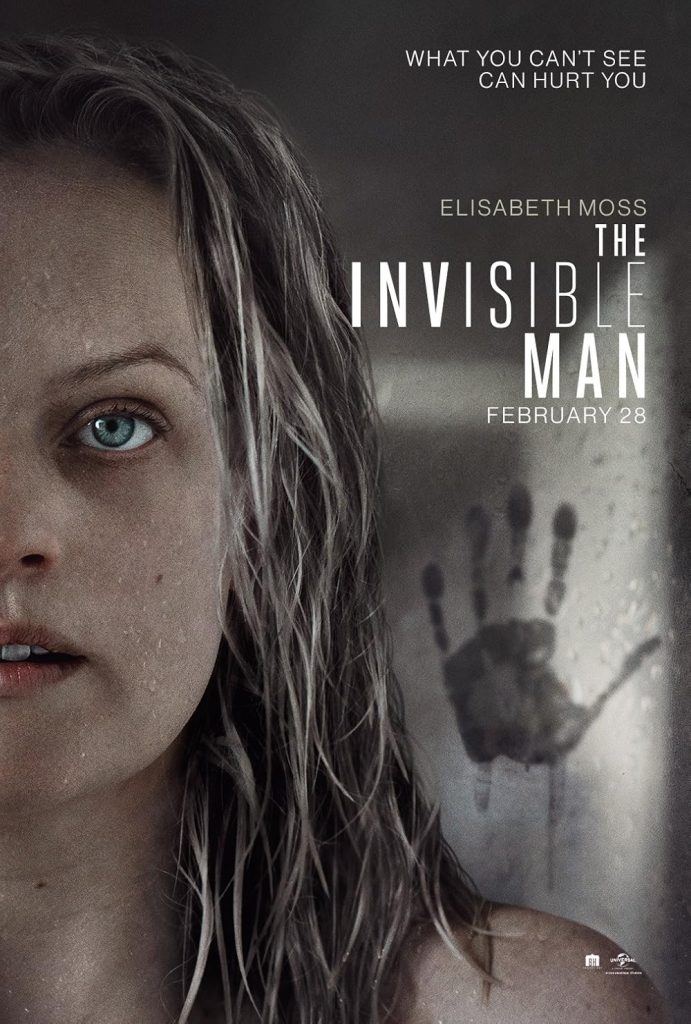
Leigh Whannell’s reboot reimagines the story as a psychological thriller rooted in abuse and trauma. Rather than following the man, the film centers on Cecilia Kass, a woman escaping her tech-mogul boyfriend, Adrian Griffin. After his apparent suicide, Cecilia is stalked by an unseen force — one using a high-tech optical suit, not a serum.
This version turns the idea of invisibility into a metaphor for gaslighting, manipulation, and domestic abuse. Adrian’s presence is always felt, even when unseen — which is exactly what makes it so terrifying. He doesn’t need to become a monster; he already is one.
The 2020 film received critical acclaim for its smart writing, minimalist tension, and powerful social commentary — bringing the character into a new era while staying true to its themes of control and madness.
Cultural Legacy
- The Invisible Man is a foundational figure in science-based horror, influencing everything from Predator to Hollow Man to The Boys.
- Classic versions appear in Abbott and Costello Meet the Invisible Man (1951) and Monster Squad (1987).
- Multiple action figures, Halloween costumes, and NECA collectibles exist across decades.
- The 2020 version has become a modern feminist horror classic, lauded for its grounded fear.
League Placement
The Invisible Man belongs in the Premier Class Tier — a legacy monster whose terrifying power is not just what he can do unseen, but what he chooses to do when freed from all accountability.