
First Appearance: A Nightmare on Elm Street (1984)
Created by: Wes Craven
Kill Count: 40+ (across films)
Portrayed by: Robert Englund (1984–2003), Jackie Earle Haley (2010)
Bio
Freddy Krueger is one of horror’s most recognizable villains — a child killer turned dream-stalking demon. Created by Wes Craven, Freddy was burned alive by vengeful parents and returned as a supernatural entity who kills teens in their sleep. With his burned skin, tattered sweater, fedora, and infamous glove with razor fingers, Freddy brought fear, flair, and wit to slasher horror.
Unlike silent killers, Freddy is sadistic, sarcastic, and cruelly creative. He manipulates dreams, exploiting each victim’s fears and turning their subconscious into a playground of death.
Film Appearances
A Nightmare on Elm Street (1984)
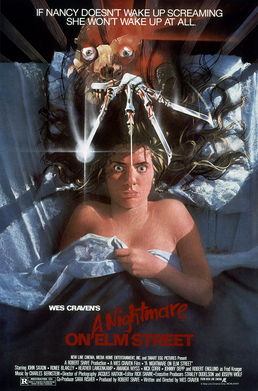
In the original A Nightmare on Elm Street (1984), Freddy Krueger is at his most mysterious and terrifying. Unlike the wisecracking killer he would later become, this first incarnation is almost spectral — a shadowy figure who lingers in dimly lit hallways, speaks sparingly, and kills with cruel, sadistic delight. Robert Englund’s performance is subtle and sinister; Freddy doesn’t need to run — he stalks, dragging his bladed glove along metal pipes or walls to torment his victims. His movements are slow and deliberate, and his appearance—melted, blistered skin, a dirty red-and-green sweater, fedora, and that infamous glove—feels less like a costume and more like a nightmare that clawed its way into reality.
Freddy in this film isn’t trying to be entertaining — he is fear incarnate. His power comes from his unpredictability and the surreal, dream-warping environments he creates. He toys with his victims before killing them, shifting physics, morphing form, and turning sleep into a death sentence. He isn’t just invading dreams; he’s turning the subconscious against the dreamer. Whether it’s stretching his arms impossibly wide across an alley or rising through the wall above a sleeping victim, Freddy in the 1984 original feels primal — like a repressed fear suddenly given shape and agency.
A Nightmare on Elm Street 2: Freddy’s Revenge (1985)
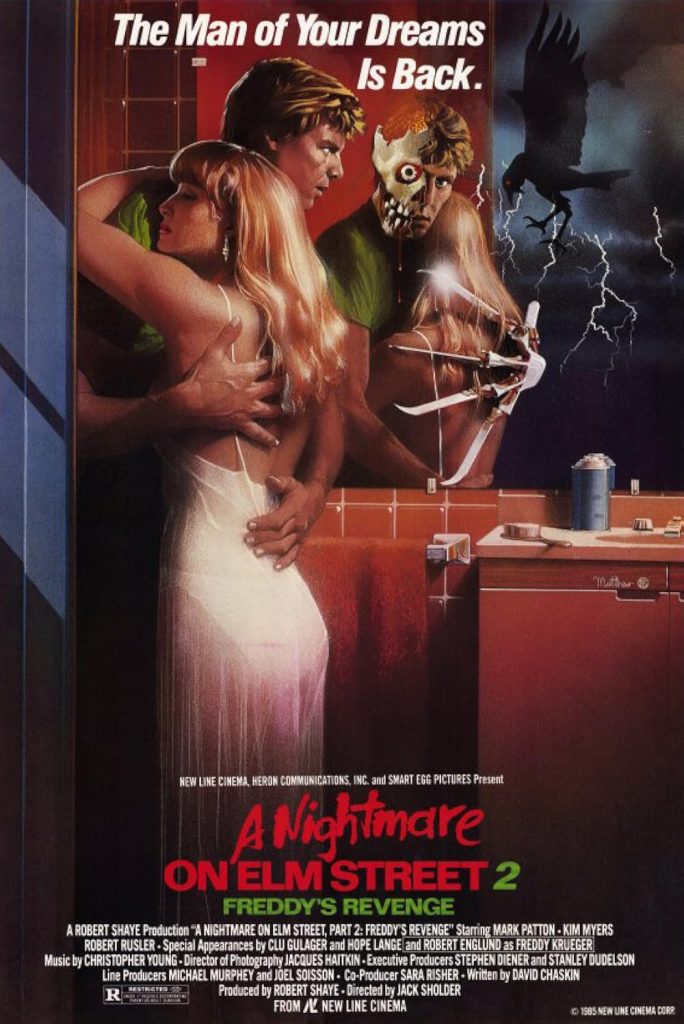
In Freddy’s Revenge, Freddy Krueger takes a dramatically different form than in his debut. Rather than haunting victims in their dreams, Freddy begins to invade the waking world, seeking to possess teenager Jesse Walsh. This film explores Freddy as a parasitic force — less a stalker of dreams and more a dark passenger, manipulating Jesse’s thoughts and physical body from within. The result is a more psychological, almost body-horror-inspired version of Freddy, who emerges during blackouts and moments of emotional vulnerability. His sadism now extends beyond the dreamscape, making Freddy feel more invasive and personally connected to his victim.
Robert Englund’s performance is still terrifying, but with a crueler edge. Freddy in Part 2 is more direct, more violent, and less restrained. He shows flashes of enjoyment in Jesse’s torment, taunting him with lines like “You’ve got the body, I’ve got the brain,” while peeling back his own skull. His design is subtly more grotesque — his skin appears wetter, more raw, with heavier burns. While this film was controversial for departing from the dream logic of the first, it gave Freddy a more possessive and psychological dimension, enhancing the idea that his evil could infect the living, not just stalk them in their sleep.
A Nightmare on Elm Street 3: Dream Warriors (1987)
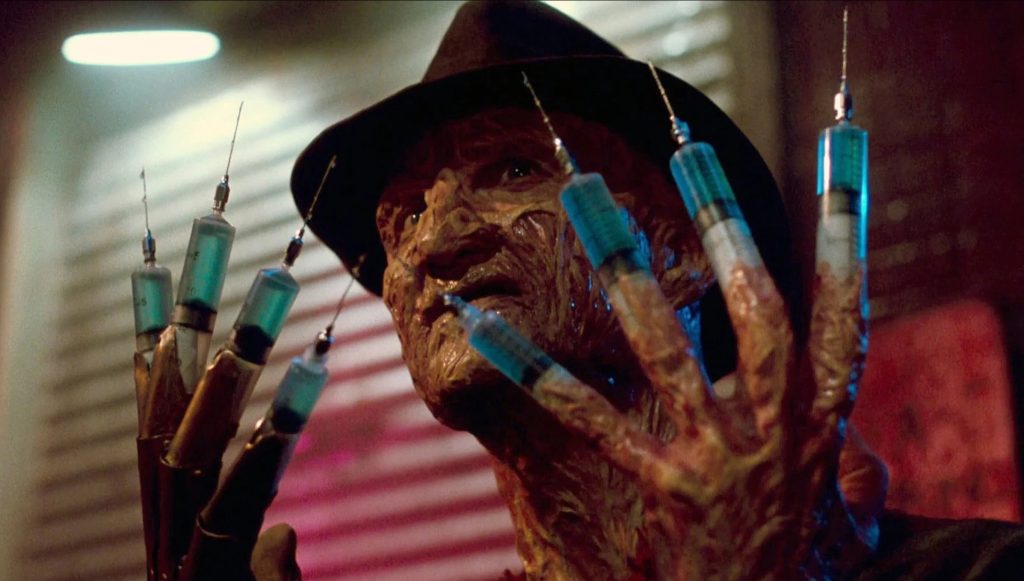
In Dream Warriors, Freddy Krueger evolves into his most recognizable form — the wisecracking, sadistic showman of nightmares. While he retains the menace and inventiveness of the first film, Part 3 pushes Freddy’s abilities to surreal extremes. No longer content with shadowy stalking, he now warps dream worlds into elaborate death traps, customized to each victim’s fears and insecurities. From transforming into a snake-like worm to turning a hospital patient into a human puppet using his veins as strings, Freddy becomes a master of psychological torment, blending body horror with theatricality.
Robert Englund fully embraces Freddy’s twisted sense of humor here, delivering mocking one-liners before brutal kills — most famously shouting, “Welcome to prime time, bitch!” as he slams a girl’s head into a TV. Freddy’s look remains iconic, but his confidence and presence grow; he’s no longer hiding in darkness — he’s commanding the dream stage. This film marks the balance point between horror and charisma for Freddy, solidifying him not only as a killer but as a nightmare celebrity, capable of stealing scenes even as he steals lives.
A Nightmare on Elm Street 4: The Dream Master (1988)
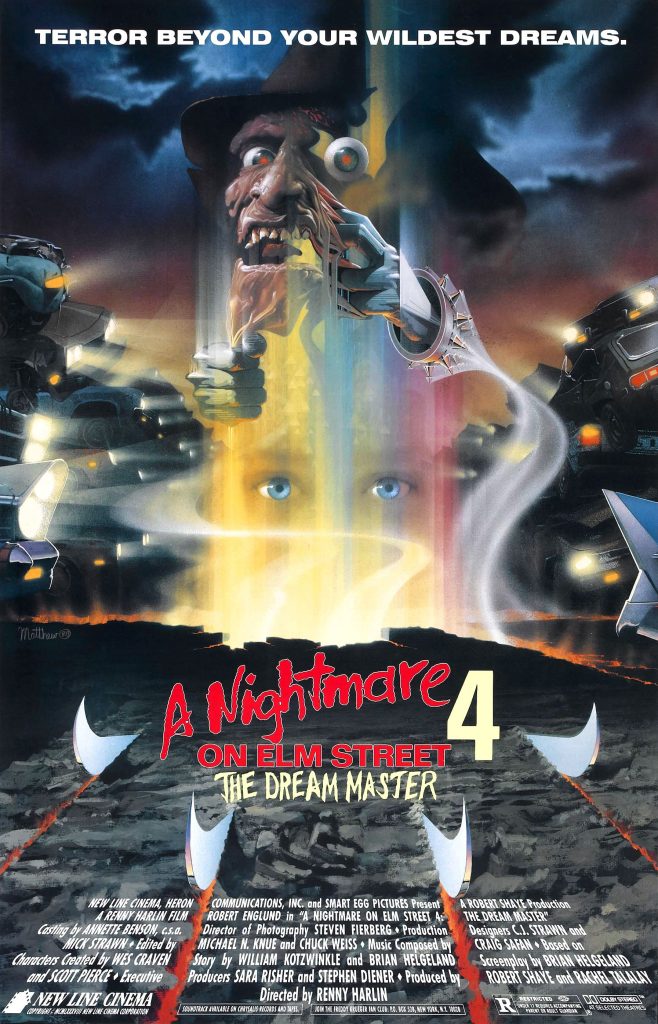
In The Dream Master, Freddy Krueger is at the height of his power — fully resurrected, fully aware, and now almost enjoying celebrity status within the horror world. He’s no longer a creature hiding in nightmares; instead, he controls them like a cruel director, staging elaborate deaths with a combination of sadism, surrealism, and showmanship. This is the film where Freddy becomes more than just a villain — he becomes a brand. His one-liners are more prominent, his presence more theatrical, and his kills more visually extravagant than ever before.
Freddy’s dream manipulation reaches new levels here. He bends time, repeats loops, and blurs reality without ever losing control. He’s smug, confident, and rarely feels threatened. When he absorbs the souls of his victims, their screaming faces appear on his chest — a grotesque and symbolic trophy wall. Robert Englund plays him with an almost rockstar-like swagger. While some fans feel this film begins Freddy’s slide into overexposure, others see it as his creative peak — the perfect blend of fear, flair, and imagination.
A Nightmare on Elm Street 5: The Dream Child (1989)
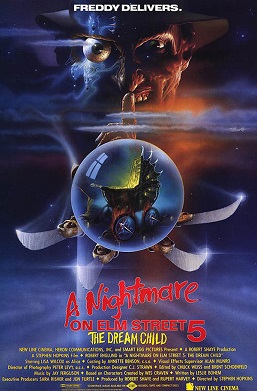
In The Dream Child, Freddy Krueger returns with a darker, more gothic tone — and a deeper dive into his twisted origin. While his wisecracks and surreal kills remain, there’s a noticeable shift toward a more demonic, almost biblical version of Freddy. This time, he attempts to be reborn into the real world by manipulating the dreams of Alice’s unborn baby, using the child’s developing consciousness as a gateway. It’s a disturbing concept that allows Freddy to strike even when characters are awake — as long as the baby is dreaming.
Visually, Freddy appears more monstrous and less human. His makeup is slicker, more exaggerated, and at times he resembles a demonic caricature of himself. His kills in this film are elaborate and stylized — turning one teen into a grotesque comic book, force-feeding another to death, and using gothic architecture as a set for his dreamscapes. Despite mixed reviews, this film deepens Freddy’s mythology, solidifying his backstory as “the bastard son of a hundred maniacs,” born of a nun’s assault in an asylum — a legacy of evil that haunts him as much as it fuels him.
Freddy’s Dead: The Final Nightmare (1991)
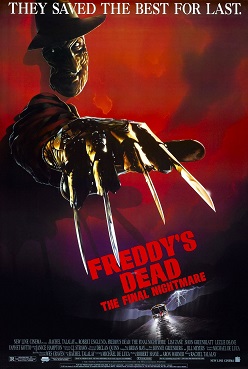
In Freddy’s Dead: The Final Nightmare, Freddy Krueger becomes a full-blown caricature of himself — more entertainer than nightmare. This sixth installment takes a more exaggerated, campy tone, stripping much of the dread and replacing it with surreal black comedy. Freddy gleefully murders with over-the-top theatrics, like dropping someone into a video game or flying on a broomstick in a Wizard of Oz parody. While still deadly, he’s no longer operating from the shadows — he’s the star of the show, relishing the attention with every pun and gag.
This film dives deeper into Freddy’s origin, showing flashbacks to his abusive childhood, the murder of his wife, and his eventual deal with “dream demons” that granted him immortality. It also introduces Freddy’s long-lost daughter, giving him a personal connection to the final showdown. Robert Englund leans fully into the performative side of the character — he’s practically winking at the audience. While the tone alienated some fans, Freddy’s Dead marked a self-aware, exaggerated farewell to the original continuity — closing the book (at least temporarily) on the Springwood Slasher.s.
Wes Craven’s New Nightmare (1994)
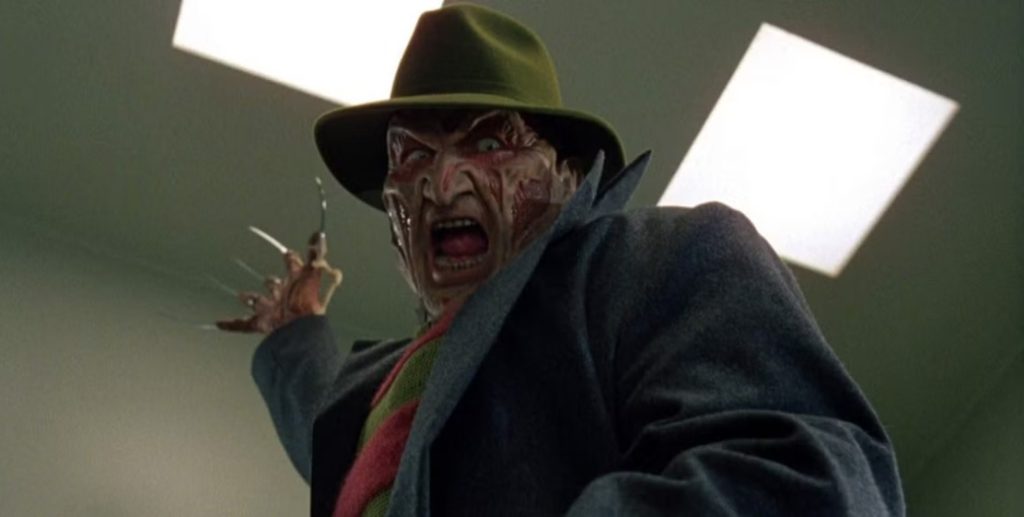
In Wes Craven’s New Nightmare, Freddy Krueger is reborn — not just as a character, but as an ancient, elemental force of evil. Gone is the wisecracking, cartoonish killer from the later sequels; in his place is a darker, more serious, and more terrifying Freddy — reimagined as a demonic entity that used the films as a prison. With those films now concluded, the entity begins to break into the real world, targeting those who helped create the franchise — including actress Heather Langenkamp, director Wes Craven, and Robert Englund himself, all playing versions of themselves.
This Freddy is visually redesigned: his makeup is deeper and more defined, his fedora and sweater darker, and his glove now features biomechanical claws fused into his hand. He speaks less, laughs less, but exudes menace. Englund’s performance is restrained but sinister, channeling a version of Freddy that’s ancient, cold, and mythological. He hides in shadows, taunts a child, and preys on fear in a meta-world where the line between fiction and reality is disintegrating. New Nightmare restored Freddy’s power as a serious horror icon, while laying the groundwork for the kind of self-aware genre deconstruction Craven would later master in Scream.
Freddy vs. Jason (2003)
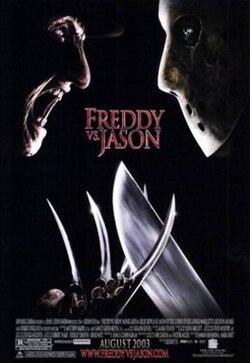
In Freddy vs. Jason, Freddy Krueger is portrayed as a manipulative puppeteer — weakened, forgotten, and furious. Trapped in Hell and no longer feared by the children of Springwood, Freddy devises a plan to resurrect Jason Voorhees, using him as a weapon to reignite the town’s fear. By impersonating Jason’s mother in his dreams, Freddy sends Jason to Elm Street to start killing again — and it works. But when Jason proves too relentless and uncontrollable, Freddy’s scheme backfires, sparking an all-out war between two of horror’s most iconic slashers.
Freddy here is back to his sinister, sarcastic self, but now filled with envy and rage. He doesn’t just want to kill — he wants to be remembered. Englund fully embraces the theatrical Freddy persona, balancing the humor with a sharper, nastier edge. Visually, he looks leaner, more aggressive, and far more physical than in previous entries. This is one of the rare times we see Freddy in a prolonged, bloody brawl — outside the dream world — and it’s satisfying. While the film plays up spectacle and fan service, it never forgets that Freddy is a predator who thrives on fear, control, and the spotlight. Even when pitted against Jason’s brute force, Freddy’s charisma and cunning shine through.
A Nightmare on Elm Street (2010)
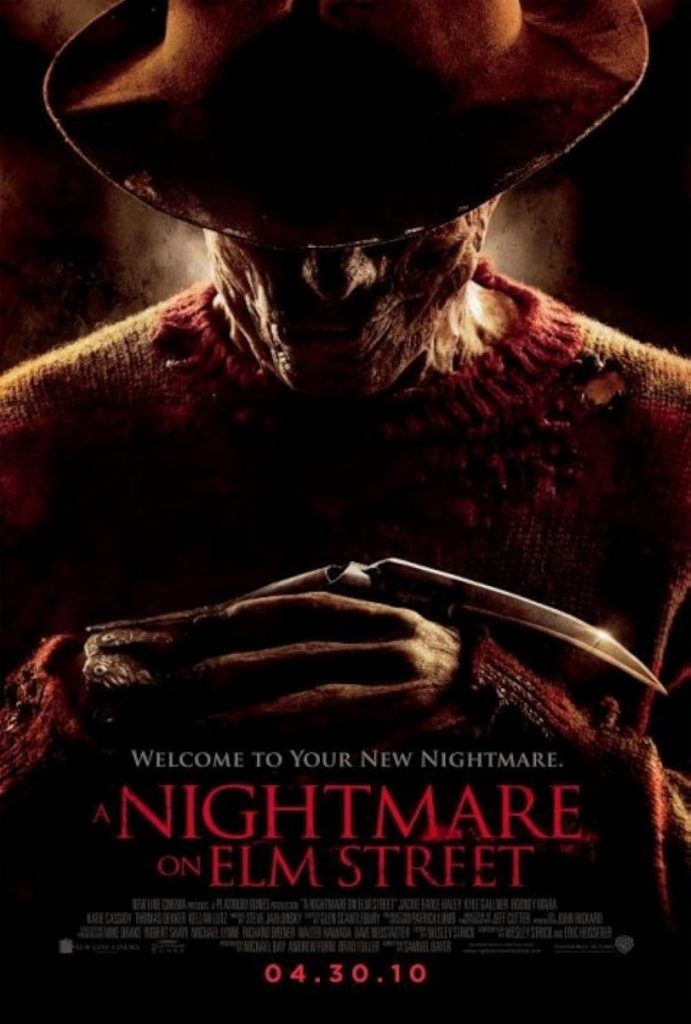
In the 2010 remake of A Nightmare on Elm Street, Freddy Krueger is reinvented as a colder, more serious, and deeply disturbing figure. Played by Jackie Earle Haley, this version of Freddy is less flamboyant and more predatory. His backstory is made more explicit and disturbing: he’s not just a child killer, but heavily implied to be a child molester — a controversial change that grounds the character in grim realism. Burned alive by vengeful parents, he returns through the dreams of his victims to exact revenge — not with quips or theatrics, but with quiet menace and calculated malice.
Visually, this Freddy is more monstrous. His burns are more medically accurate and less stylized than Englund’s version. His glove is bulkier and more mechanical. He whispers more than he shouts, and his kills are drawn out, personal, and sadistic. While the film attempts to return Freddy to his frightening roots, it lacks the surreal energy and inventiveness of the original series. Many fans felt the tone was too bleak, and the performance — while creepy — lacked the twisted charisma Robert Englund brought to the role. Still, this version of Freddy reinforced his potential as a truly horrifying figure when stripped of camp and played straight.
Other Media
- TV: Freddy’s Nightmares (1988–1990) – Anthology series hosted by Freddy.
- Comics: Freddy vs. Jason vs. Ash, Nightmares on Elm Street series.
- Games: Appears in Dead by Daylight, Mortal Kombat 9, and retro console games.
- Pop Culture: Referenced in everything from The Simpsons to Family Guy and Rick and Morty.
League Placement
Legendary Class
Freddy Krueger is not just feared — he’s unforgettable. His sharp tongue, twisted imagination, and dream-based kills make him one of horror’s most inventive and enduring icons.