
Also Known As: Frendo, The Baypen Clown, The Cornfield Killer
First Appearance: Clown in a Cornfield (2020, novel)
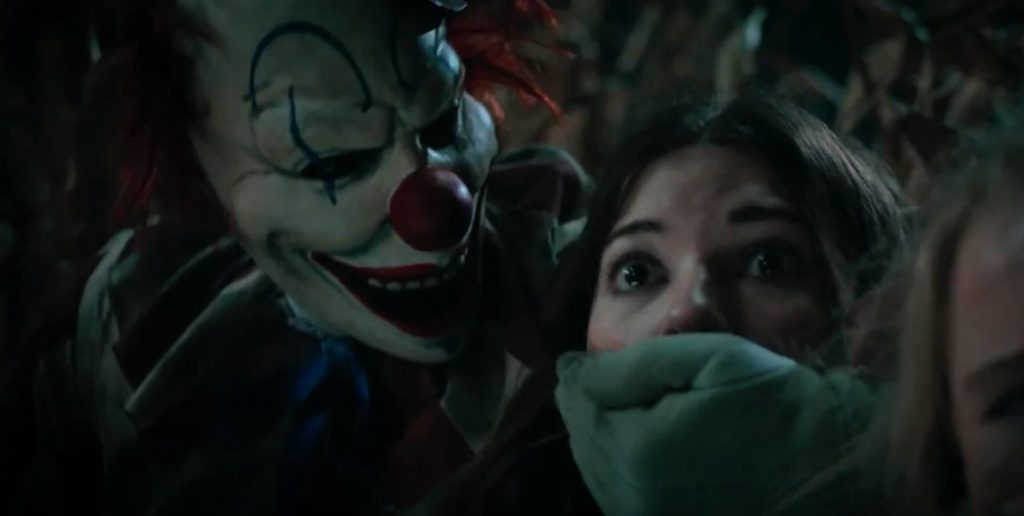
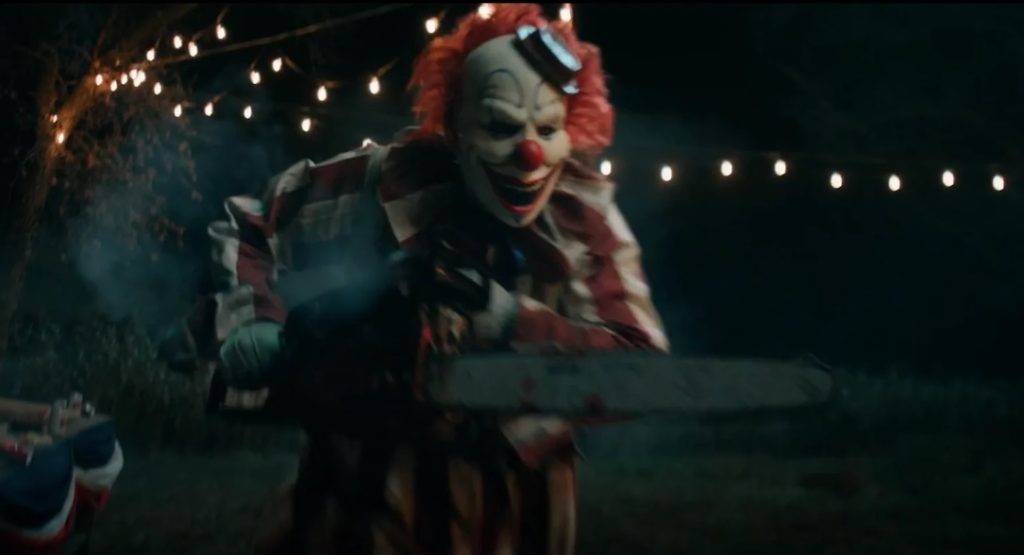
Most Iconic Form: A grotesque clown mascot costume with bright red hair, wide painted grin, and farming overalls splattered with blood
Kill Count: At least fourteen confirmed victims (novel); estimated higher in the upcoming film
Portrayed by: To be announced (film, 2025)
Tier: Third Class Tier
Clown in a Cornfield (2025 film)
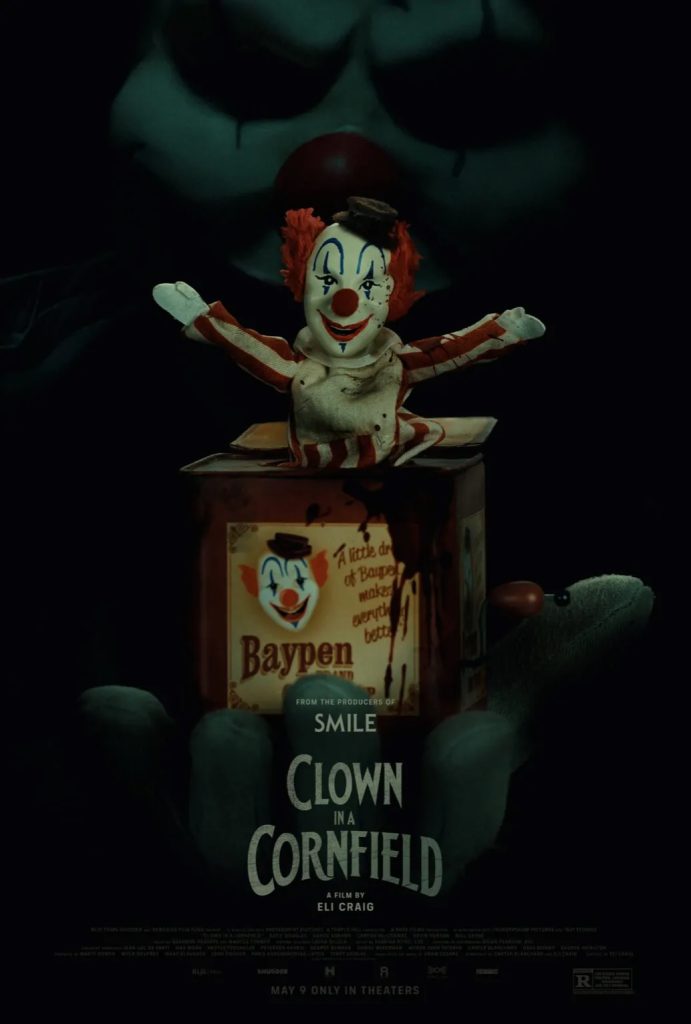
Eli Craig’s adaptation of Clown in a Cornfield brings Adam Cesare’s masked killer to life with a vivid mix of blood, satire, and small-town rage. The story follows Quinn Maybrook and her father as they move to Kettle Springs, a dying Midwestern town where the adults despise the youth they blame for its decline. When the town’s old mascot Frendo the Clown reappears at a party in the cornfields, the celebration turns into a massacre.
The film keeps the heart of Cesare’s story intact, turning Frendo into both a physical and ideological killer. Beneath the mask lies not one monster, but the face of generational resentment — adults driven to violence by nostalgia and fear of change. Clad in tattered overalls and a cracked clown mask, Frendo hunts through the rows of corn with mechanical calm, his every movement accompanied by the faint laughter of a community that has lost its mind.
Balancing dark humour with sharp violence, the film turns Frendo into a symbol of twisted Americana: a smiling relic of a town’s failed dreams, stalking the children who have inherited its ruin. His bloodstained grin reflects not supernatural evil, but the horrors of human bitterness left to rot in the fields.
Clown in a Cornfield (2020 novel)
Written by Adam Cesare, Clown in a Cornfield reimagines the classic American slasher for the twenty-first century. It combines the tropes of masked killers and teenage survival with a biting critique of generational anger and the decay of small-town America.
The story follows Quinn Maybrook, a teenager who moves with her father to the dying town of Kettle Springs, once home to the Baypen Corn Syrup Factory. The town’s mascot, Frendo the Clown, was once a symbol of community pride — cheerful, colourful, and harmless. But when the factory closed, Kettle Springs collapsed into bitterness, and Frendo’s grin became a mocking relic of better days.
Tensions boil between the conservative adults, who long for the town’s past, and the rebellious teenagers, who are blamed for its decline. When violence erupts during a party in a cornfield, the mascot returns — but this time Frendo’s smile hides murder.
The killer dressed as Frendo moves through the fields and empty silos with a farmer’s sickle and inhuman silence. Victims are dispatched with speed and precision, the corn stalks rustling like whispers before each strike. The clown’s mask is not supernatural; it is symbolic — the spirit of a town turned against itself.
As the night unfolds, Quinn and her friends uncover the truth: the adults have taken up the mask of Frendo, seeking to “punish” the younger generation for their perceived sins. The clown becomes not one killer, but an idea — the embodiment of hysteria, resentment, and the failure to adapt.
The novel closes on a note of unease. The mask is destroyed, but the ideology behind it lingers. Frendo is never just a man in a costume, but a reflection of how communities turn monstrous when they cling too tightly to nostalgia.
Clown in a Cornfield 2: Frendo Lives (2022 novel)
The sequel expands the mythology and cements Frendo as a cultural boogeyman. Survivors of the first massacre attempt to rebuild their lives, but the killings begin again — this time spreading beyond Kettle Springs.
Frendo becomes a viral symbol of rebellion and violence. Copycat killers don the mask, each driven by different motives: revenge, politics, fame, or madness. The horror shifts from local tragedy to national phenomenon.
Adam Cesare explores how myth can outlive truth, showing that Frendo’s real danger lies not in the original killer but in the idea of him. Once an emblem of small-town rage, Frendo becomes a tool for chaos across America — a modern echo of how slasher legends are born.
Symbolism and Psychology
Frendo is an emblem of collective violence. Unlike singular icons such as Michael Myers or Ghostface, he is a mask passed from one generation to another. Each wearer projects their anger, fear, or resentment into the costume, making Frendo an ever-changing manifestation of social decay.
The clown imagery plays on the same paradox that defines figures like Pennywise — joy corrupted, laughter turned cruel. Yet Frendo’s horror is more grounded. He is not an ancient evil but a human-made one, born from the emptiness of nostalgia and the resentment of the present.
His setting, the cornfield, is crucial to his identity. Cornfields have long symbolised the heartland of America — abundance and stability — but here they become prisons of shadow and silence. Frendo turns that landscape into his weapon, using familiarity to conceal his presence until it is too late.
Cultural Impact
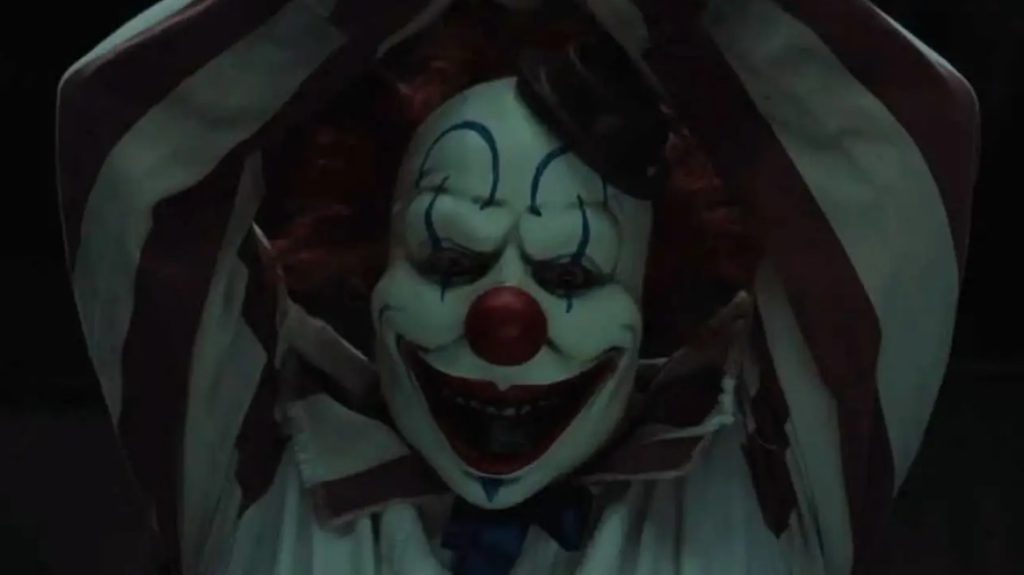
Even before the film’s release, Frendo has been celebrated as a return to classic slasher storytelling with modern urgency. The character’s design — part mascot, part monster — evokes the grounded brutality of early slashers like The Town That Dreaded Sundown and The Burning.
Critics and fans alike have praised the novels for reviving moral and political complexity in slasher fiction, making Frendo not only frightening but thematically rich. He is horror’s reflection of the cultural divide, proof that the genre can be both visceral and meaningful.
When the film arrives, it is expected to establish Frendo as a new generational killer: an heir to the grounded terror of 1980s slashers, modernised for a fractured world.
League Placement
Frendo belongs in the Third Class Tier. He is not supernatural, nor immortal. He is a mask, a movement, and a message — the fear of what happens when ordinary people dress their hate in a smile.