
Real Name: Sweeney Todd – Benjamin Barker
First Appearance: The String of Pearls (Penny Dreadful, 1846); Most Iconic Form: Sweeney Todd: The Demon Barber of Fleet Street (2007)
Most Iconic Form: Pale-faced barber in black, throat razor in hand, vengeance in his eyes
Kill Count: 20+ across film, stage, and lore — victims lured into a barber chair and dropped to their death
Sweeney Todd: The Demon Barber of Fleet Street (2007)
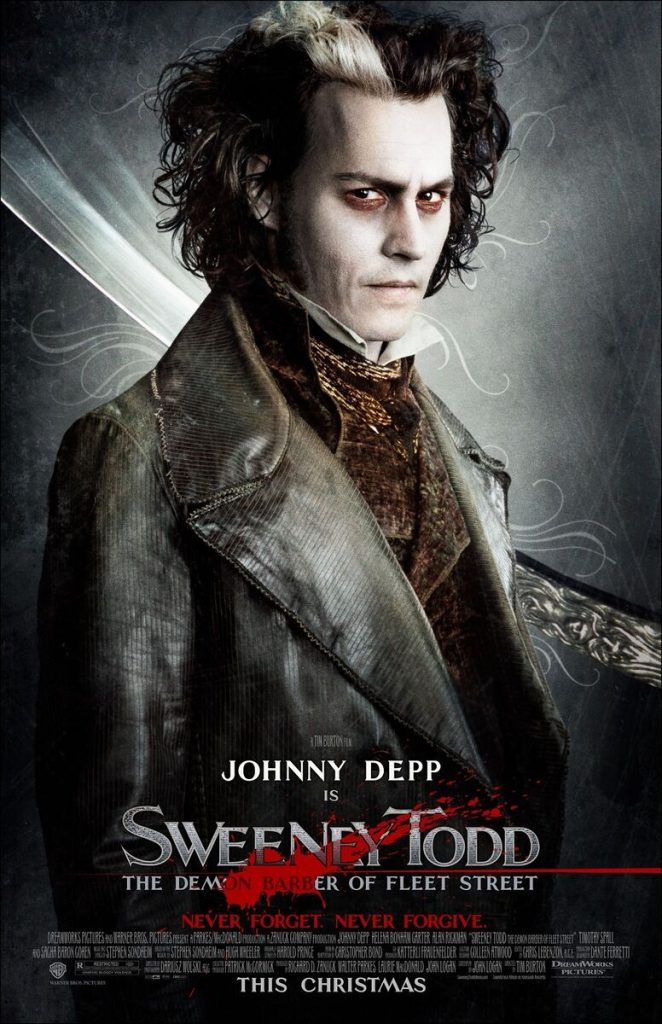
Directed by Tim Burton, this gothic musical adaptation brings the bloody tale of Sweeney Todd to a mainstream audience. Played by Johnny Depp, Sweeney is reimagined as Benjamin Barker, a kind-hearted barber falsely imprisoned by the corrupt Judge Turpin, who coveted Barker’s wife.
Years later, Barker returns to Victorian London under a new name — Sweeney Todd — and learns that his wife poisoned herself and his daughter Johanna is now Turpin’s ward. Consumed by rage and grief, Todd reopens his barbershop above Mrs. Lovett’s meat pie shop and begins murdering his customers with a straight razor — dropping them through a trapdoor for Mrs. Lovett to bake into pies.
The film plays as both horror and tragedy, with musical numbers intensifying the emotional core. Depp’s performance is cold, melancholic, and monstrous, yet strangely sympathetic. Key highlights include:
- “Epiphany” — where Todd fully embraces his murderous mission
- The mechanical barbershop chair and its basement death chute
- The bloody finale, in which Todd unknowingly kills his long-lost wife and is ultimately slain himself
Burton’s gothic visuals and Stephen Sondheim’s score make this version of Todd a modern horror musical icon.
Stage Origins & Other Adaptations
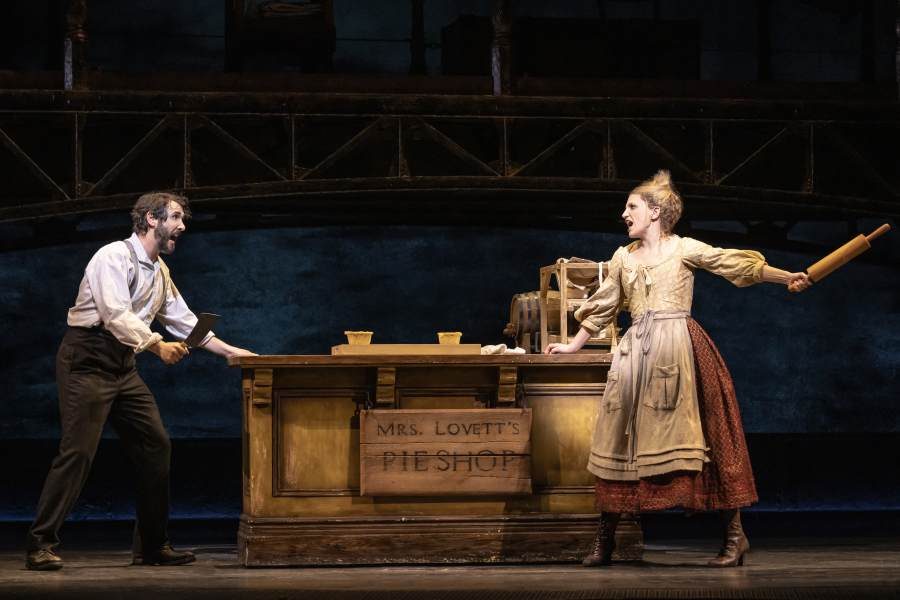
The story of Sweeney Todd predates the film, originating in the 1846 penny dreadful The String of Pearls — later adapted into plays, silent films, and ultimately Stephen Sondheim’s 1979 Broadway musical.
Sondheim’s version cemented Todd as a tragic antihero, not just a monster. It introduced the musical duality of beauty and brutality — often having characters sing haunting melodies as they commit horrific acts. The stage version has been adapted many times:
- 1982 Broadway recording with George Hearn and Angela Lansbury
- 2001 concert version with Patti LuPone and Neil Patrick Harris
- 2023 Broadway revival with Josh Groban and Annaleigh Ashford
Todd’s tale always ends in blood and betrayal — a Shakespearean cycle of revenge gone too far.
Psychology & Physiology
- Entirely human, but emotionally unrecognizable after years of imprisonment and loss
- Suffers from PTSD, depression, and homicidal obsession
- Weapon of choice: straight razor — a tool of his trade turned into a scalpel of justice
- Victims are usually men — symbolic of the corruption and cruelty of the society that ruined him
- Despite his murders, Sweeney spares the innocent, targeting only those he deems complicit
- Ultimately self-destructive — his quest for revenge ends in irony, tragedy, and his own death
Cultural Impact
- One of horror’s most famous literary slashers, long before Jason and Freddy
- Immortalized by Stephen Sondheim’s musical, blending opera, slasher, and melodrama
- The 2007 film introduced Sweeney Todd to a new generation of horror and theater fans
- Referenced in South Park, Bob’s Burgers, The Simpsons, and American Horror Story
- Inspired countless parodies, homages, and Halloween costumes
- Sweeney’s story is timeless: how far will grief drive a good man?
League Placement
Sweeney Todd belongs in the First Class Tier — not for body count, but for emotional horror and poetic vengeance. He is not a mindless killer. He is a man undone, his razors an extension of heartbreak. There’s no joy in his carnage — only grief that spills like blood across the cobblestones.