
Also Known As: The Shadow of Saint Nicholas
First Appearance (Film): Krampus (2015)
Folkloric Origins: Central European Alpine mythology
Most Iconic Form: Horned beast in ragged robes, chains, and sleigh bells
Kill Count: Varies by telling — entire families in Krampus (2015)
Krampus (2015)
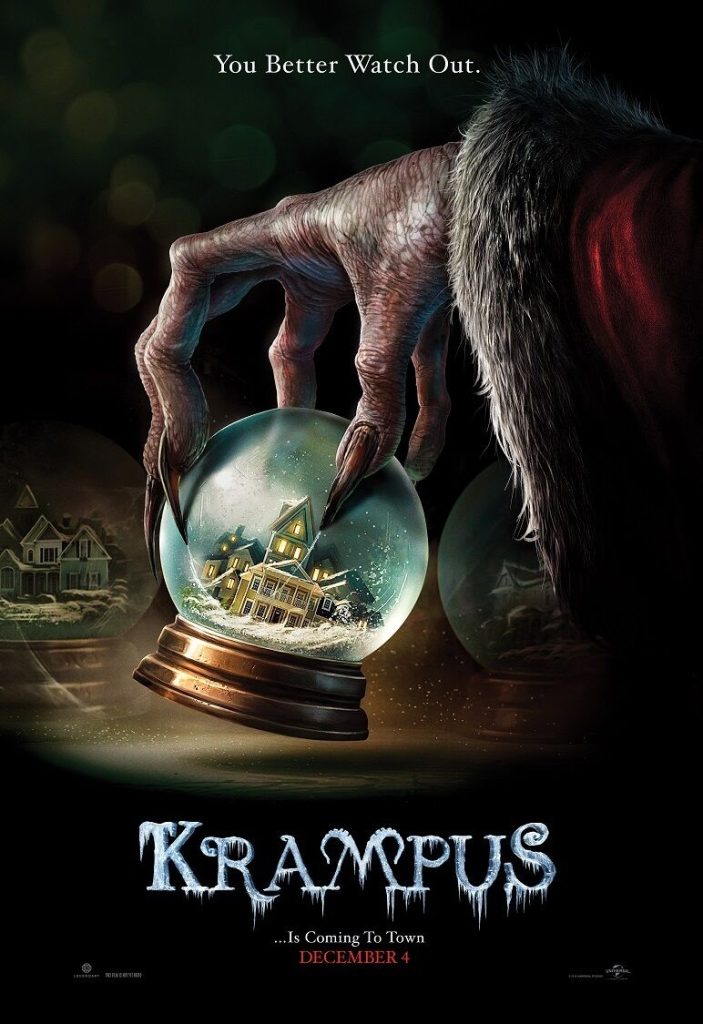
Directed by Michael Dougherty, Krampus reimagines the ancient Alpine myth as a horror-comedy with serious bite. The film centers on a dysfunctional American family whose holiday spirit collapses under the weight of fighting, selfishness, and disappointment. When young Max tears up his letter to Santa, he unknowingly summons Krampus, the Christmas devil who punishes those who forget the true meaning of the season.
Snow blankets the neighborhood, power goes out, and Krampus descends with his horde of twisted helpers — gingerbread men with knives, demonic toys, and monstrous elves. One by one, the family is picked off or dragged into the underworld.
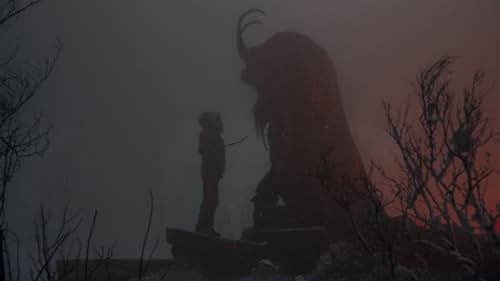
Krampus himself appears late in the film: massive, horned, cloaked in tattered robes, with glowing eyes and a face frozen in a grotesque, unmoving grimace. He doesn’t speak — he judges. And when the family tries to make amends, he offers only mockery, not mercy.
The film ends in ambiguity: the family wakes on Christmas morning… but may be trapped in an eternal snow globe, watched forever by Krampus.
Folkloric Roots – The Anti-Santa
Long before he hit movie screens, Krampus was part of Central European folklore, especially in Austria, Germany, Hungary, and Slovenia. Traditionally, Krampus appears on December 5th — Krampusnacht (Krampus Night) — as a companion and counterbalance to Saint Nicholas.
While St. Nick rewards good children with gifts, Krampus punishes the wicked:
- He carries chains and bells
- Wields bundles of birch sticks (ruten) for beating
- Tosses the worst children into a sack to be eaten, drowned, or dragged to Hell
Krampus has appeared in postcards, parades, and regional traditions for centuries. His image faded in much of the world due to commercialization and religious sanitization of Christmas, but his resurgence in pop culture has restored him as a dark reminder: not all holiday visitors come bearing joy.
Other Appearances & Adaptations
Krampus has emerged as a seasonal horror icon, appearing in:
- A Christmas Horror Story (2015) – As a vengeful, werewolf-like spirit of retribution
- American Dad, The Venture Bros, The League – Parodied in animation and satire
- The Binding of Isaac – As a punishing video game boss
- The Christmas Devil series (2013–2016) – Low-budget slasher interpretations
- Graphic novels and comics – Krampus! by Image Comics, Grant Morrison’s Klaus (a reimagined mythos)
Each depiction varies, but Krampus always represents retribution for lost faith, greed, cruelty, and broken traditions.
Physiology & Behavior
- Humanoid beast with cloven hooves, twisted horns, and a satyr-like frame
- Wears rusted chains, sleigh bells, and ragged red robes
- Face resembles a dead or frozen Santa, often unmoving — like a mask over a demon
- Commands minions: evil toys, gingerbread men, elves, snow beasts
- Capable of summoning storms, freezing environments, and dimensional travel
- Never speaks, only judges — cruelty is swift, but poetic
- Often leaves behind a bell with his name as a chilling reminder
Cultural Impact
- One of the few holiday-themed horror icons to reach mainstream status
- Reinvented a folkloric figure into a commercial horror property without losing depth
- Krampus (2015) helped reignite interest in international winter folklore
- Frequently featured in holiday horror playlists, haunted attractions, and cosplay
- Stands as a symbol of consequences, especially in a season typically sanitized by sentimentality
League Placement
Krampus belongs in the First Class Tier — a mythological terror that predates modern horror. He doesn’t slash — he judges. He doesn’t kill — he punishes. And he doesn’t offer jump scares — only eternal consequences. Be good… or else.