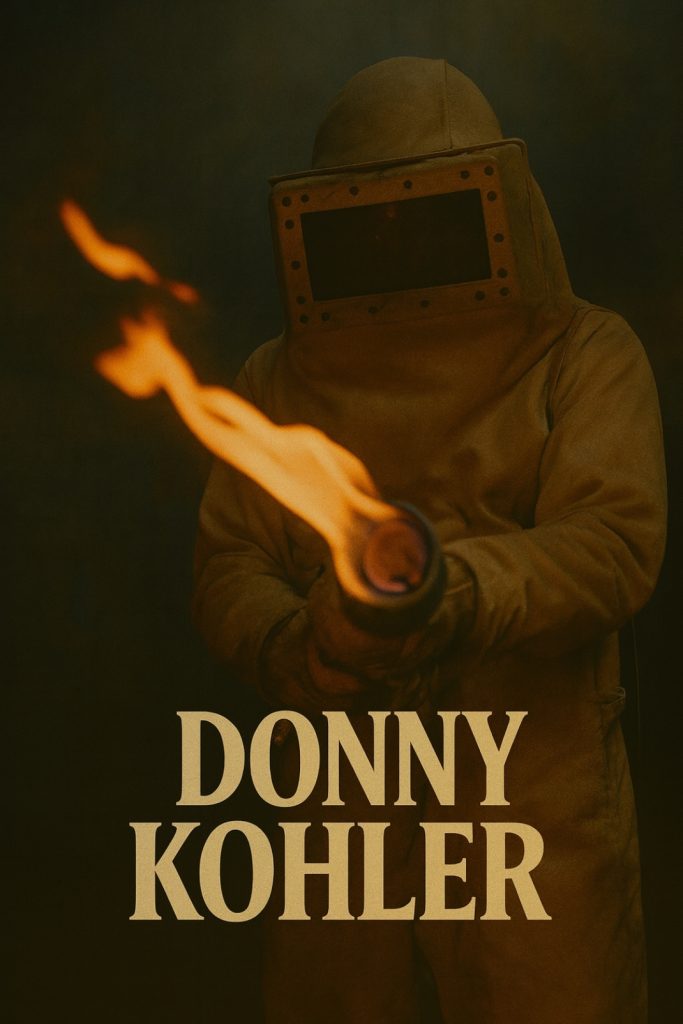
Also Known As: Donny Kohler, The Pyromaniac Killer, The Metal Room Murderer
First Appearance: Don’t Go in the House (1979)
Most Iconic Form: A lonely man in a fireproof suit, using a flamethrower within a house that mirrors his broken mind
Kill Count: Four confirmed victims
Portrayed by: Dan Grimaldi
Tier: Third Class Tier
Don’t Go in the House (1979)
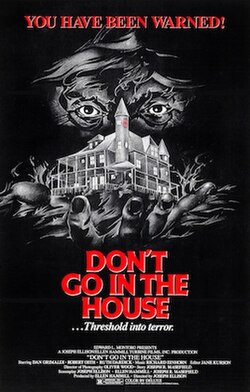
Joseph Ellison’s Don’t Go in the House is one of the most disturbing studies of abuse and psychological decay in horror cinema. Released during the early years of the slasher movement, it stands apart through its oppressive atmosphere and its refusal to offer comfort or catharsis.
The story follows Donny Kohler, a reclusive man who works at a local incineration plant. From the beginning, he is portrayed as isolated and uneasy, a person out of place in the world around him. Flashbacks and hallucinations reveal his childhood torment at the hands of his mother, who burned him as punishment for disobedience. Her cruelty created a fractured mind shaped by fear, shame and self-loathing.
When his mother dies, Donny’s fragile sense of control disintegrates. He roams their silent house, surrounded by relics of her domination. Her voice continues to echo in his mind, chastising and mocking him from beyond the grave. Left entirely alone, Donny begins to obey her again, as though her spirit has fused with his own.
He constructs a steel-lined room upstairs, a cold and silent chamber that reflects the metal walls of his own mind. Here, he brings his victims, luring them with kindness before turning on them with fire. He burns them alive with a flamethrower, believing he is purifying them as his mother once tried to purify him.
After each killing, Donny dresses the burnt bodies, sits them in chairs and talks to them as though they are guests. The scenes are chilling in their stillness. There is no laughter, no mania, only confusion and obedience. The house becomes a mausoleum of guilt where the dead refuse to rest.
As his sanity unravels, Donny begins to see his victims moving and whispering. Their charred faces haunt him in the corridors, calling him back to the fire. In the end, the same flames that once defined his life consume him completely, closing the cycle of abuse and destruction that began in childhood.
Psychology and Behaviour
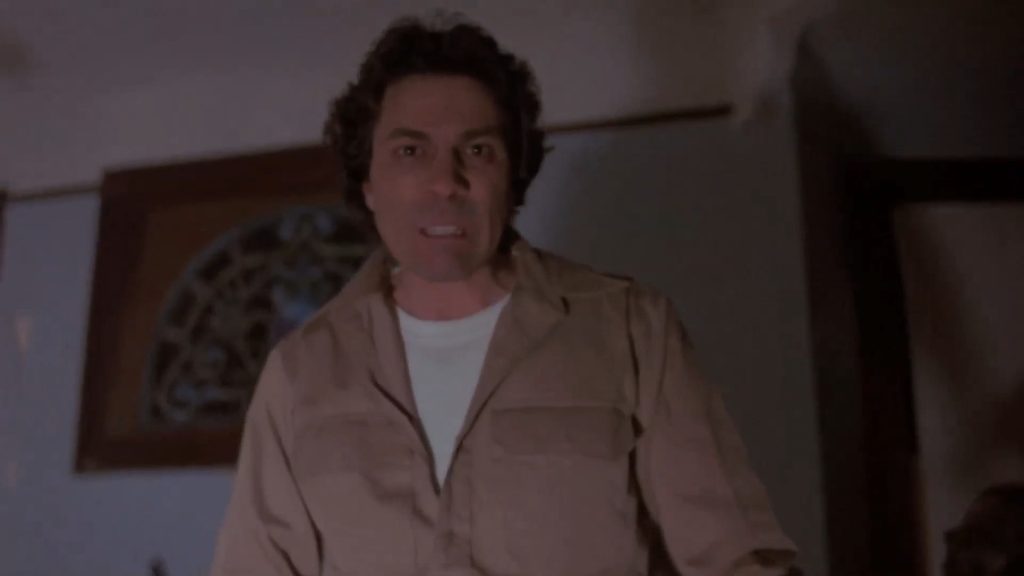
Donny Kohler is both killer and casualty. His violence is born from a life of humiliation and fear. The flamethrower he wields symbolises the twisted power he once lacked. Every victim is chosen not for desire or anger but as a surrogate for his mother’s memory.
He is emotionally stunted, unable to distinguish between comfort and punishment. The steel room is both sanctuary and prison, an extension of his mind where he can control pain but never escape it. His acts are ritualistic and compulsive, an endless attempt to silence the voices that have ruled him since childhood.
Cultural Impact
Upon release, Don’t Go in the House shocked audiences with its realism and brutality. Critics condemned it as sadistic, while horror fans praised its courage to explore psychological horror without glamour. The film quickly gained notoriety in the United Kingdom, where it was banned under the Video Recordings Act of 1984 and listed among the infamous “video nasties.”
Despite censorship, it achieved cult status, often discussed alongside Henry Portrait of a Serial Killer and Maniac for its focus on human evil rather than supernatural terror. Its claustrophobic tone and stark lighting influenced later domestic horror films and independent psychological thrillers.
Dan Grimaldi’s restrained performance remains central to its reputation. His portrayal of Donny is chilling not because it is violent, but because it feels real. He moves with the blank hesitation of a man half-asleep, guided by memory rather than intention. His voice trembles between guilt and devotion, making him one of the genre’s most tragic murderers.
Banned and Restored Versions
Following its release, Don’t Go in the House faced heavy censorship. The British Board of Film Classification refused certification, citing its unflinching depictions of women being burned alive. For years, it circulated only through underground VHS copies, often cut by several minutes to remove the most graphic sequences.
In the late 1990s, the film was re-evaluated by critics who recognised its psychological depth. It was eventually reclassified with minimal cuts for home release. Arrow Video’s restoration in 2021 presented the film in high definition for the first time, fully uncut and accompanied by new interviews and commentary.
This restoration revealed how carefully constructed the film actually is. The stark visual design, quiet pacing and eerie stillness were deliberate artistic choices rather than exploitation. The new release allowed audiences to see Don’t Go in the House as a serious work of psychological horror that reflects real-world trauma rather than simply exploiting it.
Today, the film is studied as an example of early independent horror that pushed boundaries without relying on fantasy. Its legacy endures as a disturbing yet poignant reflection on how violence is inherited and internalised.
League Placement
Donny Kohler belongs in the Third Class Tier. His story is contained within a single film, but that film captures something rare and enduring. He is a killer created by cruelty, a man consumed by the same fire that once defined his suffering.