
Also Known As: Cujo, The Rabid Saint Bernard, The Castle Rock Killer Dog
First Appearance: Cujo (1981 novel by Stephen King)
Most Iconic Form: A massive, drooling, blood-stained St. Bernard, eyes glassy with infection and rage
Kill Count: 3 confirmed victims in film (more in novel)
Portrayed by: Multiple trained St. Bernards, mechanical puppets, and stunt dogs
Tier: First Class Tier
Cujo (1983)
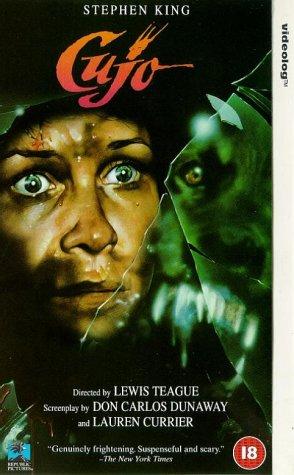
Lewis Teague’s film adaptation of Stephen King’s Cujo transforms an everyday family pet into a monstrous force of nature. Set in the quiet Maine town of Castle Rock, the story follows Donna Trenton (Dee Wallace), a mother trapped with her young son Tad inside a broken-down Ford Pinto while a rabid St. Bernard prowls outside.
The film opens peacefully: Cujo belongs to the rural Camber family, a gentle giant adored by his owners. But when Cujo chases a rabbit into a cave and is bitten on the nose by a rabid bat, his slow, tragic decline begins. The once-friendly dog becomes lethargic, hypersensitive to sound, and eventually violent. His transformation is gradual and pitiful — King’s and Teague’s greatest achievement lies in the way they preserve Cujo’s innocence even as the disease twists him into a killer.
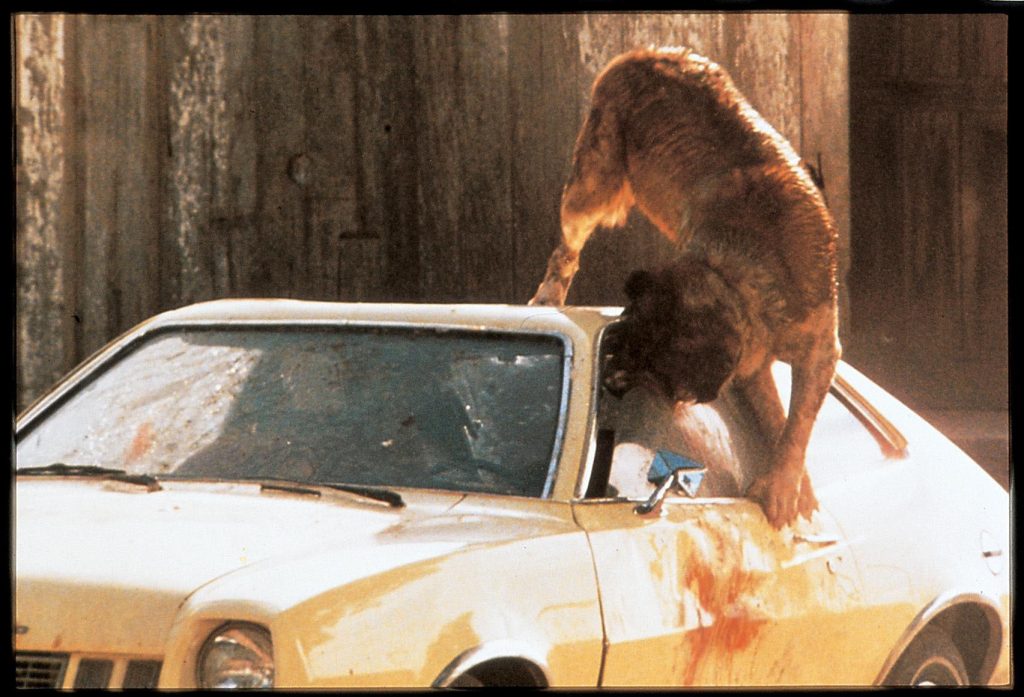
When the Cambers leave town, Donna drives to their farmhouse for car repairs, only for her vehicle to stall. Cujo, now fully rabid, emerges from the shadows — foaming, bleeding, and howling. What follows is one of horror cinema’s most claustrophobic sequences. Donna and Tad are trapped inside the car for days in sweltering heat, starving and dehydrating while Cujo circles outside, attacking whenever they try to escape.
The tension is relentless. Each time Donna thinks she can flee, Cujo smashes against the windows, his massive body thudding against the metal, his teeth gnashing inches from her face. The attacks are filmed with unnerving realism; practical dog effects and clever editing make the violence feel immediate and savage.
In the climactic sequence, Donna finally bursts from the car to fight back, bludgeoning Cujo with a baseball bat in a desperate struggle for survival. When he leaps for a final attack, she shoots him, ending his suffering — and the film’s terror — in a moment that feels as tragic as it is triumphant.
Novel Origins & Differences
In Stephen King’s 1981 novel, Cujo’s story is intertwined with the everyday dysfunctions of small-town life — infidelity, business failures, and guilt. King frames Cujo less as a villain and more as an innocent animal destroyed by circumstance and neglect.
The novel’s tone is bleaker: Tad dies of heatstroke before his mother can save him, a devastating reminder that real monsters often win. The film’s slightly softened ending doesn’t erase the tragedy; it simply allows a flicker of hope after nearly two hours of suffocating dread.
Cujo’s rabies is presented almost as possession — not by demons, but by disease and entropy. King himself has said the story represents “real horror”: no ghosts, no magic, just the random cruelty of the natural world.

Psychology and Behaviour
Cujo’s menace lies in his realism. Unlike supernatural beasts, he is a victim as much as a predator — a loyal dog overtaken by sickness. His behaviour mirrors the stages of rabies: confusion, aggression, fear of water, and finally madness.
He is driven by pain, not evil, which makes his violence heartbreaking. Each attack feels inevitable yet deeply tragic, transforming what could have been a simple creature feature into a study of disease, decay, and loss of control.
Cultural Impact
Cujo remains one of the most intense animal-attack films ever made. Its effectiveness comes not from spectacle, but from intimacy — one mother, one child, one car, and one dying dog. Dee Wallace’s performance earned critical praise, grounding the film’s terror in emotional realism.
The movie also cemented the “trapped horror” subgenre, influencing works like The Descent, Gerald’s Game, and Frozen. Cujo’s image — the drooling, blood-soaked face pressed against a car window — has become an enduring symbol of King’s brand of everyday horror.
Though later King adaptations leaned into supernatural threats, Cujo endures precisely because it’s plausible. Anyone who has ever owned a pet, driven through the countryside, or heard a distant growl knows the chill it conjures.

League Placement
Cujo belongs in the First Class Tier. He represents the terror of the familiar turned lethal — not a supernatural monster, but a victim of nature’s cruelty. His blend of realism, tragedy, and sheer intensity keeps him one of horror’s most memorable creatures.