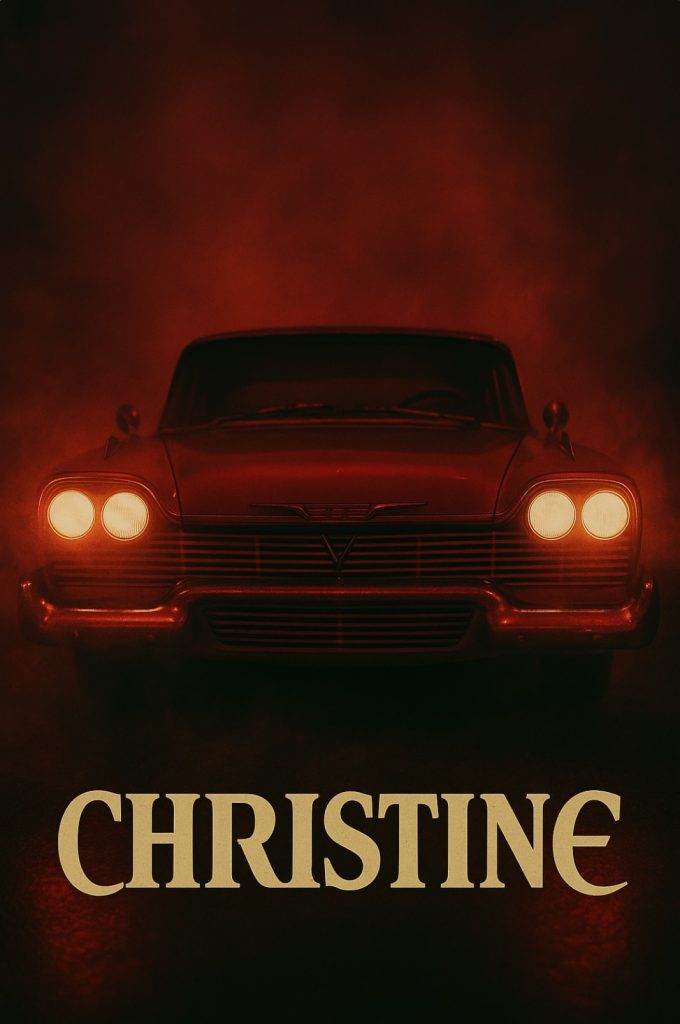
Also Known As: Christine, The Fury, The Possessed Plymouth
First Appearance: Christine (1983)
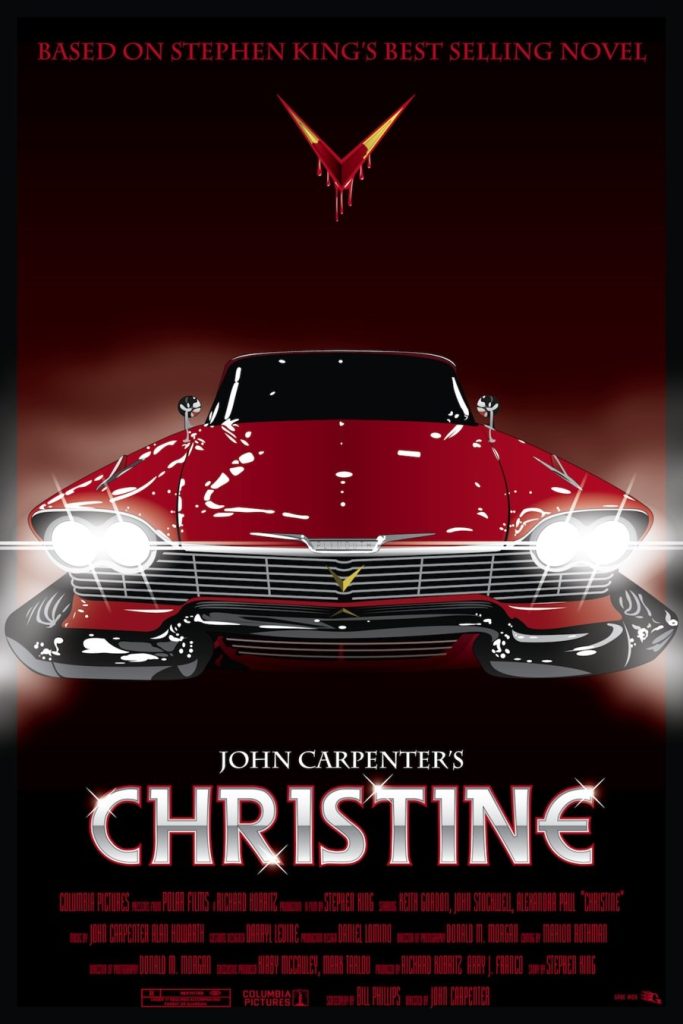
Most Iconic Form: A gleaming red 1958 Plymouth Fury with white fins, chrome trim and a deadly streak of jealousy
Kill Count: 20 confirmed deaths across the novel and film
Portrayed by: A fleet of restored Plymouth Furys
Tier: Second Class Tier
Christine (1983)
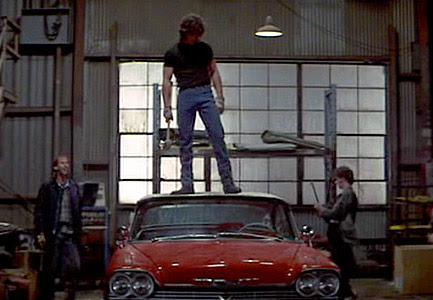
Directed by John Carpenter and based on Stephen King’s novel of the same name, Christine tells a story where metal and menace combine to create something both tragic and terrifying. The film opens in a Detroit car factory in 1957, where one particular Plymouth Fury rolls off the assembly line. Even before the engine starts, something about the car feels wrong. Workers are drawn to it, injured by it and, in one chilling moment, killed by its unseen malice. From the very beginning, Christine is alive.
Years later, the car reappears in the hands of a shy and awkward teenager named Arnie Cunningham. Arnie’s life is miserable, filled with bullies and disappointment. When he discovers the rusting remains of Christine in a scrapyard, he feels an instant connection. Against the warnings of his friends, he buys the car and begins to restore it. As the chrome gleams and the paint deepens to a rich blood red, Arnie begins to change too.
Christine exerts her influence slowly. She repairs herself after damage, plays music that reflects her moods, and reacts violently to anyone who threatens Arnie or comes between them. When Arnie’s friend Dennis and his girlfriend Leigh try to intervene, they begin to see that Christine’s jealousy is as powerful as her engine. She becomes an extension of Arnie’s repressed rage, striking out at his enemies one by one.
Carpenter films Christine’s murders with a strange beauty. Headlights blaze through fog, tyres scream across asphalt, and metal crumples under impossible force. One of the most famous sequences shows Christine engulfed in flames, still driving with mechanical fury to kill a fleeing victim. The image of a burning car racing through the night became an instant icon of horror cinema.
The connection between Arnie and Christine deepens until the two are inseparable. She becomes his obsession, and he becomes her willing accomplice. By the film’s final act, Arnie is unrecognisable — confident, cruel and consumed by his bond with the car. When Christine is finally crushed in a junkyard, the camera lingers on a single piece of chrome bending slightly, as though she is not truly gone.
Psychology and Behaviour
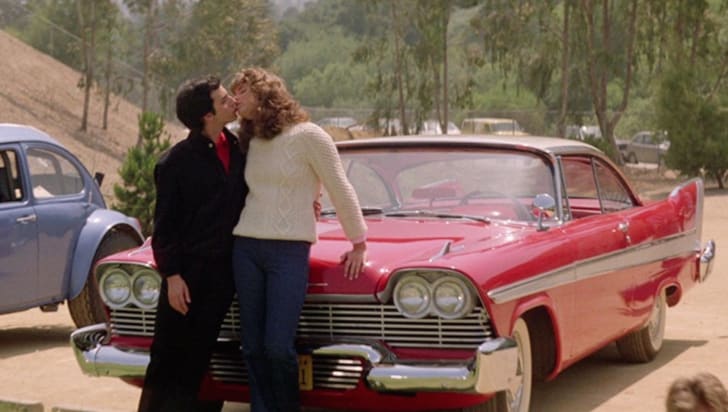
Christine is not a simple machine. She is willpower without conscience, desire without restraint. Her possessiveness mirrors the darkest parts of human love. She feels affection, jealousy and rage but channels them through destruction. Her personality is expressed through action rather than words, through headlights that glow brighter when she is angry and engines that purr when she is pleased.
Her relationship with Arnie is parasitic and symbiotic. She feeds on his insecurity and anger, offering power and purpose in return. The two evolve together, each amplifying the other’s darkness. Christine’s jealousy is absolute. Any threat to Arnie’s devotion results in swift, merciless revenge.
Though she cannot speak, her use of music acts as communication. Songs from the 1950s echo through her speakers, often reflecting her mood or intentions. “We Belong Together” and “Pledging My Love” become expressions of her possessive affection, turning nostalgia into menace.
Origins and Nature
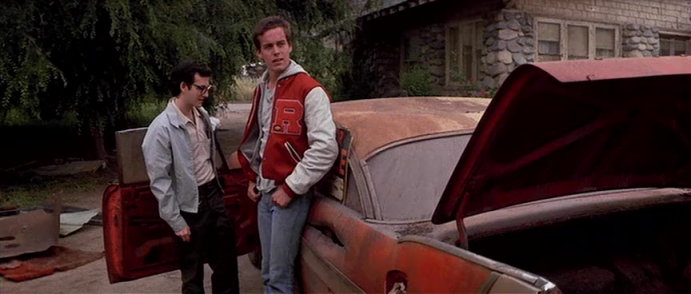
In Stephen King’s novel, Christine’s evil has no clear origin. Some interpret it as demonic possession, others as the embodiment of pure malice born from the industrial world itself. The car’s first owner, Roland LeBay, is said to have been cruel and obsessive, and his spirit may linger within it. Yet Carpenter’s film suggests something more mysterious — that Christine was always evil, a creation born with intent.
She is self-healing, impervious to time and decay. Dents push outward, glass reforms, and metal folds back into shape as though alive. Her regenerative power makes her nearly invincible, reinforcing the idea that evil, once unleashed, cannot easily be destroyed.
Cultural Impact
Christine remains one of the defining examples of King’s blend of horror and Americana. The image of a murderous car became an enduring symbol of obsession, materialism and possession. Carpenter’s direction gives Christine both sensuality and dread, making her one of cinema’s most distinctive monsters.
The film’s practical effects, especially the car’s self-repair sequences, remain extraordinary. These were achieved by constructing multiple versions of the car and using reverse photography to show damage reversing itself. The result is still mesmerising decades later.
Christine’s influence stretches across horror and pop culture. She inspired films such as Maximum Overdrive and The Car, as well as episodes of The Simpsons and Supernatural. Her story stands as a warning about how easily love and control can intertwine until neither can survive without the other.
League Placement
Christine belongs in the Second Class Tier. She is a rare creature in horror — a killer that feels both mechanical and emotional. Though her story begins and ends in one film, her presence burns bright in horror memory, her engine still running somewhere in the dark.