First Appearance: Candyman (1992)
Portrayed by: Tony Todd (1992–2021), Yahya Abdul-Mateen II (2021)
Estimated Kill Count: 30+ (on screen across the series, not including lore-based deaths and copycat incidents)
Candyman (1992)
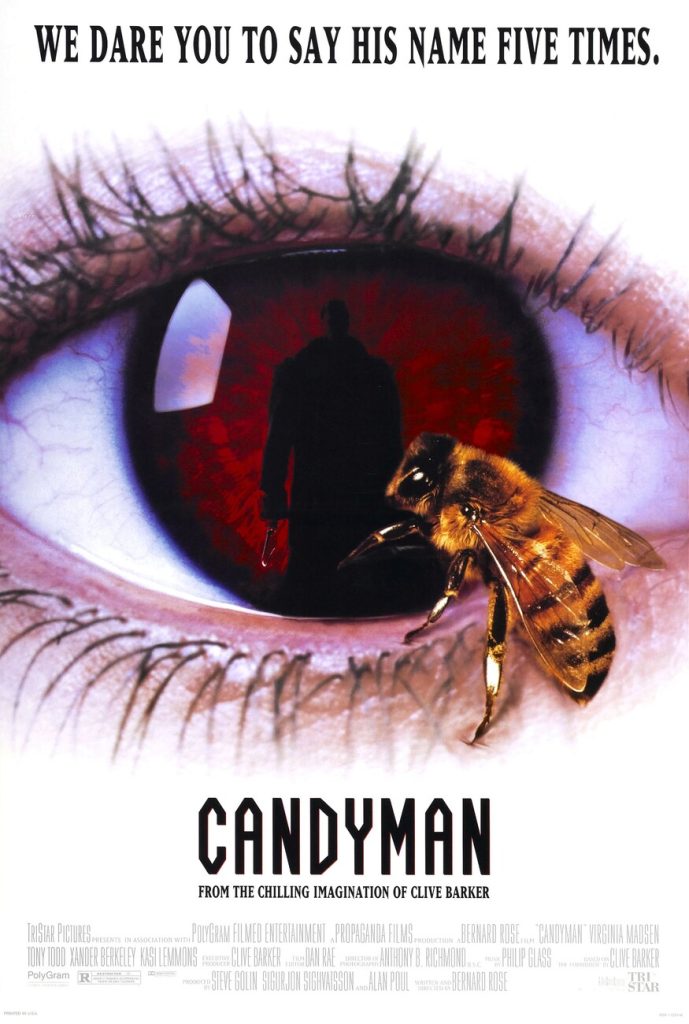
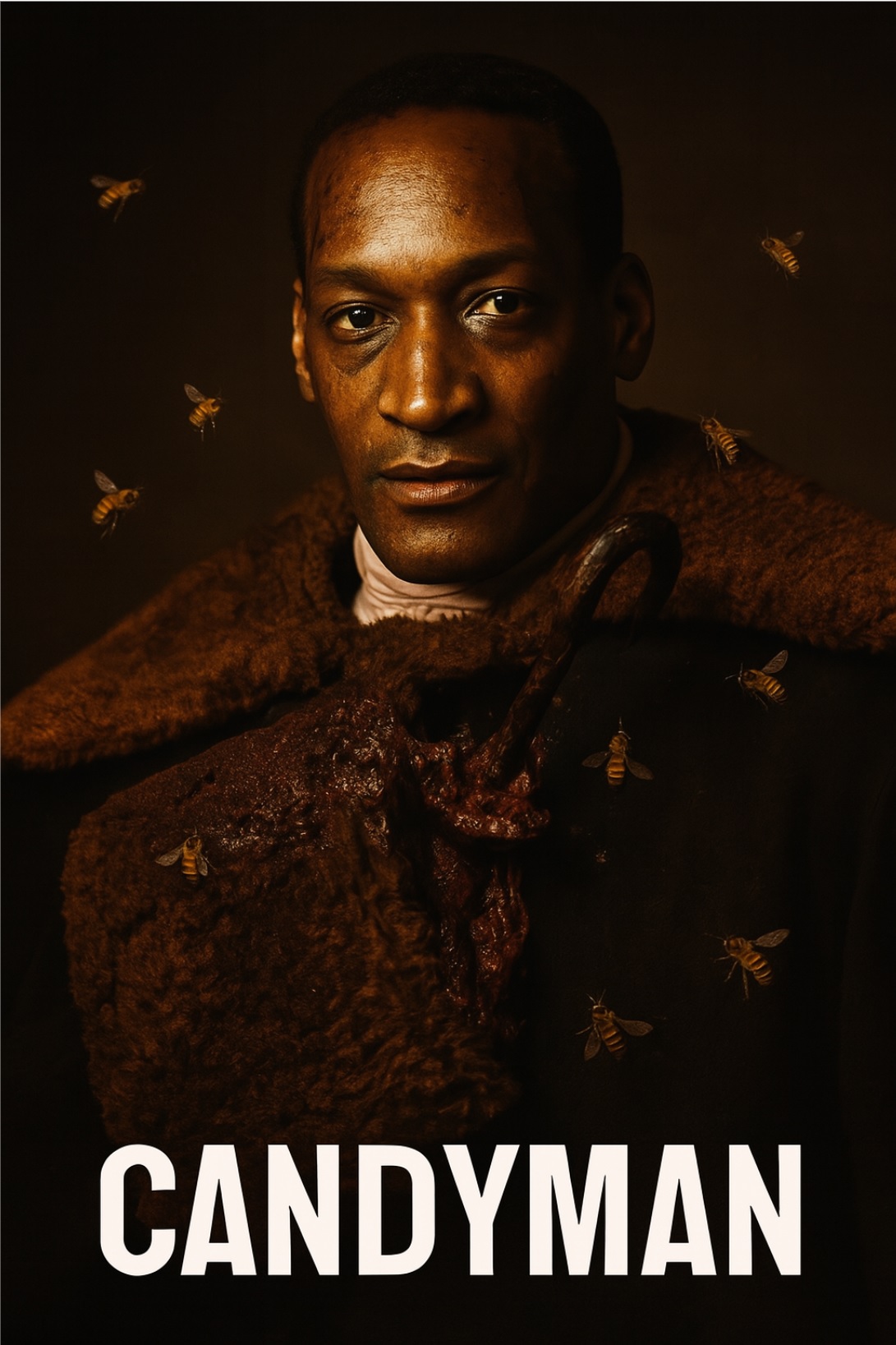
In his debut, Tony Todd’s Candyman is a figure of poetic tragedy and seductive horror — a vengeful spirit born from racial injustice, lynched in the 1890s for loving a white woman. With a bloodstained hook in place of a severed hand, a booming, almost romantic voice, and a chest crawling with bees, Candyman is less a slasher villain and more a myth made flesh. He’s summoned not by accident but by belief — a ghost that survives through fear and whispers.
Candyman doesn’t stalk victims like other killers. He waits, revealing himself only when his legend is challenged or ignored. He speaks of longing, love, and the need to maintain his legacy through violence — “the pain, the soul that must spill blood to stay alive.” When graduate student Helen Lyle investigates his myth, he sees her as a kindred spirit — and his target. Tony Todd’s commanding presence, combined with Bernard Rose’s direction, creates a killer that’s both horrifying and heartbreaking. He doesn’t just kill — he wants to be remembered, and he’ll bleed anyone who forgets him.
Candyman: Farewell to the Flesh (1995)
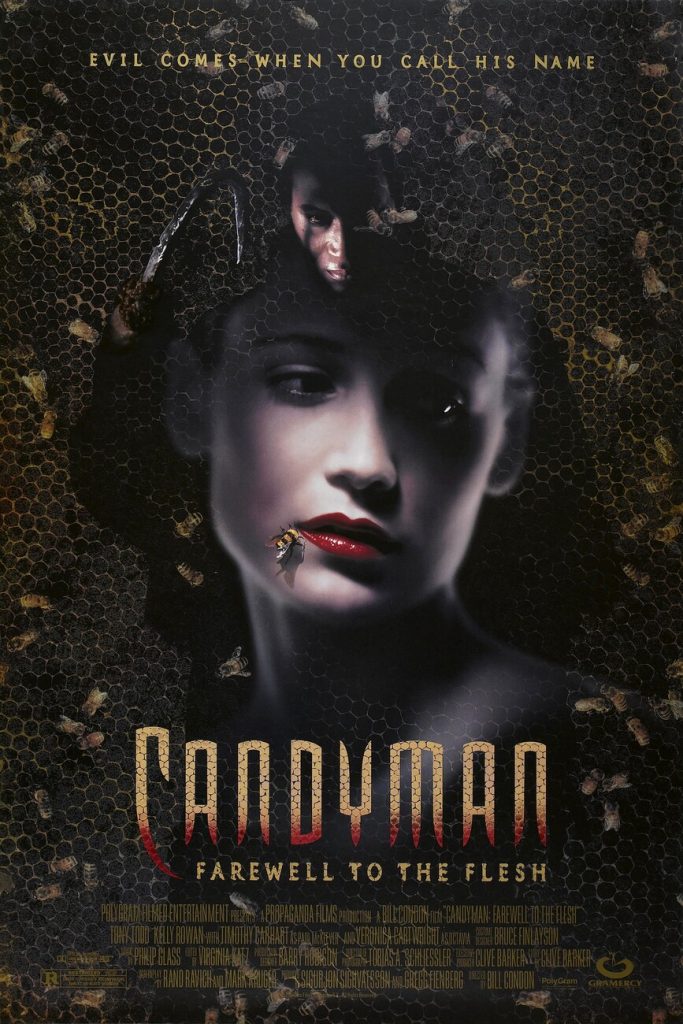
The second film expands Candyman’s origin, giving him a name — Daniel Robitaille — and exploring his backstory in more detail. Set in New Orleans, the film leans heavily into themes of bloodlines, legacy, and Southern Gothic horror. We learn that the woman Candyman once loved gave birth to a child, and her descendants still live — something Candyman seeks to protect… or punish.
Tony Todd retains full control of the role, adding even more grace and sadness to the character. He kills with purpose, not bloodlust, and often with a poetic speech beforehand. The bees return, symbolizing his torment and the swarming legacy that follows him. He’s no longer just a ghost — he’s becoming a force of ancestral memory, haunting those who try to erase painful histories.
Candyman: Day of the Dead (1999)
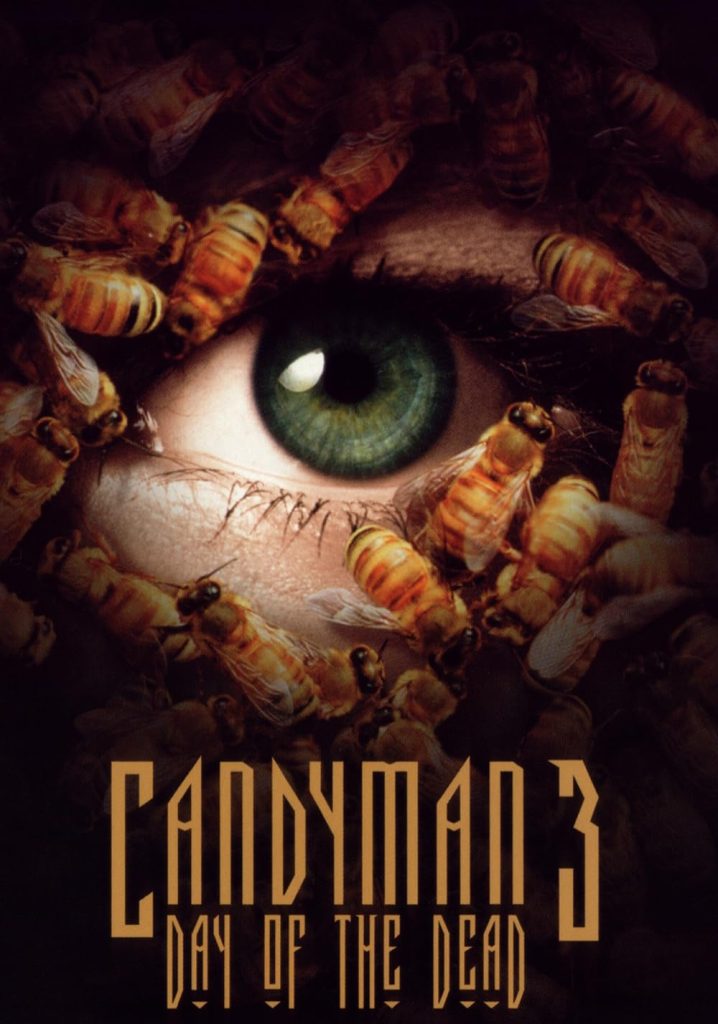
In the third entry, Candyman returns to Los Angeles to target another descendant of his bloodline — artist Caroline McKeever. This film is generally considered the weakest of the series, with a lower budget and less emotional depth. Still, Tony Todd gives a solid performance, and his Candyman remains seductive and theatrical, even when the material around him falters.
Here, Candyman is increasingly portrayed as a symbol of generational trauma, a shadow that cannot be escaped. His dialogue continues to elevate the film — poetic, haunting, and filled with rage masked as romance. Despite the film’s flaws, Candyman is always captivating, always in control, and never reduced to a mindless killer.
Candyman (2021)
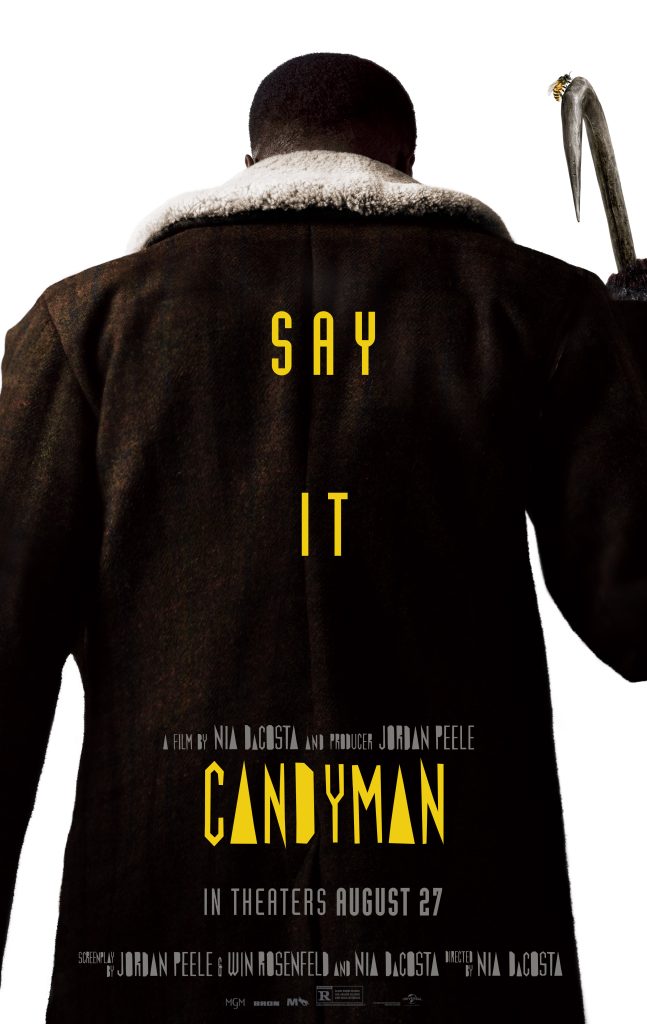
The 2021 film, directed by Nia DaCosta and written by Jordan Peele, is both a sequel and spiritual successor. It re-centers Candyman as a collective legend — not just Daniel Robitaille, but a swarm of Black men wronged by society, turned into one shared specter of vengeance. This includes Sherman Fields, a man murdered by police in the 1970s, who becomes the face of Candyman in the film’s present day.
Yahya Abdul-Mateen II plays Anthony McCoy, an artist who becomes consumed by Candyman’s myth — and ultimately becomes his new vessel. While Tony Todd only appears briefly in a haunting final moment, his voice and legacy echo throughout the film. The movie reframes Candyman not just as a ghost, but as a reaction to systemic violence — an idea passed down, reforged in every generation. “Candyman isn’t a man,” the film tells us. “He’s the whole damn hive.”
This evolution transforms the character from a single entity into a collective curse — a being born not of death, but of injustice, remembrance, and rage.
Nature & Symbolism
Candyman is summoned when his name is spoken five times into a mirror — but only if the speaker believes. He doesn’t kill at random — he punishes those who deny his legend, break the cycle of memory, or threaten the story that keeps him alive. He is as much myth as man — a weaponized memory, a symbol of how trauma echoes across time.
He’s both an avenger and a cautionary tale — rooted in racial horror, romantic tragedy, and urban legend.
Collectibles & Cultural Legacy
- Figures & Statues: NECA and Trick or Treat Studios have released multiple Candyman collectibles, including detailed Tony Todd likenesses and high-end busts.
- Costumes & Replicas: The hook hand, trench coat, and mirror motifs have become instantly recognizable Halloween staples.
- Documentaries: Candyman’s mythos and its connection to racial storytelling have been explored in multiple essays, retrospectives, and horror think-pieces.
- Influence: Candyman helped redefine horror villains — showing that a killer could be poetic, sympathetic, and deeply political without sacrificing terror.
League Placement
Infamous Class
Candyman is fear made memory — a killer shaped by injustice, summoned by belief, and kept alive by the stories whispered in the dark. He doesn’t chase you — he waits for you to call his name.