Film: RoboCop 2 (1990)
Character: Cain
Portrayed By: Tom Noonan
Classification: Human / Cyborg
Tier: Third Class
Film Directed By: Irvin Kershner
Written By: Walon Green and Frank Miller
Cain
RoboCop had already faced one of science-fiction cinema’s great criminal gangs in Clarence Boddicker and his crew, but the 1990 sequel gave Alex Murphy an enemy capable of becoming something much closer to his mechanical equal. Cain begins RoboCop 2 as a drug lord, murderer and self-styled spiritual leader. By the film’s final act, almost nothing remains of his human body except his brain, which Omni Consumer Products places inside an enormous new cyborg designed to replace RoboCop.
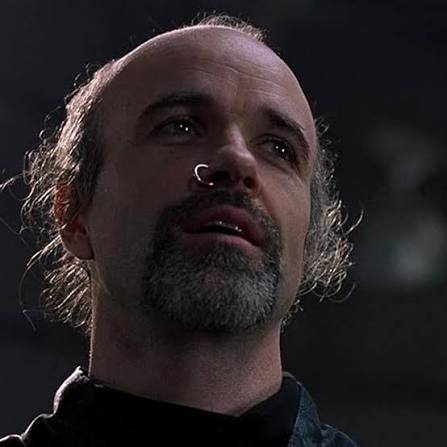
Played in human form by Tom Noonan, Cain controls the manufacture and distribution of Nuke, a highly addictive designer drug spreading throughout Detroit. He doesn’t regard himself simply as a dealer. Cain presents Nuke as a route to happiness and himself as something approaching a religious leader, addressing his followers as his “flock” and promising an artificial paradise through drugs. Contemporary coverage described the character as a messianic terrorist controlling Nuke production, while Noonan himself later discussed the character’s messiah-like qualities.
That combination makes Cain considerably stranger than a conventional crime boss. He is both supplier and addict, preaching the virtues of the substance upon which he has become dependent. His addiction ultimately survives the destruction of his human body and becomes the fatal weakness of the supposedly unstoppable machine OCP builds around his brain.
The Nuke Empire
RoboCop 2 returns to a Detroit deteriorating under corporate interference, financial crisis and widespread crime. OCP is manoeuvring to take control of the city, while much of the police force is on strike. Against that background, Cain’s organisation has built an enormously profitable market around Nuke.
Cain’s principal associates include Angie, played by Galyn Görg, and Hob, played by Gabriel Damon. Hob is particularly disturbing because he is a child operating comfortably within an extremely violent criminal organisation. Cain also has corrupt Detroit police officer Duffy feeding information to the gang, with Duffy himself addicted to Nuke. IMDb
Cain treats his criminal operation almost like a religious movement. He speaks about Nuke providing paradise and offers variations of the drug designed around different emotional experiences. There is an evangelical quality to his salesmanship, except the salvation he promises is chemical and his congregation consists of addicts and criminals.
Behind that calm presentation is an exceptionally brutal man. Cain’s organisation is prepared to use murder and intimidation to protect its business, and Cain shows very little concern for anyone who becomes inconvenient. Noonan’s restrained performance is important here. Cain doesn’t need to behave like a constantly screaming gangster because his apparent calm makes his violence more unsettling.
Duffy’s Punishment
One of the clearest demonstrations of Cain’s cruelty comes after RoboCop discovers that Officer Duffy has been supplying information to the Nuke organisation. Murphy uses Duffy to locate Cain’s operation, and Cain quickly understands that his corrupt police contact has betrayed him.
Duffy’s punishment is deliberately horrific. Cain has him strapped down while his body is surgically opened, forcing him to remain conscious during the ordeal. When Angie protests that Cain had supposedly intended only to frighten Duffy, Cain responds with complete indifference to the suffering taking place in front of him.
The scene establishes that Cain’s outwardly composed personality should never be mistaken for restraint. He is capable of inflicting extraordinary violence when someone threatens his organisation, and he can watch that violence with virtually no emotional reaction.
It also places him firmly within the tradition established by the first RoboCop. The series’ Detroit is populated not merely by criminals but by people capable of almost grotesque levels of cruelty, while the corporations supposedly offering solutions frequently prove equally dangerous.
Cain Versus RoboCop
RoboCop eventually tracks Cain to his operation, but the confrontation goes disastrously wrong. Cain and his gang overwhelm Murphy and subject him to one of the film’s most memorable attacks, methodically dismantling RoboCop rather than simply attempting to shoot him.
The remains of Murphy are dumped outside the police station, leaving OCP to rebuild him. Cain therefore achieves something few of RoboCop’s opponents manage: he physically defeats Murphy and leaves him completely incapacitated.
OCP subsequently makes matters worse by loading RoboCop with hundreds of new behavioural directives following the intervention of psychologist Dr Juliette Faxx. The changes render Murphy almost incapable of functioning effectively as a police officer. He eventually frees himself from the directives by subjecting his systems to a massive electrical charge and then leads the police in a renewed assault against Cain’s organisation.
This time the outcome is different. Cain attempts to escape but is seriously injured during the pursuit and falls into a coma. The police have finally captured Detroit’s Nuke kingpin, and his criminal empire appears to have lost its leader.
Unfortunately, OCP has been looking for somebody exactly like him.
Creating RoboCop 2
OCP’s attempts to duplicate the success of Alex Murphy have been disastrous. Previous candidates for the RoboCop 2 programme have been unable to psychologically survive their transformation into machines. Dr Juliette Faxx concludes that the problem lies in the people being selected and begins considering criminals rather than police officers.
Cain presents her with an extraordinary opportunity. He is violent, power-hungry and already facing death, while his addiction potentially provides OCP with a means of controlling him. Faxx selects the comatose Cain for the programme and has his life support disconnected. His brain and associated biological material are removed and incorporated into OCP’s enormous new RoboCop 2 unit.
Cain has therefore undergone a transformation that deliberately mirrors Murphy’s while completely reversing its moral foundation. Alex Murphy was a murdered police officer reconstructed as a machine and struggling to preserve his humanity. Cain is a murderous criminal deliberately converted into a machine because OCP believes his personality will make him easier to control.
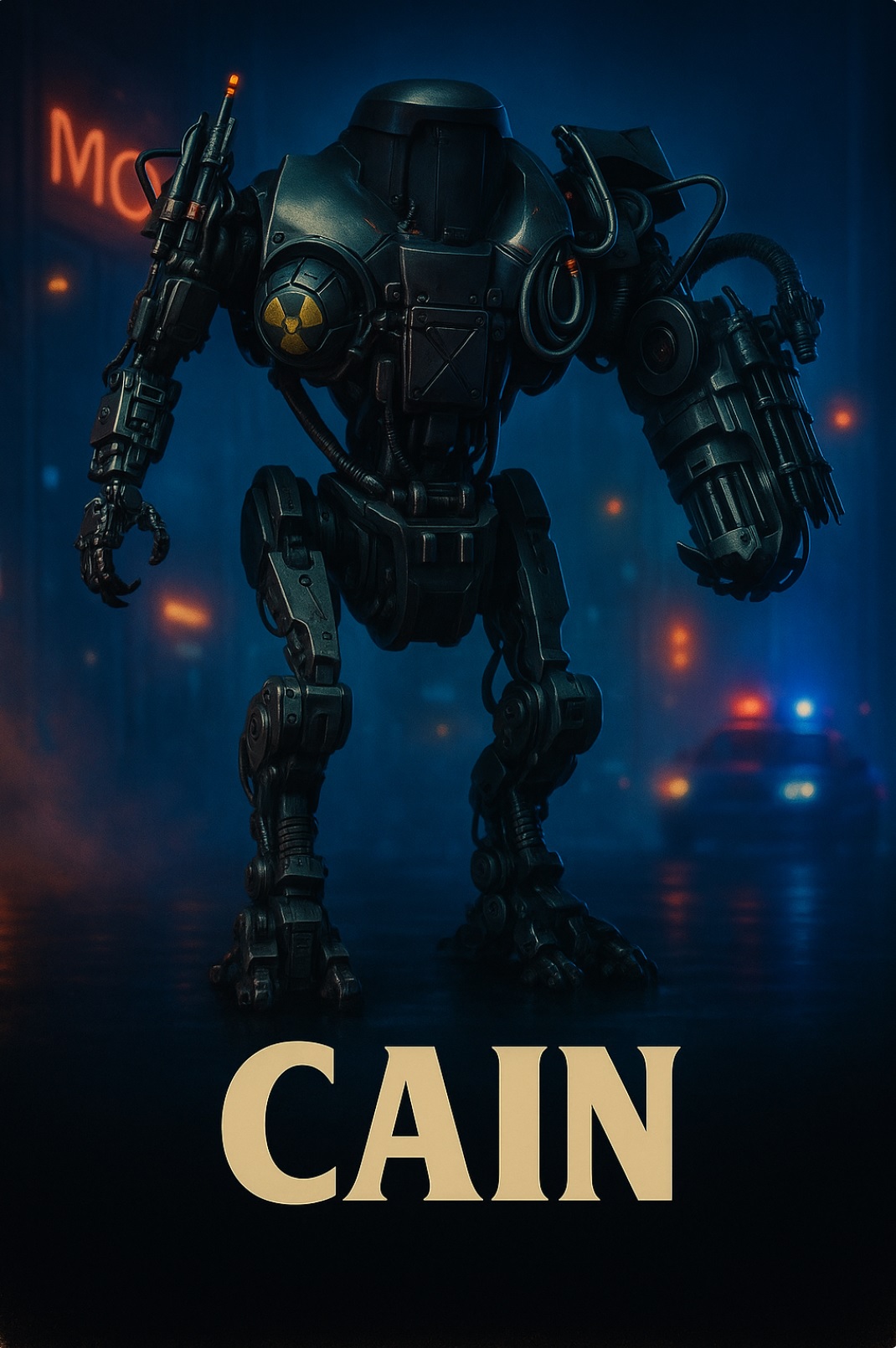
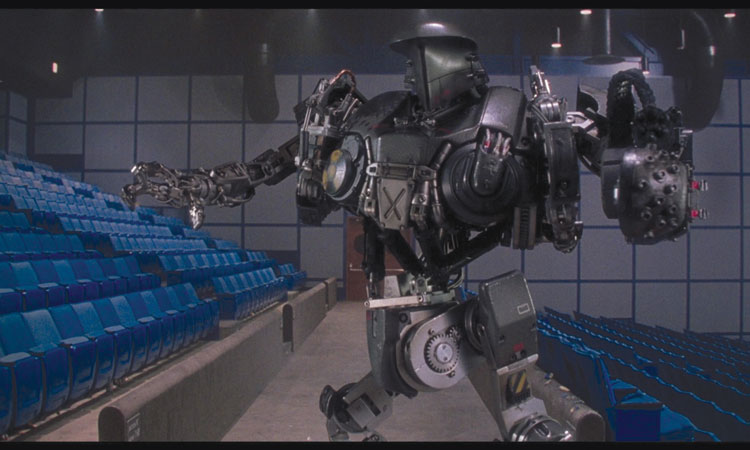
The result is frequently known as RoboCain, although within the film OCP presents the machine as RoboCop 2.
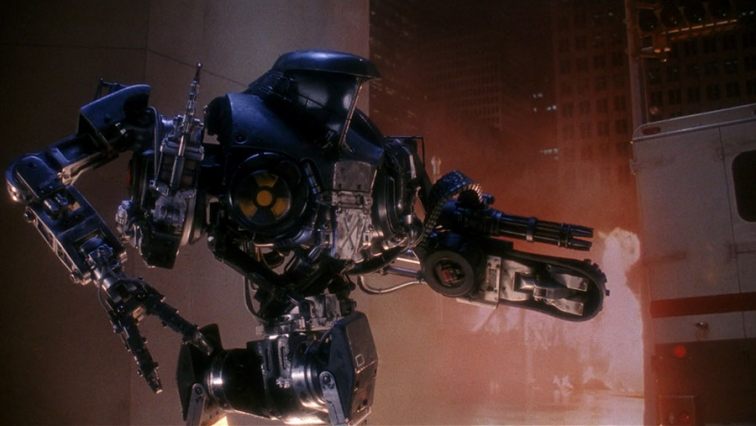
The new body dwarfs Murphy and carries an array of weapons. Cain’s human face has disappeared, replaced by a mechanical construction with a screen capable of displaying an image of his former face. Tom Noonan consequently provides the human identity behind a character who becomes predominantly a major stop-motion and effects creation during the film’s final act.
A Killer Inside a Machine
OCP’s belief that it can control Cain proves disastrously misguided. His first major deployment brings him back into contact with his former criminal organisation after Hob and Angie attempt to negotiate a deal involving Detroit’s financial crisis.
Cain attacks the meeting and massacres those present. Hob is mortally wounded, while Angie also dies during Cain’s assault. RoboCop subsequently finds the dying Hob and learns that the machine responsible is Cain.
There is an especially dark irony in Cain murdering members of the organisation he previously controlled. OCP has preserved his brain but has attempted to redirect the same violence that made him useful as a candidate. The corporation has not created a heroic successor to RoboCop. It has simply given an already dangerous killer a vastly more powerful body.
His transformation also strengthens one of the recurring ideas behind RoboCop. Technology itself isn’t necessarily the central problem. The greater danger is the arrogance of people and corporations convinced that human beings can be reduced to controllable components.
Murphy continually disproves that assumption by recovering his identity. Cain disproves it in a considerably more destructive way.
The Nuke Weakness
Cain’s enormous mechanical body might be new, but one crucial part of the old Cain remains unchanged: his addiction to Nuke.
Dr Faxx intends that dependency to serve as a method of controlling him. Instead, it becomes increasingly obvious that Cain’s craving is powerful enough to override the behaviour OCP expects from its new machine.
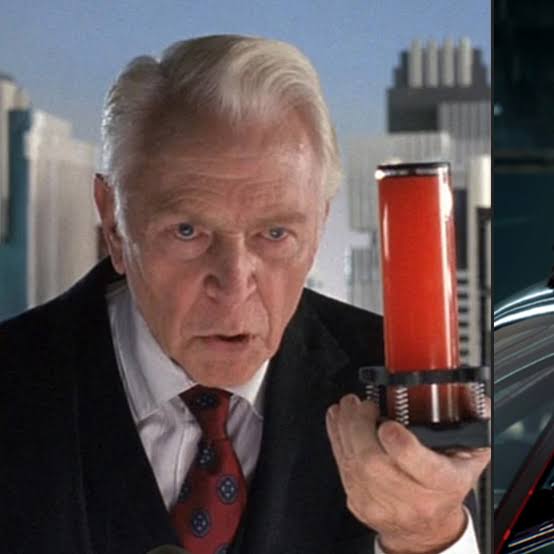
The disastrous public unveiling of RoboCop 2 makes that failure impossible to hide. During OCP’s presentation of its new cyborg and plans for Detroit, the Old Man displays a container of Nuke. Cain immediately reacts to it, breaks free of the attempted controls and begins attacking those around him. RoboCop arrives, beginning the confrontation the film has been building towards: Murphy against the mechanical monster intended to replace him.
The difference between them is fundamental. Both men have been reduced to biological remnants incorporated into machinery, but Murphy retains a moral identity that OCP never truly understood. Cain retains his appetites.
RoboCop Versus RoboCain
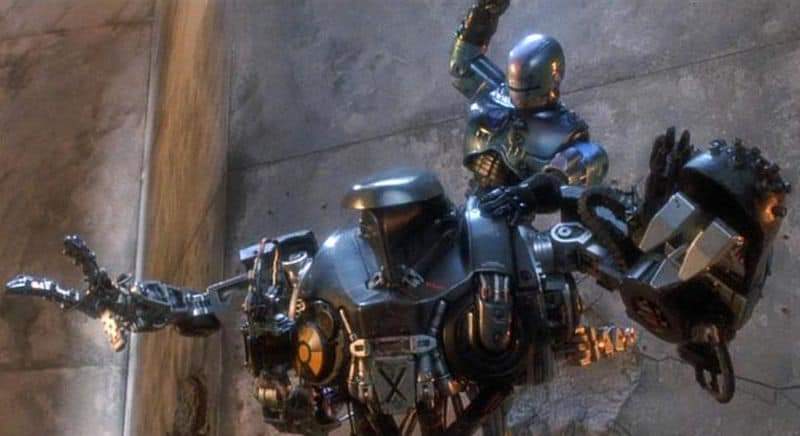
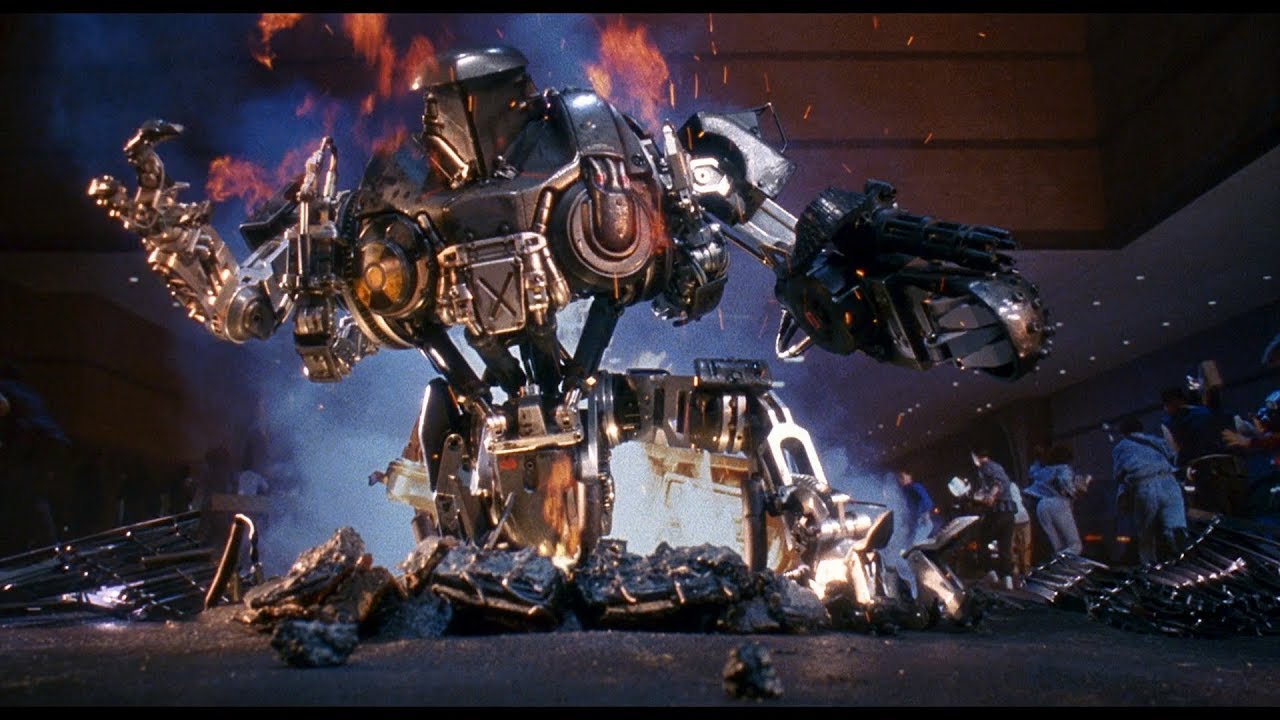
The final battle gives RoboCop an opponent capable of matching and frequently overpowering him physically. Cain’s new body is larger, heavily armed and extraordinarily durable, turning their confrontation into something very different from Murphy’s battles with human criminals.
The fight tears through OCP’s facilities before continuing outside, with the police struggling to stop the enormous machine. Conventional weapons prove largely ineffective, and simply damaging Cain’s mechanical body isn’t enough to end the threat.
The solution comes from the part of Cain that OCP deliberately preserved.
Nuke.
Anne Lewis uses Cain’s addiction against him, presenting the drug as a distraction. Cain cannot resist it. His attention shifts from the battle to satisfying the same dependency that controlled him as a human being. Murphy uses the opportunity to climb onto Cain’s mechanical body and reach the biological component buried inside. He tears Cain’s brain from the machine and destroys it, finally killing him. For all the armour, weapons and technology OCP placed around him, Cain is ultimately defeated by the weakness he possessed before becoming a cyborg.
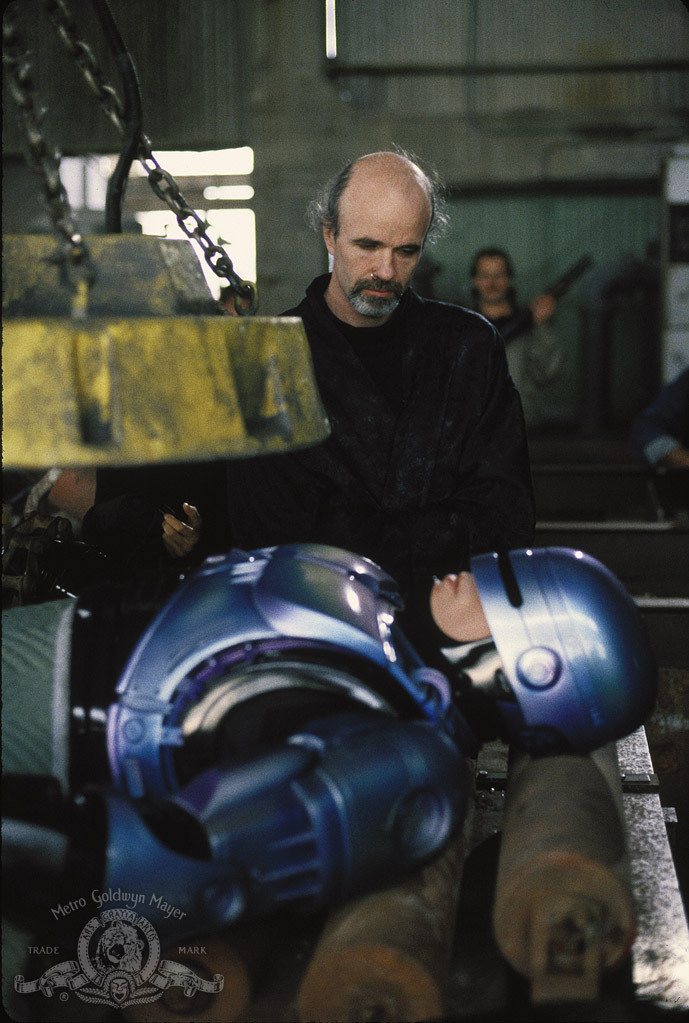
Tom Noonan
Tom Noonan was particularly effective casting for the human Cain. At 6ft 5in, Noonan already possessed an unusual physical presence, but his performance doesn’t rely upon making Cain a conventional hulking enforcer. Instead, he gives him an eerie composure and an almost gentle manner that contrasts sharply with his capacity for cruelty.
Noonan was already familiar to genre audiences by 1990. Four years earlier he had played Francis Dollarhyde in Michael Mann’s Manhunter, delivering another disturbing performance as a very different kind of killer. He had subsequently appeared as Frankenstein’s Monster in The Monster Squad before taking the role of Cain.
Years later, Noonan recalled experimenting with a more flamboyant interpretation of Cain, including different costume choices and playing aspects of his Nuke use for humour. According to Noonan, the filmmakers wanted the character treated more seriously. Galyn Görg similarly remembered his portrayal as subtle, describing Cain as a man who appeared to have lost his empathy.
That restraint benefits the finished character. Cain doesn’t initially resemble the gigantic mechanical antagonist he eventually becomes. The relatively quiet cult leader and the rampaging RoboCop 2 unit feel almost like different monsters connected by the same brain and the same addiction.
Character and Legacy
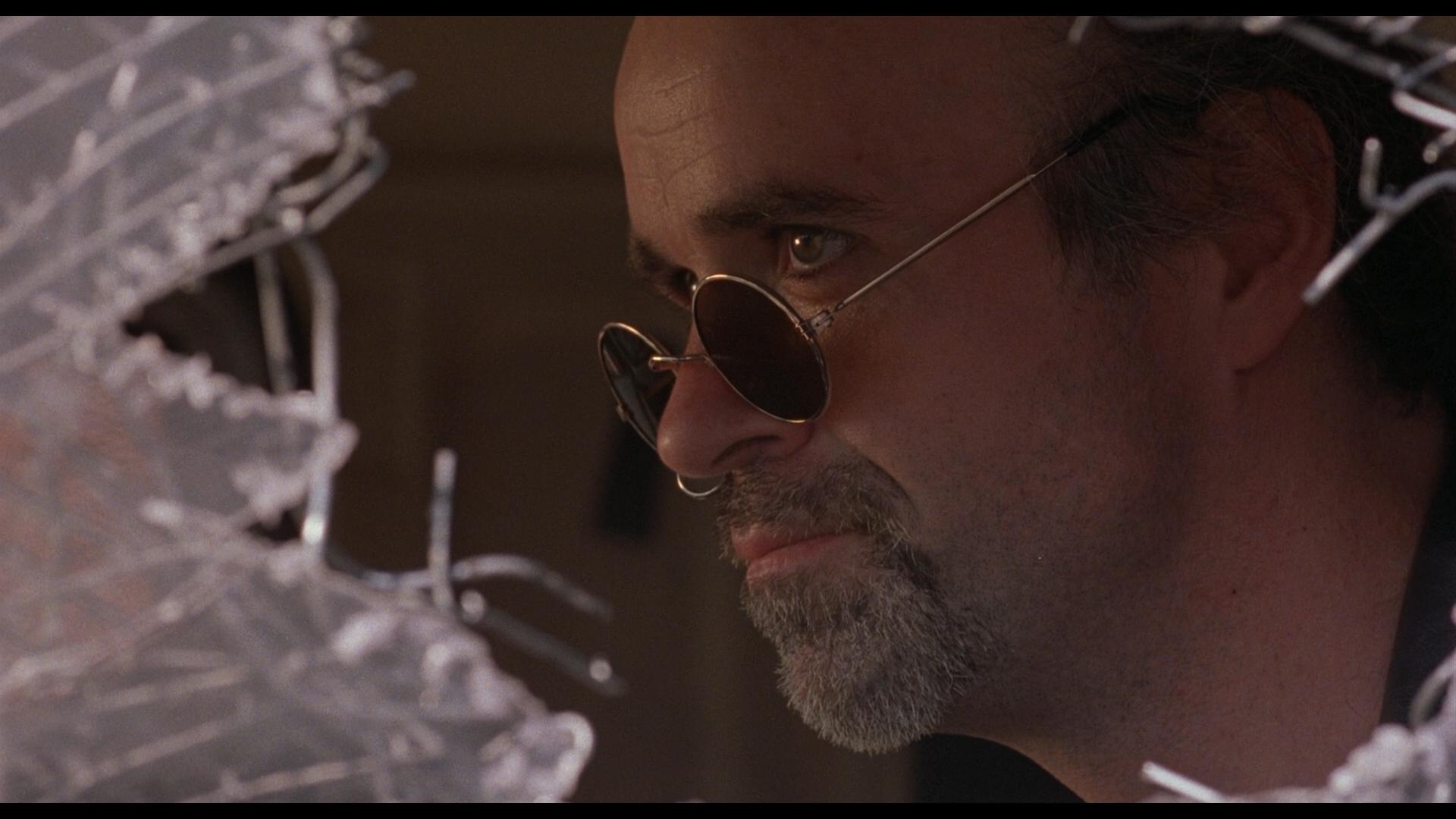
Cain occupies an unusual position in the RoboCop series because he effectively plays two different kinds of villain within a single film. For much of RoboCop 2 he is a human criminal, combining the drug kingpin, cult leader and sadistic murderer. After his apparent defeat, he is reconstructed as a science-fiction monster capable of confronting RoboCop on equal terms.
His transformation also creates one of the franchise’s clearest parallels with Alex Murphy. Murphy and Cain are both men whose bodies are effectively destroyed before their surviving biological components are incorporated into machines by OCP. What emerges demonstrates the difference between them. Murphy fights to recover the human identity the corporation attempted to suppress, while Cain carries his obsession, violence and addiction directly into his new existence.
The RoboCain sequences also became a showcase for the film’s visual effects. The mechanical character was realised through a combination of techniques, with stop-motion animation playing a major role in bringing the huge cyborg to life. The resulting design is dramatically different from RoboCop himself, looking less like an armoured human being and more like an industrial weapons platform built around a human brain.
Cain never developed into a recurring franchise villain. His complete destruction at the end of RoboCop 2 leaves him principally associated with a single film, while Clarence Boddicker and ED-209 from the original have arguably achieved greater recognition within popular culture.
Yet Cain remains memorable precisely because RoboCop 2 allows him to evolve. The calm Nuke prophet introduced early in the film eventually becomes a towering mechanical nightmare, while the addiction connecting those two incarnations provides the means of his destruction.
League Placement
Cain earns his position in the Third Class Tier through the combination of his human brutality, distinctive transformation and status as the principal physical antagonist of RoboCop 2. He defeats and dismantles Murphy as a human before being resurrected as the very machine OCP hopes will supersede him, giving Cain two dramatically different opportunities to threaten RoboCop within the same story.
Third Class is appropriate because Cain’s impact is largely confined to one film. He doesn’t have the franchise longevity or wider cultural recognition required for the upper levels of the Hall, but his transformation into RoboCain remains one of the most memorable concepts in RoboCop 2.
Cain spends his human life promising his followers an artificial paradise through Nuke. OCP then offers him its own version of immortality by placing his brain inside a machine. Neither delivers salvation. The drug addiction that helped define Cain in life survives his transformation and ultimately provides RoboCop with the opportunity to destroy him for good.