
First Appearance: The Blair Witch Project (1999)
Most Iconic Form: Unseen, malevolent forest entity
Kill Count: 3 (1999 film), dozens implied across lore
The Blair Witch Project (1999) – Fear You Never See
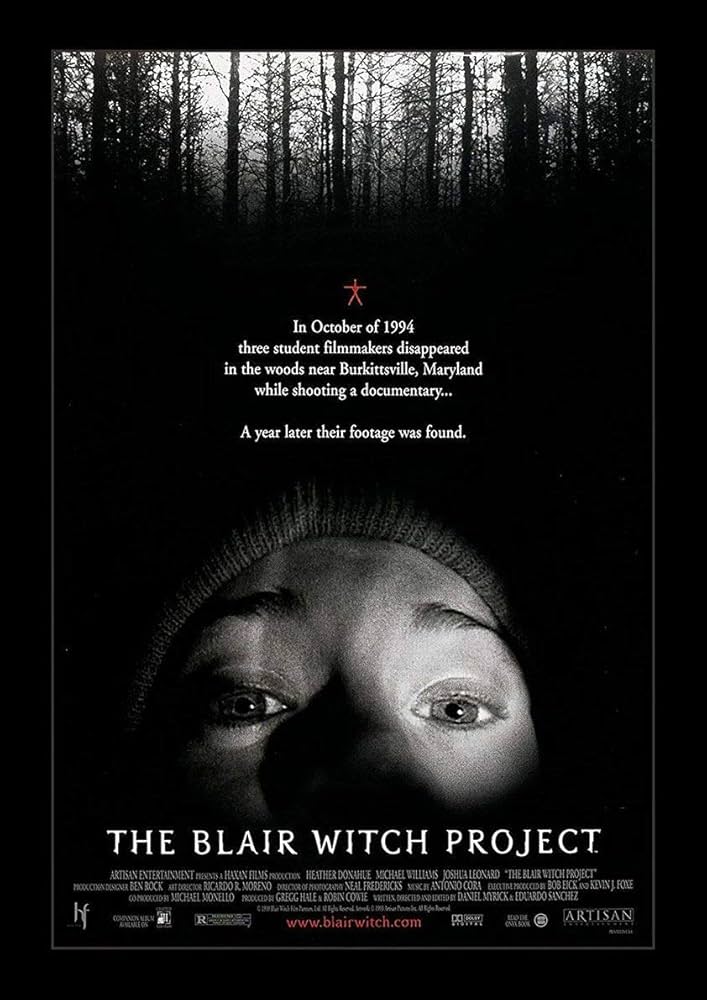
The Blair Witch is horror distilled to its purest psychological form: the unseen. In Daniel Myrick and Eduardo Sánchez’s 1999 found-footage phenomenon, three student filmmakers vanish while investigating the legend of the Blair Witch in the Black Hills Forest of Maryland. Their footage is discovered a year later. It shows a slow descent into madness, fear, and finally — vanishing.
The Blair Witch is never seen. No jump scares. No monster reveal. But her presence is felt in every stick figure, in every pile of stones, and in the oppressive silence between screams. What makes her terrifying is what’s left to the imagination — and the belief that something ancient, possibly supernatural, is playing with them like prey.
The film became a cultural phenomenon, redefining horror and launching the modern found-footage genre.
The Legend of Elly Kedward
According to lore, the Blair Witch may be Elly Kedward — a woman accused of witchcraft and banished into the freezing woods of Burkittsville in the 1700s. She was presumed dead… but strange disappearances followed. Children vanished. Townsfolk reported hauntings. The woods became cursed.
Though the “true” identity of the Blair Witch remains speculative, what’s certain is that anyone who enters the forest with ill intent—or sometimes no intent at all—risks being absorbed into her influence.
Behavior & Power
- The Blair Witch does not kill directly, but distorts time, space, and sanity.
- Victims are psychologically broken, often before any violence occurs.
- She manipulates the environment — stick figures, rock piles, and mysterious noises.
- She can trap people in an endless loop inside the forest, regardless of direction.
- Some victims vanish; others end up standing in corners… waiting.
Book of Shadows: Blair Witch 2 (2000) – Madness Outside the Woods
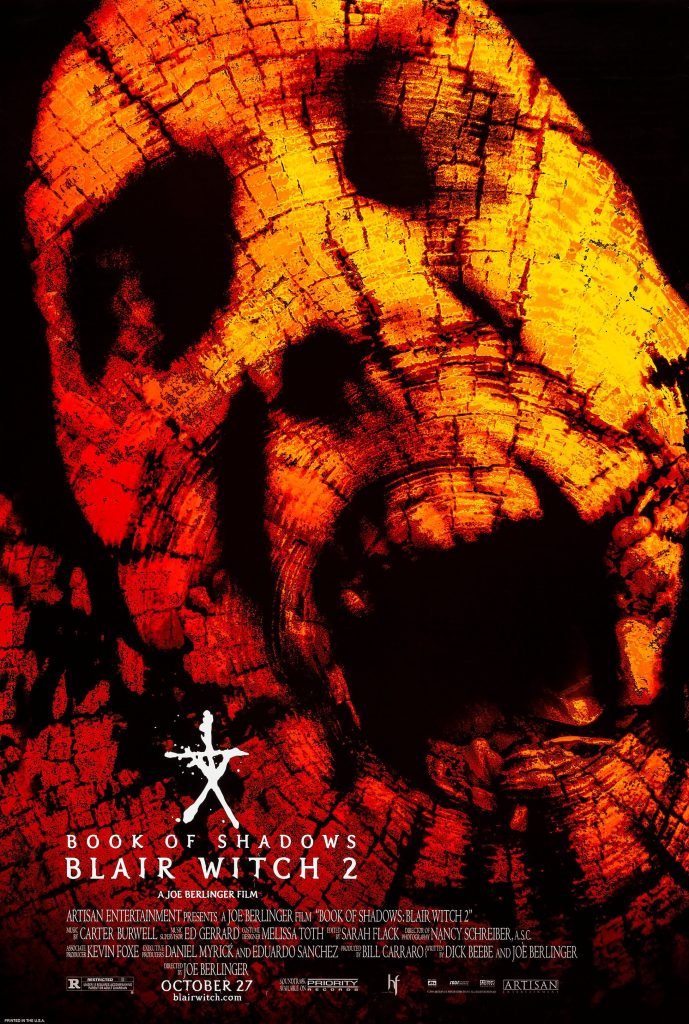
Set in a world where The Blair Witch Project exists as a film, this meta-sequel follows a group of obsessed fans who venture into the Black Hills Forest to see if the legend is real. When they wake up after a blackout, they discover their footage is missing—and someone may have been killed.
Unlike the minimalist terror of the first film, Book of Shadows leans into a paranoia-fueled, reality-bending psychological thriller. The Blair Witch’s presence here is more ambiguous, but still corrupting: warping minds, twisting timelines, and revealing hidden violence.
Though the sequel was critically panned upon release, it has gained cult status for its ambition, underlying nihilism, and commentary on media, obsession, and mass hysteria. It dares to ask: What if you became the horror you were chasing?
Blair Witch (2016) – The Forest Evolves
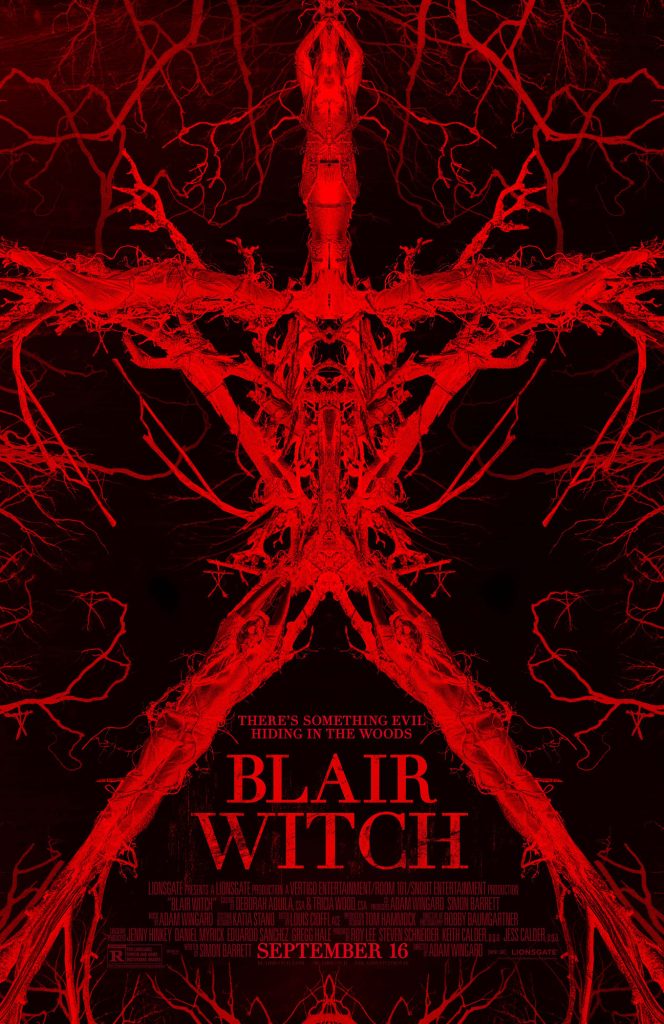
Directed by Adam Wingard, this direct sequel to the 1999 original returns to the found-footage format with modern tech: drones, earpiece cameras, GPS… none of which help. James Donahue, brother of missing filmmaker Heather from the first film, leads a new group into the Black Hills Forest hoping to find answers. They find only time loops, shifting geography, and accelerating terror.
The Blair Witch in this film is far more aggressive and dimensional. We glimpse her shadow. Victims are snatched, distorted, and psychologically undone. Tents fly, time unravels, and one horrifying sequence traps a character in a tunnel so tight she can barely breathe.
Where the 1999 film whispered, the 2016 Blair Witch screams. But it stays true to the core horror: the forest is alive, and it wants you lost, terrified, and broken.
Cultural Impact
- Pioneered the modern found-footage horror genre
- Influenced Paranormal Activity, Lake Mungo, REC, The Medium, and Skinamarink
- Made with a budget under $100K, earning over $240 million globally
- Its minimalist horror inspired an entire generation of filmmakers to rethink what’s necessary to scare
League Placement
The Blair Witch belongs in the First Class Tier — a master of atmospheric, psychological horror that never shows her face, yet continues to haunt audiences more than two decades later. She’s proof that sometimes, what you don’t see is what kills you.