Film: The Mutilator (1984)
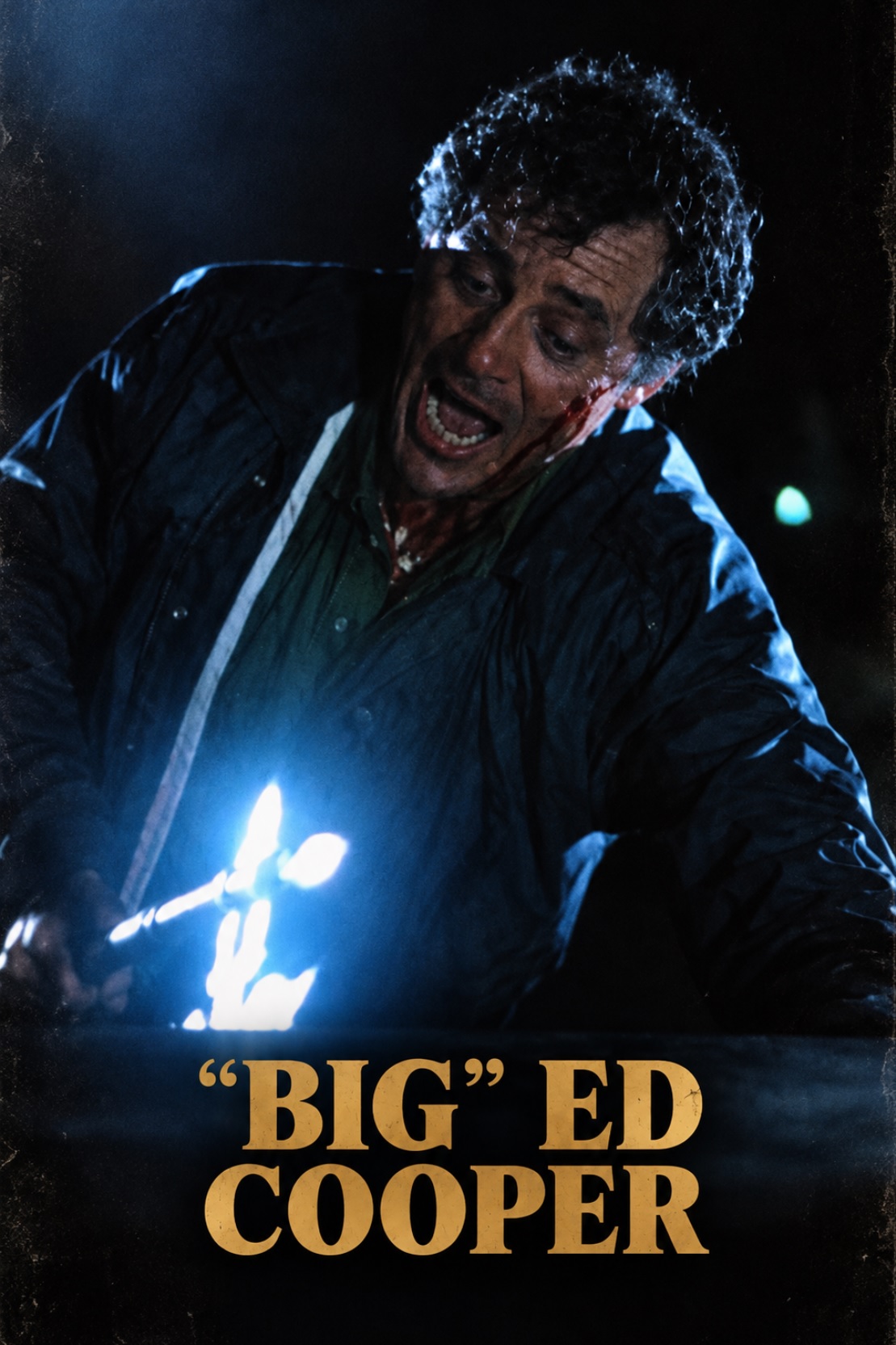
Character: “Big” Ed Cooper
Portrayed By: Jack Chatham
Classification: Human
Tier: Third Class
Film Directed By: Buddy Cooper and John Douglass
Written By: Buddy Cooper
Original Title: Fall Break
“Big” Ed Cooper
The golden age of the American slasher produced an enormous number of masked maniacs, supernatural killers and silent stalkers, but The Mutilator took a somewhat different approach with “Big” Ed Cooper. There is no mask, no supernatural resurrection and very little mystery surrounding the man eventually revealed as the killer. Big Ed is a grieving father whose life was shattered when his young son accidentally shot and killed his mother, and years later that grief has curdled into murderous rage.
Played by Jack Chatham, Big Ed is an imposing but strangely understated presence. He spends much of The Mutilator lurking around his beach property, watching his son and his friends while preparing to kill them with whatever hunting, fishing or power tools are available. The film gives him an appropriately grisly collection of weapons, including an axe, chainsaw, pitchfork and fishing gaff, allowing Big Ed to become responsible for some of the most graphic deaths in 1980s slasher cinema.
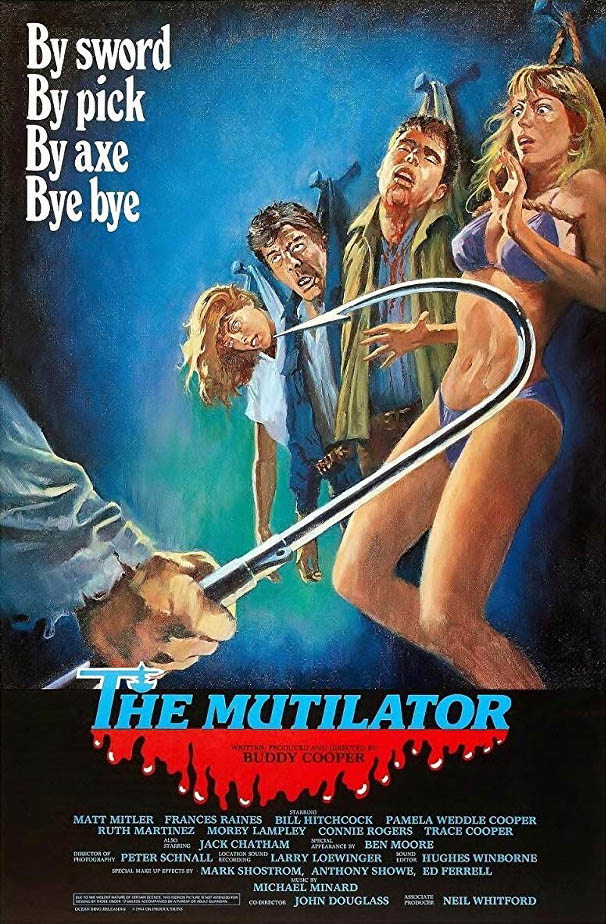
Originally made under the considerably more cheerful title Fall Break, The Mutilator was filmed in 1983 and eventually received its American theatrical release in 1985. Writer-director Buddy Cooper conceived it as a deliberately bloody contribution to the slasher boom, and decades later the film has developed a cult following that has kept Big Ed hunting long after many of his contemporaries disappeared into obscurity.
The Death That Creates Big Ed
The origins of Big Ed’s madness are established immediately. As a young boy, Ed Jr. decides to clean his father’s collection of guns as a birthday present. While handling one of the weapons, he accidentally fires it and kills his mother.
Big Ed arrives home to discover his wife dead and his young son responsible. His reaction immediately establishes the psychological wound that will define the rest of his life. He strikes the boy, then carries his wife’s body away and sits with her, pouring a drink as though desperately attempting to deny what has happened.
The film then jumps forward several years. Ed Jr. is now a college student, but his relationship with his father is clearly distant. Big Ed has never truly recovered from the death of his wife, and the accident that destroyed the family has remained with him.
The opening gives The Mutilator’s killer a motivation more personal than many of the slashers surrounding it. Big Ed isn’t murdering because a group of teenagers happen to wander into his territory. His own son is at the centre of his rage, while Ed’s friends become additional victims after accompanying him into a place where Big Ed has already decided to kill.
Fall Break
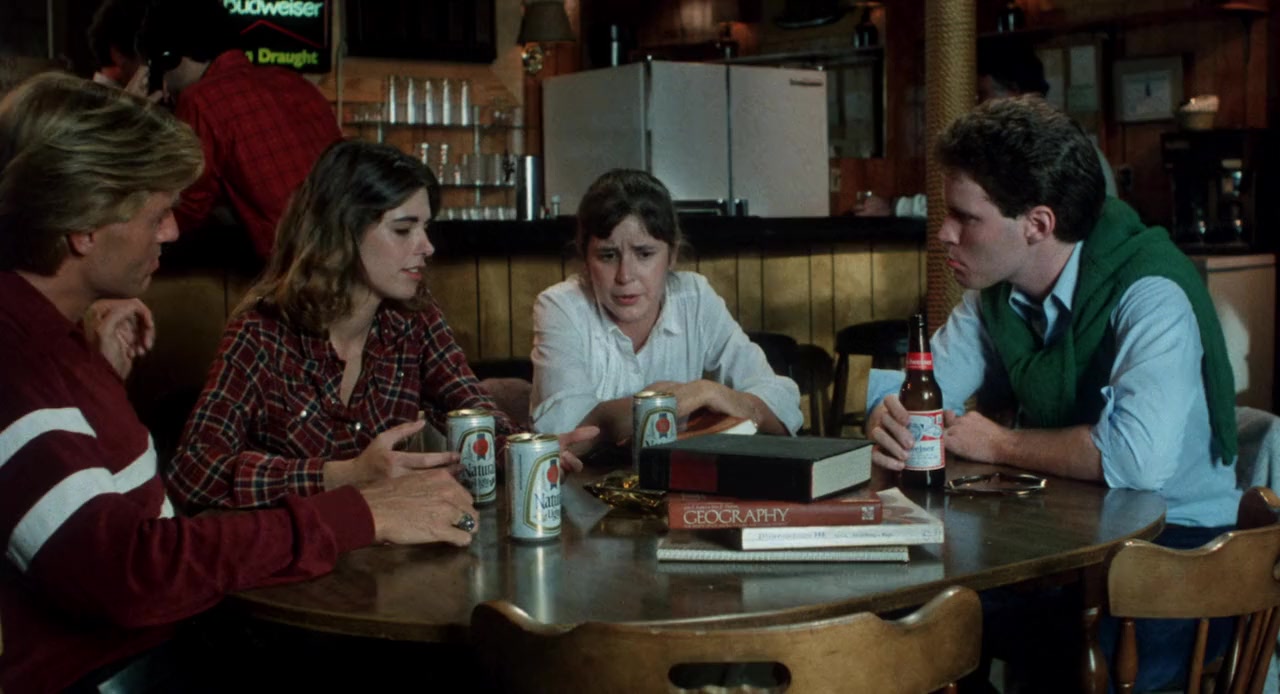
Years after his mother’s death, Ed Jr. receives a telephone call from his estranged father asking him to close the family’s beach condominium for the winter. Ed’s friends Pam, Ralph, Sue, Mike and Linda decide to accompany him, transforming an unwanted job into an opportunity for a fall break by the sea.
The property gives them plenty of reasons to understand what kind of man Big Ed is. He is an enthusiastic hunter and fisherman, and his trophies and equipment fill the place. Ed tells his friends stories about his father’s exploits, including the brutal killing and gutting of animals. What initially seems like colourful background information becomes considerably more ominous once Big Ed begins using the same skills against human beings.
Ed also notices that a battle axe is missing from its usual position. His friends suggest that somebody may have broken into the property, but Ed assumes his father has simply moved it. He is wrong. Big Ed is already there.
Hunting His Son
Big Ed hides around the property while watching Ed Jr. and his friends. At one point he cradles the missing axe while imagining killing his son as a child, making the real target of his anger unmistakable.
There is an uncomfortable irony running through The Mutilator because Ed Jr. is not responsible for his mother’s death in any meaningful adult sense. He was a child involved in a horrific accident. Big Ed nevertheless appears to have spent years directing his grief and hatred towards the son who survived.
By the time Ed returns to the beach property, his father has crossed completely into homicidal madness. The hunting skills that once filled his trophy room are now directed towards people, and Ed’s friends effectively become prey moving through Big Ed’s territory.
Unlike killers who adopt a single signature weapon, Big Ed is happy to use whatever suits the opportunity. The result is a series of murders built around different implements associated with his life as a hunter, fisherman and outdoorsman.
The Murders Begin
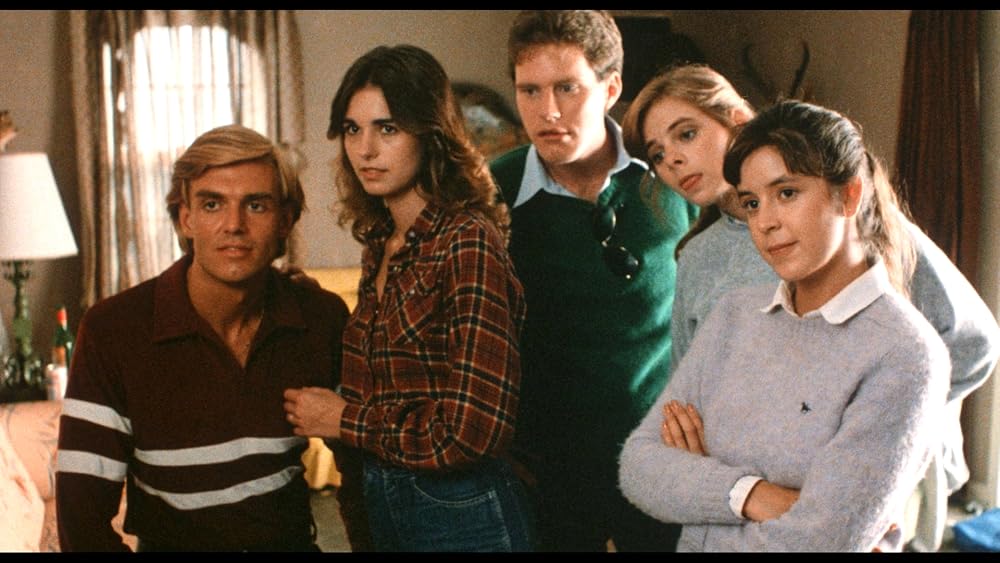
Linda and Mike become two of Big Ed’s early targets after leaving the others to go swimming. Big Ed attacks Linda at the pool and carries away her body without Mike initially realising what has happened.
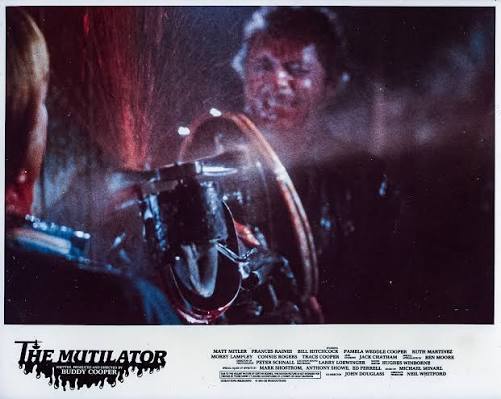
Mike subsequently follows a trail that leads him into a work area, where Big Ed attacks him with a chainsaw. The sequence establishes that The Mutilator intends to live up to its eventual title. Big Ed doesn’t simply dispatch victims quickly. His attacks are designed around physical destruction, giving the film opportunities to showcase the elaborate gore effects that became central to its reputation.
A police officer investigating the area fares no better. Big Ed ambushes and decapitates him, removing one of the few potential sources of outside help and leaving the young people increasingly isolated.
Ralph later goes searching when Mike and Linda remain missing. Big Ed catches him and kills him with a pitchfork, continuing the film’s pattern of giving its killer a varied collection of weapons rather than a single trademark implement.
The murders progressively transform the seemingly carefree beach break into a hunting ground. The title Fall Break may have sounded almost like a college comedy, but the alternative title The Mutilator ultimately proved considerably more representative of what Big Ed does to anyone unfortunate enough to encounter him.
The Gaff
The Mutilator’s most infamous murder involves Sue and a fishing gaff. Earlier in the film, Ed explains the tool to his friends as part of Big Ed’s fishing equipment. A gaff is used to hook large fish and bring them aboard, establishing the implement long before it becomes a murder weapon.
Big Ed later uses it on Sue in an extraordinarily graphic attack. The sequence became the film’s most notorious killing and remains the moment most frequently associated with The Mutilator’s reputation for extreme gore.
The murder also demonstrates how effectively the film connects Big Ed’s identity as a hunter and fisherman with his killing methods. His victims have effectively replaced the animals that once became his trophies. The tools surrounding the beach property are not random objects conveniently available to a slasher. They belong to Big Ed’s established world.
That gives the character a simple but effective identity. He is a trophy hunter who has begun hunting people.
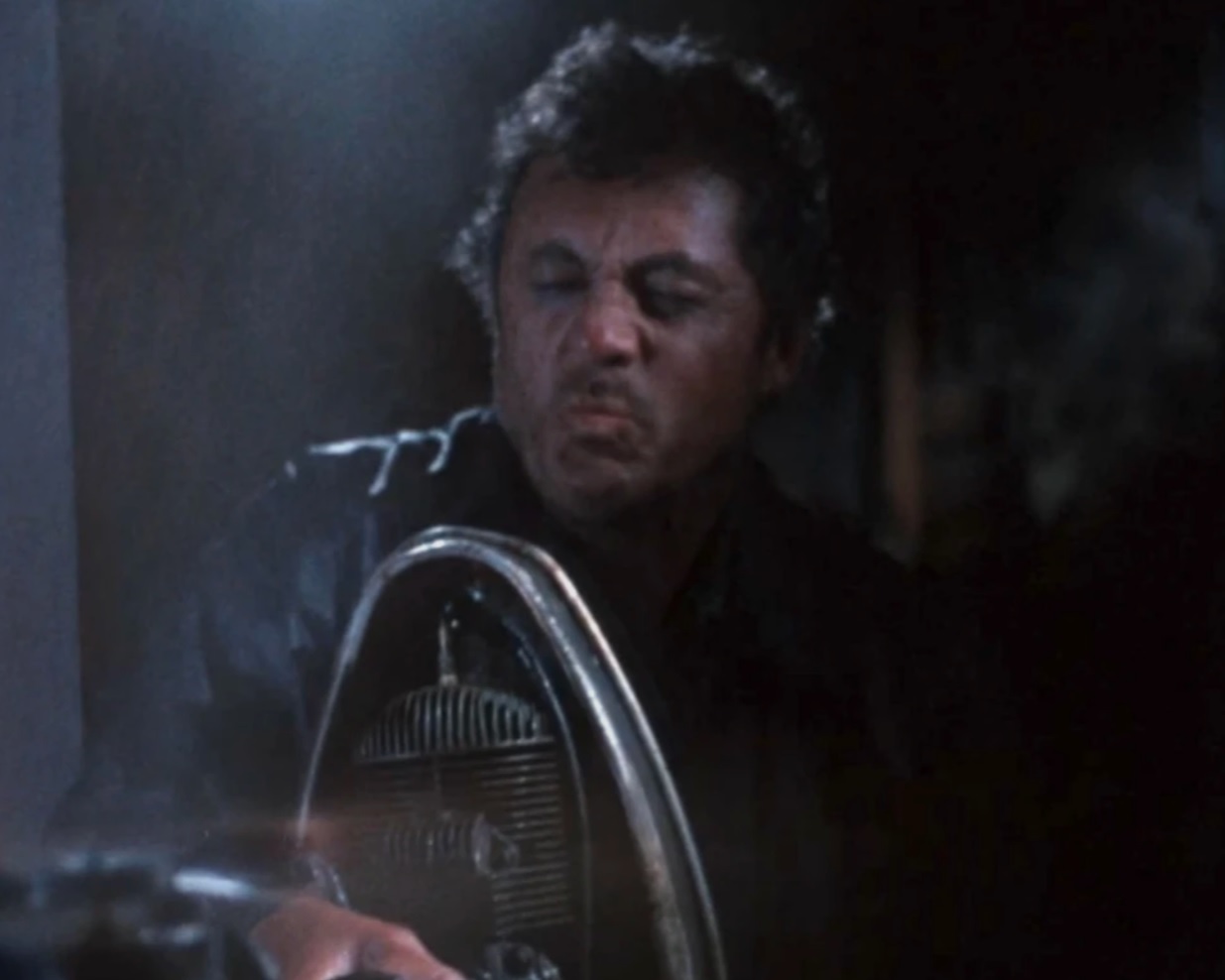
A Father and Son
Eventually Ed Jr. and Pam discover the horrifying truth about what has been happening around them. The killer isn’t an anonymous intruder who happened to find the group. It is Ed’s own father.
That revelation brings the film back to the tragedy with which it began. Big Ed’s murderous rampage has its roots in the accidental death of his wife, while the son he blamed for that death is now forced to fight for his life against him.
Big Ed pursues the survivors and proves remarkably difficult to stop. Even serious injuries don’t immediately end the threat, giving the otherwise entirely human killer some of the exaggerated durability audiences had come to expect from the slasher genre.
His eventual fate is appropriately gruesome. During the final struggle, Big Ed is struck by a car and effectively cut in half. Even after suffering catastrophic injuries, he makes one final attempt to attack before finally dying.
For Ed Jr., the end of the nightmare leaves an extraordinary amount of trauma behind. An accident during his childhood destroyed his mother and effectively destroyed his relationship with his father. Years later, that same tragedy returns in the form of Big Ed himself.
Jack Chatham
Jack Chatham’s performance is central to Big Ed’s effectiveness, particularly because the character has relatively little dialogue. The role depends much more upon Chatham’s physical presence, expressions and ability to appear threatening while silently stalking the other characters.
Buddy Cooper later recalled that Chatham asked him for guidance about the character. Cooper’s description was remarkably straightforward: Big Ed was essentially one mean individual. Chatham took that limited direction and built the character around it.
There is an interesting contrast between the character and the performer. Cooper remembered Chatham as an extremely kind and gentle person who had worked as a high-school teacher. On screen, however, he becomes an intimidating middle-aged hunter capable of treating human beings like animals awaiting slaughter.
Chatham also benefits from not being hidden behind a mask. Big Ed’s face remains visible, allowing the performance itself to create the menace. He isn’t a faceless embodiment of evil. He is recognisably Ed’s father, which makes the eventual confrontation between them considerably more personal.
Creating The Mutilator
The Mutilator was the creation of Buddy Cooper, who wrote the screenplay and directed the film, with John Douglass serving as co-director. Cooper conceived the project during the early 1980s, when slasher films were proving commercially attractive and independent filmmakers had demonstrated that comparatively inexpensive horror pictures could find substantial audiences.
The film was shot in North Carolina, with production taking place in 1983. Cooper originally called the project Fall Break, reflecting the holiday taken by Ed and his friends. The title even inspired the film’s famously upbeat theme song, which creates an amusing contrast with the carnage that follows.
The title eventually became The Mutilator after a distributor concluded that Fall Break and its existing advertising campaign weren’t effectively selling the horror film. The replacement could hardly have been more direct, immediately promising prospective audiences exactly the kind of violent experience the movie intended to deliver.
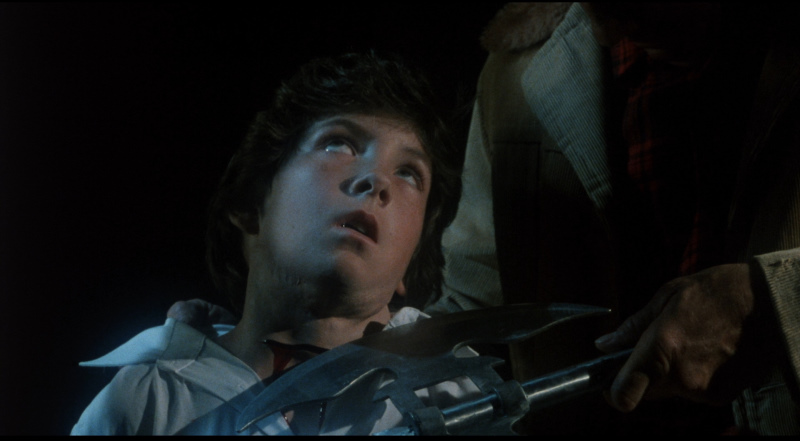
Special make-up effects became an essential component of that promise. Mark Shostrom worked as makeup supervisor and special make-up effects artist early in a career that would later include major genre films. The production placed considerable emphasis on practical gore, helping The Mutilator distinguish itself within an already crowded slasher market.
Buddy Cooper has said that the intention was to make something that would appeal directly to gore fans. That approach worked. Whatever limitations the film may possess, nobody could reasonably accuse The Mutilator of being reluctant to deliver elaborate death scenes.
From Obscurity to Cult Slasher
The Mutilator didn’t become a major mainstream horror franchise, and Big Ed never achieved the widespread recognition enjoyed by Jason Voorhees, Michael Myers or Freddy Krueger. The film nevertheless survived through home video, where its gore, unusual theme song and straightforward slasher pleasures gradually attracted a dedicated following.
Its reputation received a substantial boost from later restorations and home entertainment releases. The availability of the film in better-quality presentations allowed a new generation of horror fans to discover Big Ed’s rampage without relying upon ageing VHS copies and heavily compromised versions.
Buddy Cooper has himself credited home-video exposure with helping the film endure, particularly its VHS life and a later Blu-ray and DVD release. What had originally been intended partly as an opportunity for Cooper to learn how to make a feature unexpectedly developed a lifespan extending decades beyond its production.
The continued affection for the film eventually became substantial enough for Cooper to return to the property with Mutilator 2, demonstrating just how far The Mutilator had travelled from its origins as a regional independent slasher.
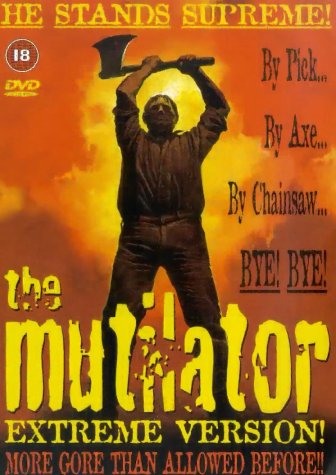
Character and Legacy
“Big” Ed Cooper represents the kind of slasher villain who flourished during the genre’s early-1980s boom but was increasingly overshadowed by the franchise monsters. He doesn’t possess supernatural powers, an iconic mask or an elaborate mythology. What he has instead is a simple motivation, an intimidating physical presence and an enthusiasm for turning hunting and fishing equipment against human prey.
The opening tragedy also separates him from killers whose backgrounds amount to little more than an excuse for murder. Big Ed’s hatred has a clear source. His wife was accidentally killed by their young son, and rather than processing that loss, he allowed his grief and resentment to consume him. The film doesn’t suggest that this excuses anything he subsequently does, but it provides a direct line between the devastated husband seen at the beginning and the murderer stalking the beach property years later.
His collection of weapons gives him another distinguishing feature. Big Ed doesn’t become associated with one implement in the way Jason became associated with the machete or Leatherface with the chainsaw. An axe, chainsaw, pitchfork, gaff and other tools become extensions of his experience as a hunter and fisherman.
Most importantly, The Mutilator gives Big Ed some genuinely memorable kills. In a subgenre where a villain’s reputation is often inseparable from the inventiveness of the murders, the practical gore effects ensured that Big Ed would have something capable of keeping him in horror conversations long after the film’s original release.
He remains a cult figure rather than a mainstream horror icon, but that is precisely why the Hall of Killers has a Third Class.
League Placement
“Big” Ed Cooper belongs firmly in the Third Class Tier of the Hall of Killers. He comes from a film that developed a genuine cult following and is responsible for several memorable murders, but his recognition remains largely concentrated among dedicated slasher and exploitation fans rather than the wider horror audience.
What Big Ed lacks in franchise recognition, he compensates for with brutality. His hunting background gives his murders a coherent identity, Jack Chatham gives him a threatening human presence, and the practical effects make his attacks considerably more memorable than those of many forgotten killers produced during the same slasher boom.
There is also something appropriately grim about the character’s journey. Big Ed begins as a husband confronted with an unimaginable family tragedy. Instead of recovering from it, he spends years allowing grief and hatred to consume him until the hunter eventually turns the people around him into prey.