Strawstalker Review: Influencers, Scarecrows and Unwanted Attention
There was a time when moving into a new house meant unpacking your belongings, meeting the neighbours and discovering that the previous occupants had left something unpleasant in the fridge. Nowadays, apparently, you must film the entire experience, upload it to the internet and hope somebody finds your kitchen sufficiently interesting to press the like button. In Strawstalker, however, the biggest problem isn’t the neighbours. It’s a scarecrow that appears to have developed an unhealthy interest in social media influencers.
Written and directed by George Henry Horton, who also stars, Strawstalker is a found-footage horror comedy that combines influencer culture with a supernatural threat. It’s an interesting premise, although anybody who has spent more than five minutes scrolling through TikTok will probably agree that the internet is already frightening enough without introducing a murderous agricultural decoration.
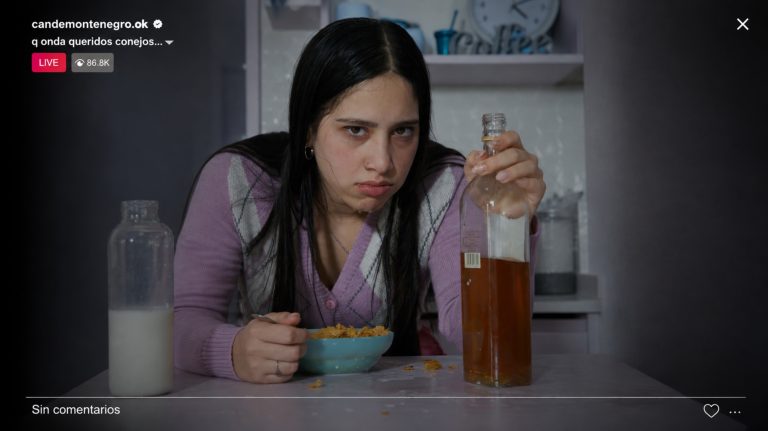
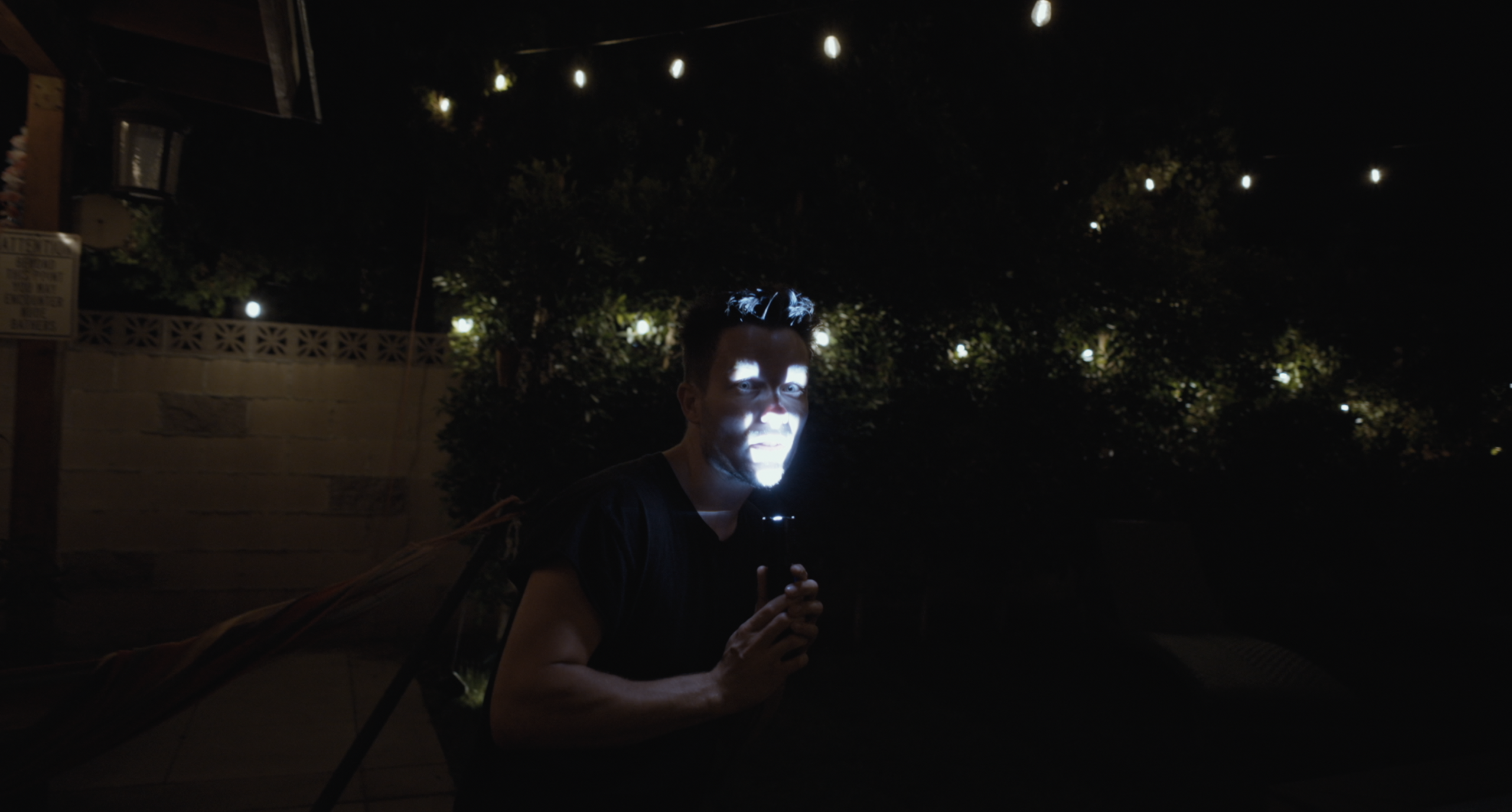
The film begins with Sandy (Vincent Ranola), an online personality presenting a livestream called Finance & Flirt under the name Kurt. Unfortunately for him, fellow content creators Henry (Horton) and Haley (Branika Scott) have exposed his real identity to his audience, leaving him furious and determined to get his own back. Sandy subsequently presents footage apparently showing himself breaking into their home, before insisting that it is merely a deepfake. Whether that explanation should be believed is another matter, but it’s certainly an interesting way to reassure your followers that you haven’t committed a crime.
Sandy then introduces recordings documenting Henry and Haley’s move to Los Angeles, where the couple hope to establish themselves as successful influencers. They film practically everything, from exploring their new accommodation to dressing up in costumes they discover in one of the bedrooms. Neither is particularly endearing, and their constant need to perform for the camera makes it difficult to care too deeply about their ambitions. Still, there is something appropriate about placing two attention-seeking personalities in a horror film where being watched becomes a considerably less attractive prospect.
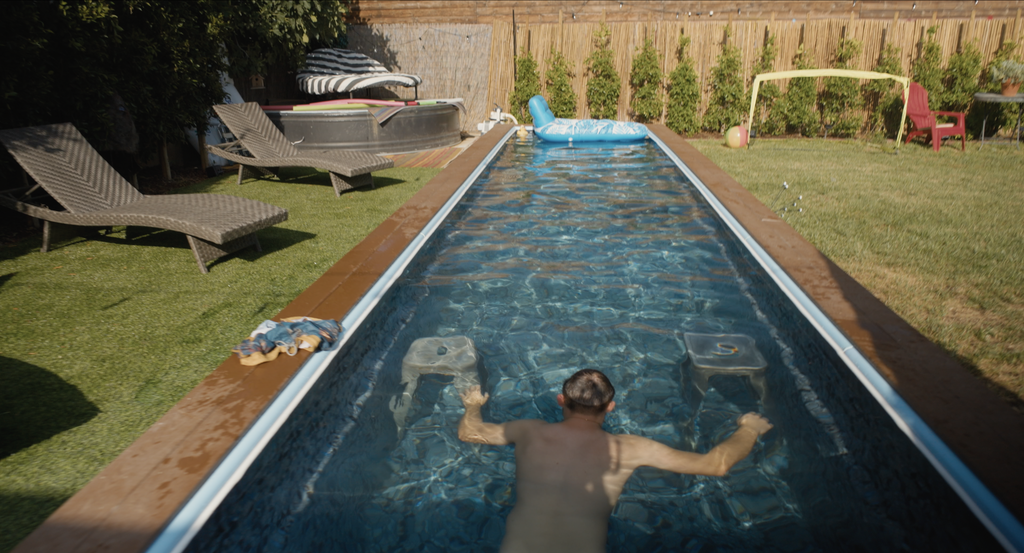
One morning, the couple decide to go skinny-dipping in what might genuinely be the world’s narrowest swimming pool. Henry enthusiastically strips off, giving the audience an unexpected view of his backside before jumping into the water and pretending to drown. Quite why he considers this an excellent way to entertain his girlfriend is anybody’s guess, but the moment takes an unpleasant turn when Haley notices what appears to be somebody watching them from the hedges.
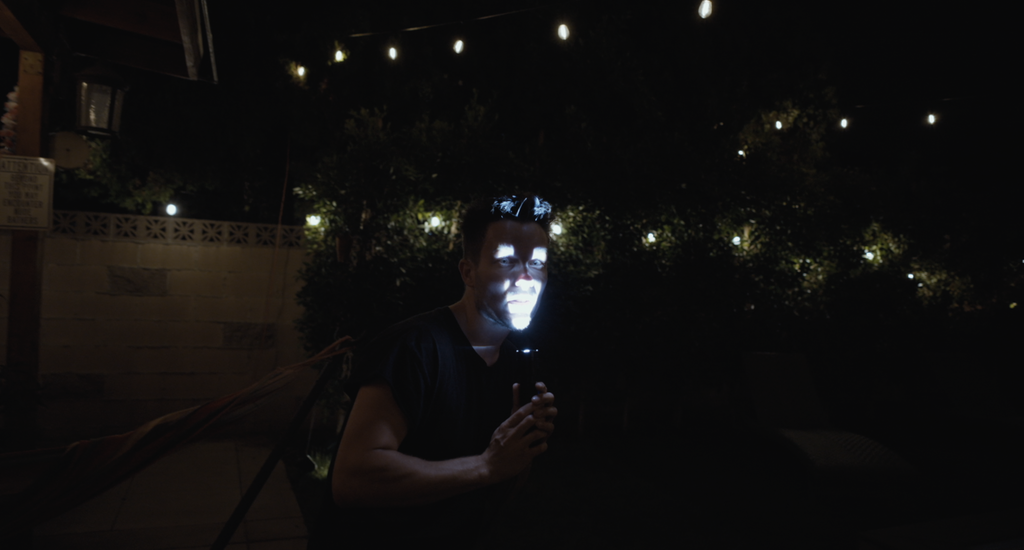
Henry climbs out to investigate, thankfully allowing the film to concentrate on something other than his bare arse, and discovers a scarecrow with a skull-like face, a cloth covering and straw protruding from its head. It’s hardly the sort of garden ornament you’d expect to find beside a Los Angeles property, unless the estate agent neglected to mention that the house comes with its own supernatural security system.
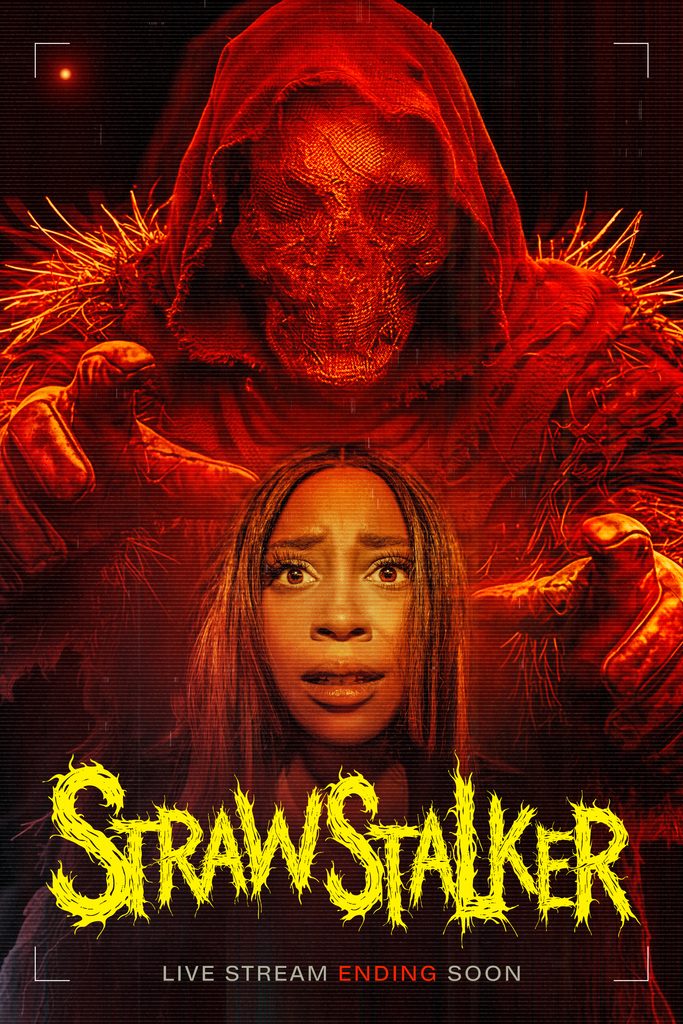
Things become stranger when the scarecrow starts appearing in different positions. During one nighttime incident, Haley hears a sweeping noise outside and approaches the rear door to investigate. Henry suddenly appears behind her, attempting to frighten her himself, before the pair become concerned about the scarecrow’s whereabouts. A distant scream draws their attention away from the garden, and when they look back, the figure appears to have moved.
These sequences make reasonable use of a simple horror idea. An object that shouldn’t move becomes unsettling when it repeatedly turns up somewhere unexpected, and Horton doesn’t need elaborate effects to establish that something is wrong. The trouble is that Strawstalker spends quite some time returning to variations of this same trick, when the audience is already waiting for the threat to develop into something more substantial.
The found-footage presentation also has its problems. Despite supposedly watching recordings made by the characters, we frequently hear conventional horror music and sudden audio cues designed to accompany frightening moments. Matthew James provides the score, and while the music establishes the appropriate atmosphere, these additions sometimes weaken the impression that we’re witnessing genuine events.
There is an explanation for this within the story, as Sandy has assembled the recordings into something resembling a horror film. Nevertheless, understanding why the music is there doesn’t necessarily make the scares more effective. Sometimes a figure standing silently in the background is considerably more unsettling than a soundtrack enthusiastically announcing that we’re supposed to be frightened.
As the story develops, the neighbourhood’s agricultural past becomes connected to the strange events surrounding the house. It’s an interesting direction, placing a traditional figure associated with farmland in the middle of a modern residential setting. Henry and Haley have arrived in Los Angeles hoping to build their futures through technology and online popularity, only to discover that something considerably older has other plans.
The danger eventually intensifies during a party at the property, pushing the story beyond the scarecrow’s earlier appearances and towards more direct horror. However, Strawstalker takes a while to truly start delivering on its premise, and the repeated encounters with the apparently moving figure don’t always provide enough variety to sustain the suspense. There are only so many times a scarecrow can change position before you begin wondering whether it’s actually going to do anything with its evening.
Horton clearly has fun with the absurdities of influencer culture, particularly the way Henry and Haley seem incapable of experiencing anything without turning it into material for their followers. Their constant filming becomes an important part of the horror, transforming the cameras they use for self-promotion into a record of increasingly disturbing events.
The film also incorporates different recording formats, including livestreams and phone footage, helping establish the couple’s online world. Derek Matarangas is credited as cinematographer, with Rommel Villa handling the editing, and the combination of these formats gives Strawstalker a presentation suited to its subject matter.
Gary Kasper portrays the titular Strawstalker, whose skull-like appearance provides the film with a recognisable antagonist. There’s something appealing about using a scarecrow rather than another masked intruder or conventional supernatural figure, particularly when its presence can initially be established through little more than an unsettling silhouette and a change of position.
The biggest obstacle is the central couple. Henry and Haley’s exaggerated personalities suit the film’s satirical intentions, but their constant enthusiasm for themselves can become exhausting. When a horror film places its characters in danger, it helps enormously if the audience wants them to survive, rather than wondering whether the scarecrow might persuade them to delete their social media accounts.
Even so, Strawstalker has an amusing premise and a willingness to embrace its own ridiculousness. The combination of online vanity, mysterious recordings and an old-fashioned horror creature gives Horton plenty to work with, even if the execution is sometimes uneven and the scares take longer than they should to develop.
Ultimately, Strawstalker is a playful independent horror with an unusual central monster and a recognisable target for its satire. Its characters won’t appeal to everybody, the found-footage illusion isn’t always convincing and the supernatural threat could benefit from a little more urgency, but there are enough ideas here to make it worth considering for fans of quirky, low-budget horror.
And perhaps there’s a useful lesson buried beneath all that straw. If your new home comes with a scarecrow that keeps moving around the garden, forget about recording a reaction video. Pack your belongings, cancel the livestream and find somewhere else to live.
Preferably somewhere with a swimming pool wide enough to turn around in.