The Unmade: John Carpenter’s Creature from the Black Lagoon
There are certain combinations of filmmaker and material that seem so obvious that discovering they nearly happened can be painful. George A. Romero and Resident Evil. Vincent Ward and Alien 3. Somewhere on that list belongs John Carpenter and Creature from the Black Lagoon, a project that progressed far beyond Carpenter simply saying he would like to make it. A screenplay was written, development work was undertaken and legendary make-up artist Rick Baker designed a new version of the Gill-man. Yet Carpenter never got to take Universal’s amphibious monster back into the water.
What makes this particular lost film fascinating is that Carpenter wasn’t simply a director Universal approached with another remake. The Creature was something he genuinely wanted to tackle. Carpenter had grown up admiring the 1954 film and was particularly struck by one of its most famous sequences, in which the Creature swims beneath an oblivious Kay Lawrence. His intention was not to throw away everything audiences recognised and reinvent the Gill-man beyond recognition. Carpenter wanted to preserve what worked about the original while finding ways of making the monster and its mythology work for a contemporary audience. Considering what he had already accomplished when revisiting another 1950s creature feature with The Thing, the prospect remains irresistible.
The Last Great Universal Monster
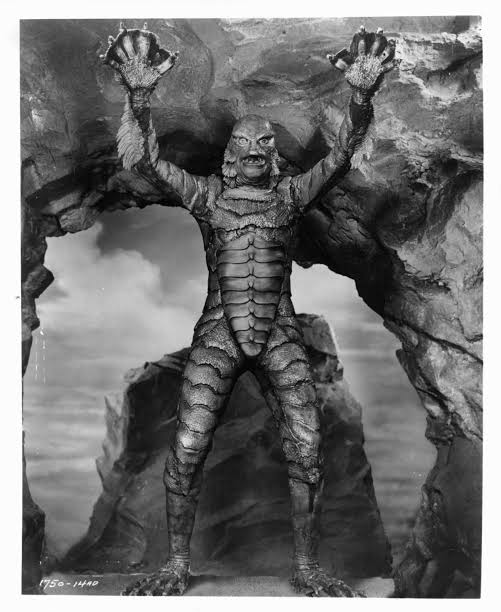
Directed by Jack Arnold and released in 1954, Creature from the Black Lagoon arrived considerably later than the films that established Universal’s most famous monsters. Dracula, Frankenstein’s Monster, the Mummy, the Invisible Man and the Wolf Man had already become horror royalty by the time audiences first descended into the Black Lagoon. The film followed an expedition into the Amazon after the discovery of fossilised evidence suggesting an evolutionary link between marine and terrestrial life. The scientists eventually entered a remote lagoon where they discovered something considerably more important, and dangerous, than a fossil: a living amphibious humanoid.
The Creature, played on land by Ben Chapman and underwater by Ricou Browning, became an icon. Much of the Gill-man’s enduring appeal came from the extraordinary creature design, created through the work of Universal’s make-up department, with Milicent Patrick now widely recognised for her crucial contribution to developing its appearance. The Creature was frightening, but there was also something strangely sympathetic about him. He wasn’t Dracula deliberately selecting another victim or a calculating human murderer. He was an animal, an evolutionary mystery and, increasingly, a tragic outsider fascinated by Julie Adams’ Kay Lawrence.
Two sequels followed, Revenge of the Creature in 1955 and The Creature Walks Among Us in 1956, but the Gill-man then largely disappeared from cinema screens. That didn’t mean Universal had forgotten him. Over the following decades the studio would repeatedly attempt to return the Creature to the water, and one of those attempts would eventually bring the property to Carpenter.
Before Carpenter, There Was Another Creature
Carpenter’s version wasn’t Universal’s first serious attempt at remaking the film. During the early 1980s, John Landis became involved with a proposed new Creature from the Black Lagoon and hoped to bring original director Jack Arnold back. British writer Nigel Kneale, creator of Quatermass, wrote a screenplay for the project. His version featured a significantly different approach to the mythology, including more than one creature and the involvement of the United States military.
The project was also conceived during Hollywood’s brief early-1980s revival of 3D filmmaking. The original Creature from the Black Lagoon had itself been photographed in 3D, making the idea of using the technology again particularly appropriate. That incarnation ultimately collapsed, however, and the Gill-man returned to development limbo. Kneale’s screenplay did not entirely disappear, and when Carpenter became involved with the property years later, Universal still had the material available.
Carpenter Goes Fishing
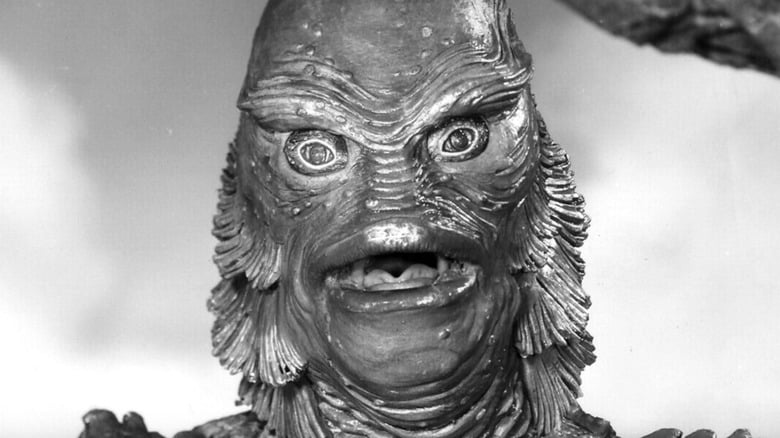
Carpenter’s involvement was being discussed publicly around the beginning of the 1990s. His attraction to the property wasn’t difficult to understand because he genuinely loved the Gill-man and the original film. Carpenter specifically remembered the famous image of the Creature looking upwards at the woman swimming above him, with the monster silently mirroring her movements beneath the surface. It remains one of the most beautiful and unsettling images in 1950s horror, and Carpenter clearly understood that a new version didn’t need to discard the things that had made Jack Arnold’s film endure.
By 1992, the project had become considerably more developed. Carpenter intended to return the story to a contemporary Amazon rather than radically relocating the mythology. He had access to Kneale’s earlier screenplay and admired elements of it, but a script written years earlier for a different production was not going to become the foundation of Carpenter’s film. Instead, he turned to Bill Phillips, with whom he had previously worked on Christine. A surviving first draft of Phillips’ Creature from the Black Lagoon screenplay is dated 4 May 1992, providing hard evidence that this wasn’t merely one of the countless films Carpenter casually discussed making. Universal was actively developing it and a screenplay existed.
Carpenter was also thinking beyond simply reproducing the narrative of Jack Arnold’s original. His ideas included exploring what the existence of the Gill-man would actually mean to science, religion and our understanding of human evolution. The Creature could remain a monster movie icon while simultaneously becoming evidence of something much larger.
John Carpenter Meets H.P. Lovecraft
One of Carpenter’s most intriguing ideas involved the evolutionary significance of the Creature. He considered making the Gill-man a genuine missing link between human beings and aquatic life, a discovery that could then collide with characters attempting to reconcile physical evidence with literal religious interpretations of creation. Carpenter discussed the possibility of creationist scientists becoming part of the story, allowing the existence of the Creature to become more than simply the discovery of an unknown animal.
There was another influence that makes Carpenter’s unrealised version particularly tantalising: H.P. Lovecraft. Carpenter specifically mentioned The Shadow over Innsmouth while discussing the project. Lovecraft’s story concerns a decaying coastal community hiding a relationship with an aquatic race known as the Deep Ones, and Carpenter considered whether his Gill-man might similarly be more than one isolated evolutionary accident. Perhaps there had once been an entire race of these creatures. He also discussed incorporating legends of hidden pyramids in the Amazon, potentially connecting the Creature to something much older than the expedition discovering him.
Those ideas make Carpenter’s version sound as though it could have occupied territory somewhere between the straightforward expedition narrative of the original and the cosmic unease Carpenter explored elsewhere in his career. Prince of Darkness had already demonstrated his fascination with stories where science, religion and ancient horror collide, while In the Mouth of Madness would soon take his Lovecraftian interests even further. It is important, however, not to transform development discussions into scenes from a finished movie that never existed. Carpenter considered several possibilities while developing the project, and not every idea he mentioned publicly should automatically be treated as something that would definitely have appeared in the final film. What can safely be said is that he was seriously considering expanding the mythology behind the Gill-man.

Bill Phillips Takes Us Back to the Amazon
Phillips’ screenplay retained the Amazonian setting and built a contemporary expedition around the discovery of something extraordinary beneath the rainforest. The surviving 1992 first draft begins by taking the story into Brazil and establishing a modern research operation around the Black Lagoon. The expedition encounters evidence pointing towards an ancient structure, connecting with Carpenter’s interest in hidden Amazonian pyramids and suggesting a history extending beyond a solitary monster simply living beneath the water.
That screenplay is especially useful when discussing Carpenter’s project because Creature from the Black Lagoon passed through so many writers and filmmakers that details from different abandoned versions have sometimes become muddled together. Timothy Harris and Herschel Weingrod, for example, would also write a Creature from the Black Lagoon screenplay, but their work belongs to the property’s subsequent development rather than being the screenplay Carpenter originally commissioned from Phillips. Later filmmakers brought still more approaches, meaning it is dangerous to grab an interesting idea from any unmade Creature screenplay and automatically attribute it to Carpenter.
Carpenter’s project was built around the Phillips screenplay, the Amazon setting, the evolutionary ideas being considered and the attempt to create a new Gill-man without sacrificing the identity of the original. The Creature himself was also going to be placed in exceptionally capable hands.
Rick Baker Rebuilds the Creature
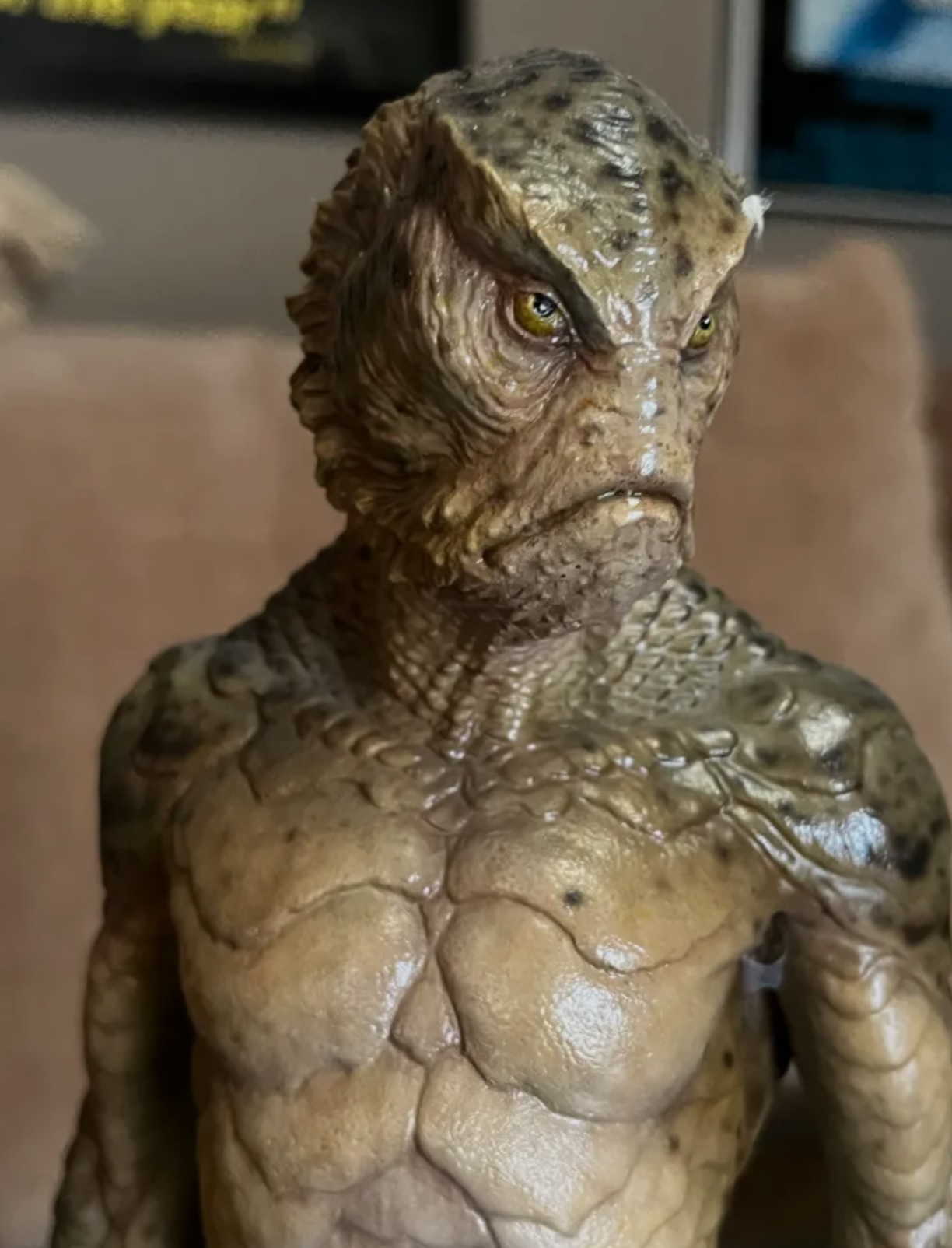
Rick Baker was brought aboard to redesign the Gill-man. By this point Baker was already one of cinema’s most celebrated make-up effects artists. His transformation work on An American Werewolf in London had won the inaugural Academy Award for Best Makeup, and his extraordinary career would eventually encompass everything from Harry and the Hendersons and Ed Wood to Men in Black. Giving him one of Universal’s most recognisable monsters was a mouth-watering proposition.
Baker didn’t want to throw away the original Gill-man either. Years later, he recalled that his approach was rooted in affection for the classic design, with the intention of modernising it while ensuring that audiences could immediately recognise the Creature. Carpenter had expressed essentially the same philosophy. They weren’t interested in producing some barely recognisable biological monstrosity and calling it the Gill-man simply because Universal owned the name. The fundamental design had already survived for decades. What modern effects could do was overcome some of the unavoidable limitations of a 1950s creature suit while preserving its silhouette, scales, gills and unmistakable amphibious appearance.
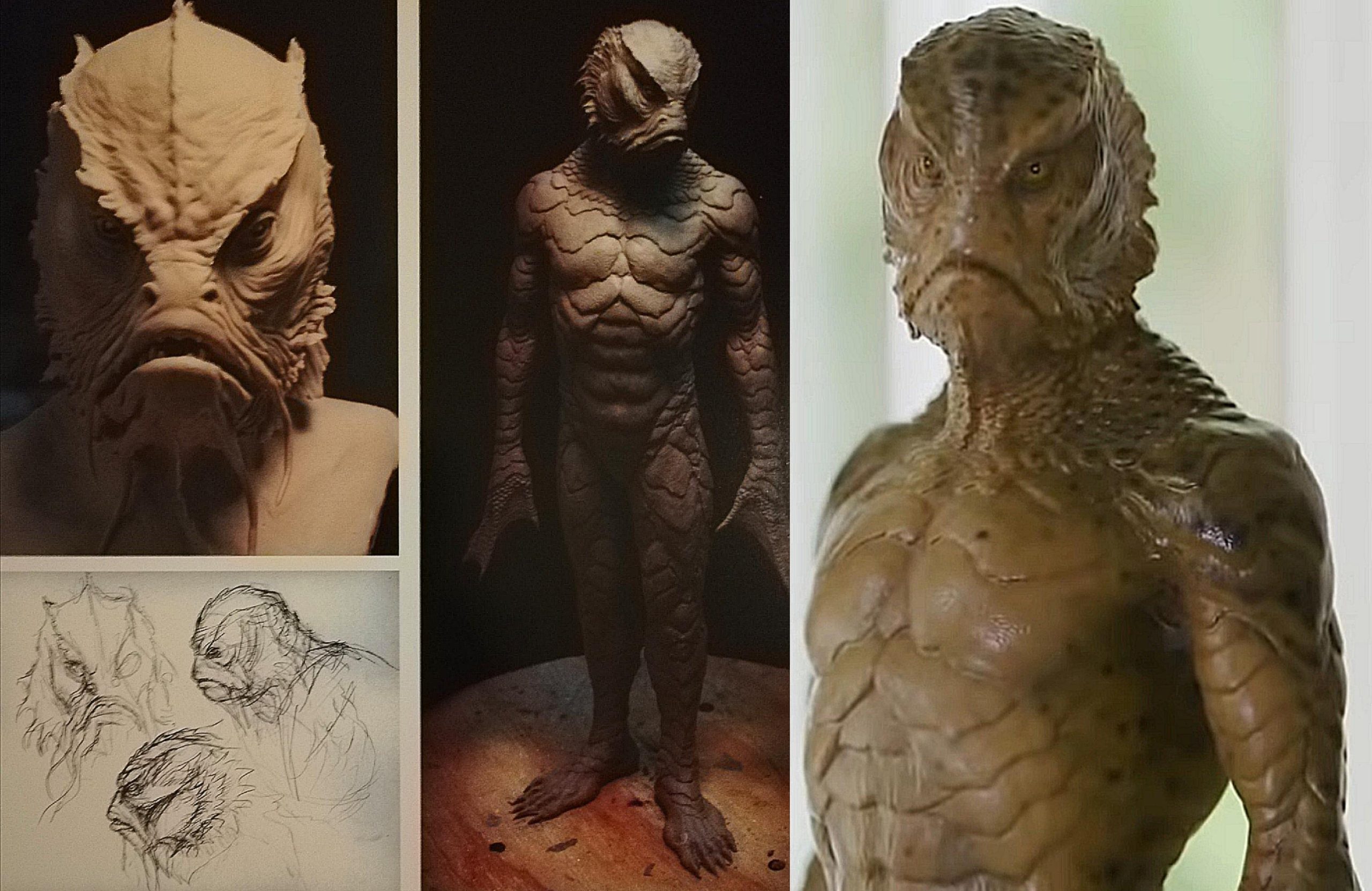
Baker has confirmed that considerable design work was undertaken, including designs and maquettes for the proposed Creature. Images of his work have subsequently surfaced, giving Carpenter’s abandoned film something many unmade projects lack: a physical glimpse of what might have reached the screen. This isn’t modern fan art attempting to imagine what a Carpenter Gill-man might have looked like. Genuine development work survives from the production. Phillips has also recalled that Carpenter had glass plates made depicting the lagoon he envisioned, another indication that the project had moved considerably further than a director and studio simply discussing possibilities over lunch.
So What Killed Carpenter’s Creature?
This is where the history becomes frustrating because there isn’t one perfectly documented moment in which somebody walked into an office, slammed a folder shut and killed the Gill-man. Carpenter’s Memoirs of an Invisible Man opened in 1992 and performed poorly, and its failure has frequently been connected with Universal cooling on Creature from the Black Lagoon. The timing makes that interpretation understandable, particularly because Carpenter’s relationship with the studio was changing while Creature was being developed.
By early 1993, the project was being described as stalled despite substantial preparation having already taken place. Phillips himself later acknowledged uncertainty over precisely why Universal never made it. That uncertainty matters. It’s tempting with an article about an unmade movie to provide a dramatic single cause, but development rarely works that neatly, and the evidence doesn’t justify pretending that we can point to one meeting or one box-office result and declare that it definitively killed Carpenter’s film.
There are also accounts connecting Creature with Carpenter eventually directing Universal’s remake of Village of the Damned. Carpenter and producer Sandy King had been pursuing the Gill-man project while Universal had other properties moving through development, and Carpenter ultimately made Village of the Damned, released in 1995, while the Creature remained trapped in development. Stories that Carpenter took Village because Creature might follow have circulated for years and have support in later recollections, but the development history is complicated enough that it shouldn’t be reduced to a simple promise that Universal made and then broke. What is certain is considerably less dramatic but far more important: Carpenter’s Creature from the Black Lagoon never received the green light.
The Creature Refuses to Die
Universal didn’t abandon the property when Carpenter’s version collapsed. The studio continued developing new incarnations, with different writers and filmmakers attempting to solve the problem of how to modernise one of Universal’s most recognisable monsters without destroying everything audiences loved about him. Harris and Weingrod wrote another screenplay, and Peter Jackson was subsequently offered an opportunity to become involved with the property during the 1990s but instead pursued his ambitions for King Kong. Ivan Reitman was among the other filmmakers associated with attempts to resurrect the Gill-man as the project continued passing through Hollywood.
Later development would involve still more filmmakers, including Guillermo del Toro, whose fascination with the romantic possibilities of an amphibious humanoid would eventually find very different expression in The Shape of Water. Universal continued trying to resurrect the Creature through the 2000s, and the character remained one of the obvious candidates whenever the studio considered ways of bringing its classic monsters back to cinemas. Yet despite decades of development, the Gill-man has remained remarkably resistant to receiving another solo feature.
Carpenter’s version has retained a particular fascination because we know enough about it to see the shape of the movie that might have been. We have Carpenter’s own comments about what attracted him to the material. We have Phillips’ screenplay. We have Baker’s surviving design work and maquettes. We know Carpenter wanted the Amazon, wanted to preserve the identity of the original Creature and remained fascinated by that unforgettable underwater imagery. We also know he was considering evolution, creationism, ancient structures and a Lovecraftian possibility that the Gill-man might not have been the only member of his species.
Most importantly, Carpenter’s own comments suggest that his film wouldn’t simply have been an aquatic equivalent of The Thing. That is perhaps the easiest version to imagine retrospectively: John Carpenter takes the Gill-man and transforms him into some horrifying mass of mutating flesh. But Carpenter’s stated admiration for the original points towards something more respectful. He wanted to retain the Creature’s essential identity while using contemporary filmmaking and effects to make him believable for a new generation.
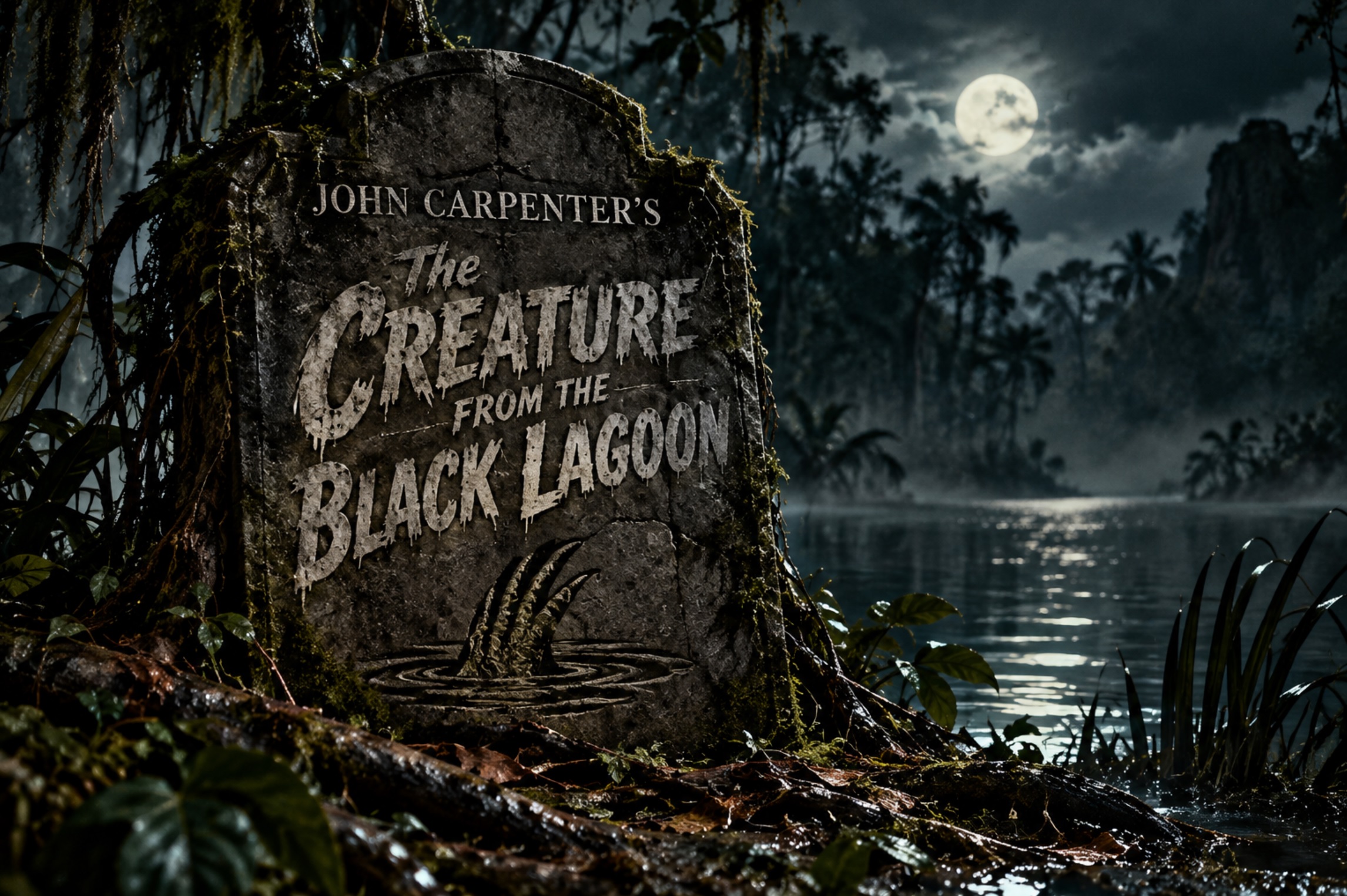
That might be the greatest frustration surrounding the entire project. Carpenter had already demonstrated with The Thing that remaking a beloved 1950s monster film didn’t require copying it, mocking it or throwing away everything that made it special. He could identify the fundamental idea, return to what made it powerful and then build something unmistakably his own around it. A decade later, Universal had another classic monster sitting in front of him, and this time Carpenter had chosen the property himself.
Bill Phillips wrote the screenplay. Rick Baker began creating the Creature. Carpenter was developing his Amazonian Black Lagoon and thinking about evolution, religion, lost civilisations and Lovecraft. Pieces of the movie existed, but the most important piece never arrived: Universal never put it into production.
John Carpenter was ready to take audiences back into the Black Lagoon. The Gill-man simply never made it out of development hell.