The Unmade: Dennis Etchison’s Halloween 4
There are enough abandoned Halloween sequels to fill an entire cemetery. Michael Myers has spent nearly fifty years being shot, stabbed, burned, decapitated, retconned, rebooted and occasionally informed that several of his previous adventures no longer happened. Long before the franchise started treating continuity like a Choose Your Own Adventure book, however, John Carpenter and Debra Hill considered a fourth film that could have taken Michael Myers somewhere considerably stranger.
This wasn’t the Halloween 4 released in 1988. There was no Jamie Lloyd, no Rachel Carruthers and no Michael waking from a ten-year coma apparently having survived the inferno at Haddonfield Memorial Hospital through the healing power of franchise potential. Instead, writer Dennis Etchison developed a story with Carpenter in which Michael’s apparent death at the end of Halloween II remained meaningful. Haddonfield had spent ten years attempting to erase Halloween and everything associated with the 1978 murders, only to discover that burying its collective trauma might actually bring the Shape back.
Even more tantalisingly, Carpenter’s preferred director for the project was reportedly Joe Dante, fresh from Gremlins and already responsible for Piranha and The Howling. Etchison met with Dante to discuss the film, although Dante ultimately didn’t direct it. Had everything aligned, we could therefore have received a Halloween sequel developed by Carpenter and Hill, written by one of their established collaborators and potentially directed by Joe Dante. Naturally, it didn’t happen. Welcome back to The Unmade.
The Man Carpenter Asked to Bring Halloween Back
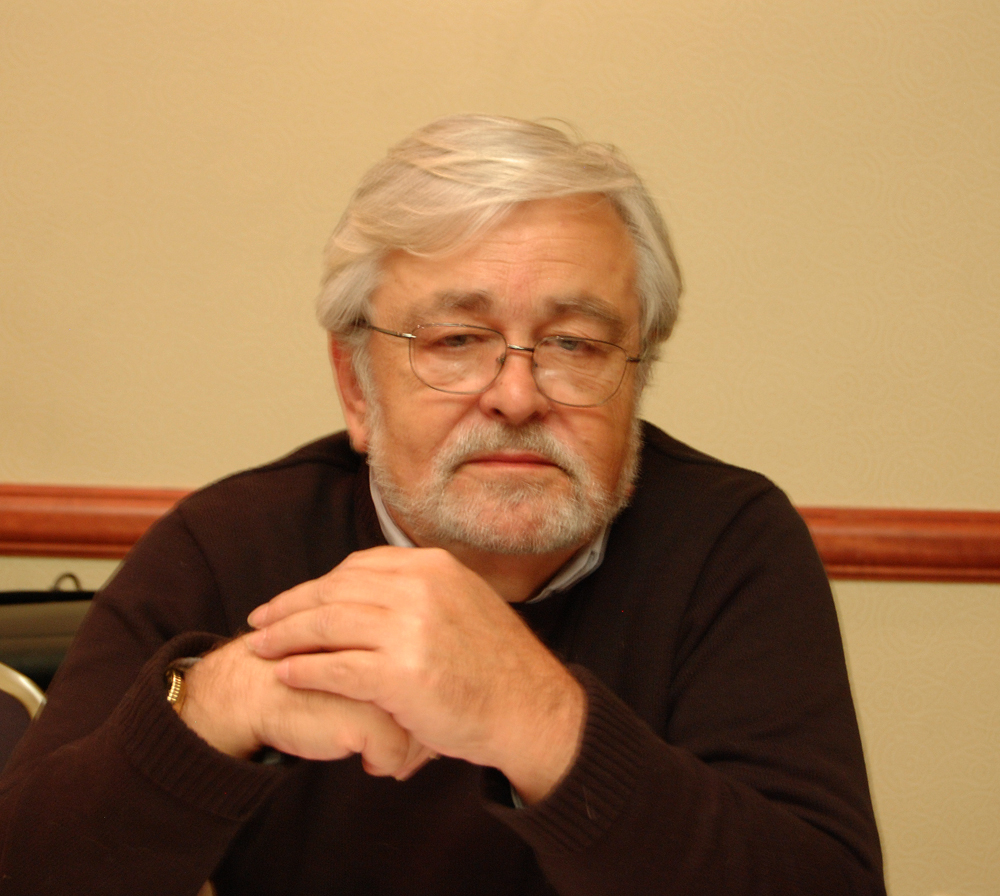
Dennis Etchison wasn’t some random writer handed Michael Myers because everyone else was busy. He already had a substantial relationship with Carpenter and Hill. Etchison recalled first being summoned to Carpenter’s office when Hill needed somebody to replace an unsatisfactory novelisation of The Fog. His version was successful enough that Carpenter subsequently asked him to novelise Halloween II and Halloween III: Season of the Witch, both published under Etchison’s Jack Martin pseudonym.
Then came an unexpected Christmas present. Etchison later remembered Carpenter calling him on Christmas Eve after Halloween III and asking him to write Halloween IV. Hill phoned shortly afterwards with the same news. Etchison began meeting with Carpenter and the pair developed the basic direction together. He ultimately wrote three drafts, and described sitting cross-legged on the floor at Carpenter’s home while the two men worked through the final version with marker pens, Carpenter cutting unnecessary dialogue and concentrating on what the camera could communicate visually.
The surviving second draft is dated December 2, 1986 and bears the simple title Halloween IV. It offers a fascinating glimpse of a franchise standing at a crossroads, because this wasn’t an attempt to pretend the explosion at the end of Halloween II had merely inconvenienced Michael and Dr Loomis. Etchison had something much weirder in mind.
Haddonfield Has Cancelled Halloween
The central idea is excellent. Ten years have passed since the night Michael Myers terrorised Haddonfield, and the town’s response has essentially been to ban Halloween. No masks, no costumes, no Halloween sweets and no celebration of the supernatural. Even a school dance has to avoid openly acknowledging what night everybody knows it is. Haddonfield’s civic strategy for dealing with one of the worst nights in its history appears to have been sticking its fingers in its ears for a decade and hoping evil respects municipal regulations.
It isn’t simply a gimmick. Suppression is the central theme of Etchison’s story. The town refuses to acknowledge what happened, but its attempt to eliminate the memory of Michael has only given that memory greater power. Etchison explained that the idea was that suppressing something can cause it to return more strongly. Haddonfield has spent ten years trying to remove Michael Myers from its consciousness and, in doing so, has effectively helped create the conditions for the Shape to exist again.
That makes his version markedly different from the eventual Halloween 4: The Return of Michael Myers. The 1988 film physically resurrects Michael and Loomis despite the hospital explosion and continues their pursuit in relatively straightforward slasher territory. Etchison instead treated Michael as something increasingly abstract, a manifestation of the fear Haddonfield has refused to confront. Michael Myers wasn’t simply coming home again. Haddonfield was dreaming him back into existence.
Tommy Doyle and Lindsey Wallace Grow Up
Etchison and Carpenter also made a clever decision about their protagonists. Rather than inventing another entirely separate group of Haddonfield teenagers, they went back to the children who had actually survived the original night. Tommy Doyle and Lindsey Wallace are now teenagers and still live across the street from one another. They share the same traumatic history but have responded to it very differently.
Lindsey has repressed her memories of 1978, encouraged by a mother determined to prevent Tommy from dragging the past back into her daughter’s life. Tommy, meanwhile, is beginning to remember. The two had undergone psychiatric treatment after the murders, but while Lindsey’s memories remain blocked, Tommy increasingly experiences flashes of what happened. There is also a developing attraction between them, complicated by Lindsey’s mother refusing to let Tommy near her. It creates a continuation that feels surprisingly organic. The frightened children Laurie Strode protected are approaching adulthood, but surviving Michael didn’t mean the experience stopped affecting them when the credits rolled.
Laurie herself is absent from the main action. The surviving second draft acknowledges her, while Michael’s unresolved connection to her remains part of the mythology, but the emotional centre belongs to Tommy and Lindsey. Deputy Gary Hunt from Halloween II has meanwhile become Haddonfield’s sheriff, providing another connection to the first two films. And unlike the finished fourth film, Dr Loomis didn’t need to miraculously survive being at the centre of an enormous gas explosion. Sometimes dead actually meant dead. What a concept.
The Shape Comes Home
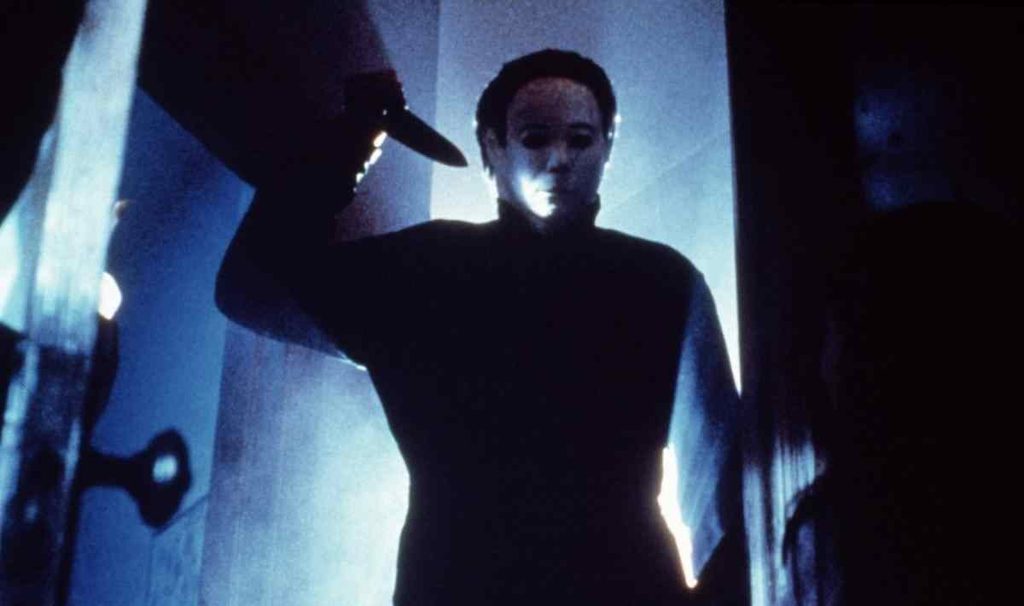
Etchison’s opening immediately announces that something is wrong with reality. The screenplay returns to the abandoned Myers house, moving through it from a subjective point of view. The camera travels upstairs and approaches a cracked mirror. Pale hands appear. A featureless white mask is lifted into place. Looking into the fractured reflection is the Shape.
The sequence deliberately evokes Carpenter’s original film, but the important question is no longer simply how Michael survived. Etchison’s conception moves towards something less tangible. The Shape exists because Haddonfield has failed to deal with what he represents. That gives the entire screenplay an eerie dream logic. Michael can still stalk people and kill them, so this wasn’t going to be ninety minutes of philosophical discussion about municipal trauma while somebody waits patiently for a stabbing. Etchison specifically recalled that several people die. But his Michael is moving towards being something more than the flesh-and-blood psychopath of the original films.
One particular sequence demonstrates how effectively the approach could have worked, and it involves an absolutely irresponsible quantity of pumpkins.
The Pumpkin Patch Murder We Were Robbed Of
One of Etchison’s favourite sequences involves a teenager named D’Arcy travelling just beyond Haddonfield’s limits to buy pumpkins. The geographical joke is important: Halloween may effectively be forbidden inside Haddonfield, but immediately beyond the town line normal civilisation continues and people are still perfectly capable of purchasing seasonal vegetables without causing a civic emergency.
D’Arcy enters a lot containing enormous piles of pumpkins. What begins playfully becomes increasingly uneasy as pumpkins start rolling around her. A collapsing display knocks her down, a dark figure initially turns out to be a scarecrow, and then the largest mound erupts. This time it isn’t a scarecrow. The Shape bursts out from beneath the pumpkins. D’Arcy is knocked down and buried as Michael attacks, the orange fruit around her becoming spattered with blood.
Etchison loved the visual enough that he imagined it forming the basis of the film’s poster, accompanied by a variation on the original’s famous tagline: “The night he came home… again!” It is difficult not to mourn this one. Michael Myers emerging from an avalanche of pumpkins is so aggressively Halloween that it’s remarkable the franchise has managed to produce thirteen films without eventually doing it anyway.
Welcome to the Lost River Drive-In
The other major location was the Lost River Drive-In, and this wasn’t simply a random cinema Etchison invented. He recalled Carpenter telling him about a real Lost River Drive-In from Bowling Green, Kentucky, where Carpenter grew up. The name had already entered the Halloween universe through dialogue in Halloween II.
In Etchison’s screenplay, the drive-in becomes the focal point for everything Haddonfield has attempted to suppress. It is showing horror movies while the town argues about whether Halloween should even be acknowledged. At a town meeting, the proprietor protests because banning Halloween entertainment is rather inconvenient when you’re trying to sell tickets to teenagers who would quite like to watch horror films.
The Lost River becomes packed with young people. Etchison envisioned it as an outdoor multiplex with three screens angled away from one another, all showing films simultaneously. By midnight, the place is full. Unfortunately, so is Michael. Etchison described the climax as a huge and bloody sequence in which the Shape stalks and kills people throughout the packed drive-in while Tommy and Lindsey become increasingly central to the confrontation.
It is here that Etchison’s supernatural conception of Michael reaches its extreme. Accounts of the screenplay describe the Shape becoming gigantic during the climax, growing to an impossible size as the fear surrounding him intensifies. The bogeyman has stopped behaving like a man. He has become the nightmare Haddonfield spent ten years creating.
And Joe Dante Might Have Directed It
As if the project weren’t tantalising enough already, Carpenter apparently had Joe Dante in mind to direct. Etchison recalled meeting Dante at the old Schwab’s Drugstore in Hollywood and discussing what they might do with Halloween IV. He even read Dante a passage from his Halloween II novelisation that encapsulated his thinking about evil repeatedly returning when people refuse to confront it. Etchison was never entirely sure why Dante ultimately didn’t make the film.
The prospect is fascinating. Dante had already demonstrated with The Howling that he could handle genuine horror while Gremlins showed his ability to combine darkness, humour and American small-town imagery. Etchison’s strange mixture of suburban repression, supernatural horror and knowing observations about horror movies seems like material Dante could have done something extremely interesting with. We will, unfortunately, never know.
Why Didn’t Dennis Etchison’s Halloween 4 Happen?
The simplest answer is that the people controlling Halloween ultimately wanted something else. Etchison remembered completing three drafts and seeing a stack of finished scripts in Debra Hill’s office ready to be sent to investors. Later, Hill phoned him and explained that she and Carpenter had sold their interest in the Halloween franchise and that his screenplay wasn’t included in the deal. Etchison said other writers subsequently worked on the project and that he lost a Writers Guild arbitration over screen credit.
Other accounts of the development identify producer Moustapha Akkad’s objection more specifically. Akkad reportedly considered Etchison’s approach “too cerebral” and wanted Michael Myers returned as the recognisable flesh-and-blood killer audiences expected. Carpenter and Hill sold their interests, and the project moved in a different direction.
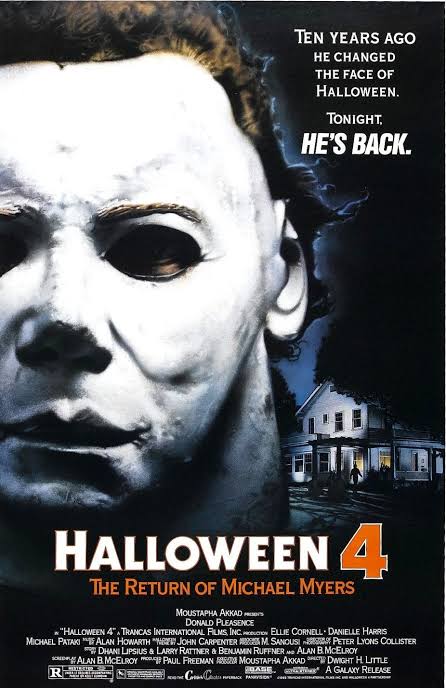
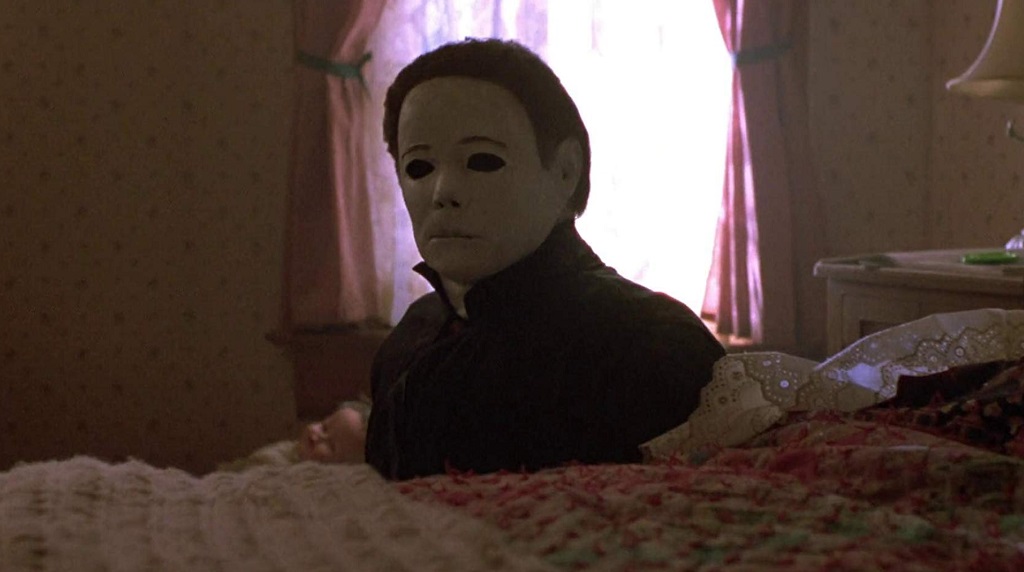
Eventually Alan B. McElroy wrote the screenplay that became Halloween 4: The Return of Michael Myers, directed by Dwight H. Little and released in 1988. Michael physically survived the events of Halloween II, Laurie Strode was said to have died before the events of the film, and her daughter Jamie Lloyd became Michael’s new target. The supernatural psychological horror Etchison had conceived was gone. Michael Myers was back, just not this Michael Myers.
Would It Have Worked?
This is where The Unmade becomes frustrating, because a screenplay can only tell us what might have been. There are ideas in Dennis Etchison’s Halloween 4 that sound extraordinary. Returning to Tommy and Lindsey rather than simply manufacturing another group of victims gives the sequel an emotional connection to Carpenter’s original. A Haddonfield that has outlawed Halloween is a wonderfully bleak reaction to the murders. Michael emerging from a mountain of pumpkins is pure seasonal horror iconography, while a midnight massacre at a packed drive-in could have given the series a climax unlike anything it had attempted before.
There are also ideas that would undoubtedly have divided audiences. Turning Michael into an increasingly supernatural manifestation of Haddonfield’s collective fear is a significant departure from the ambiguity that made the original Shape so frightening. A gigantic Michael Myers could have been nightmarish in the right hands or completely ridiculous in the wrong ones. Possibly both within the same thirty seconds.
But that is precisely why this abandoned film remains fascinating. The Halloween series ultimately spent decades searching for different explanations for how Michael Myers could keep returning. Family curses arrived. Continuities were abandoned. Laurie Strode died, returned, died again and returned again in a different timeline. Michael was eventually stripped back to being an inexplicable force of evil in David Gordon Green’s trilogy, where Haddonfield’s collective trauma and obsession with him became part of the story.
Back in 1986, Dennis Etchison and John Carpenter were already playing with a related question: what if Michael Myers survived not because his body couldn’t die, but because Haddonfield couldn’t stop being afraid of him? The film that reached cinemas in 1988 gave audiences exactly what its title promised, The Return of Michael Myers. Dennis Etchison’s Halloween 4 might have given us something stranger: the return of the Shape.