What Actually Makes a Slasher Film a Slasher?
Everybody knows a slasher film when they see one. At least, we think we do. Put a masked lunatic on the poster, give him something unpleasant from the gardening section and surround him with teenagers who have apparently never heard the phrase “stay together”, and we’re probably somewhere in the right neighbourhood. Except horror has never been particularly interested in keeping its shelves tidy. Psycho has a knife-wielding murderer but isn’t usually classified as a conventional slasher. The Texas Chain Saw Massacre has Leatherface and one of horror’s most famous surviving women, yet doesn’t follow the formula that would later define the genre. Freddy Krueger murders teenagers one by one but does it in their dreams, while Scream follows the rules while simultaneously standing in the corner pointing and laughing at them.
So what actually makes a slasher a slasher? The answer isn’t simply knives, masks or body counts. The slasher is better understood as a collection of storytelling and filmmaking conventions that gradually came together over several decades before exploding at the end of the 1970s. A typical slasher gives us a killer who stalks a defined group of victims, usually eliminating them individually, while suspense comes from wondering who will be next and who might survive long enough to confront the murderer. Film scholar Carol J. Clover famously examined this structure in Men, Women, and Chain Saws, describing the recurring figure who became widely known as the Final Girl.
Before Michael Myers Came Norman Bates
There is no universally agreed first slasher movie, largely because cinema didn’t suddenly wake up one morning and invent Michael Myers. Instead, pieces of what became the slasher formula appeared in earlier thrillers, murder mysteries, exploitation films and European horror. Two films released in 1960 loom particularly large. Alfred Hitchcock’s Psycho gave audiences Norman Bates, the Bates Motel and a shower murder that remains one of cinema’s most famous sequences. Michael Powell’s Peeping Tom, released the same year, followed Mark Lewis, a murderer who films his victims while killing them. Both are routinely identified as important ancestors of the slasher, but neither quite resembles the assembly line of teenage slaughter that audiences would recognise twenty years later. They provided ingredients rather than the complete recipe.

Italian giallo cinema supplied more. Films associated with directors including Mario Bava and Dario Argento frequently combined murder mysteries with stalking sequences, black-gloved killers, elaborate deaths, sexual themes and highly stylised violence. Meanwhile, American horror was becoming increasingly vicious. Wes Craven’s The Last House on the Left arrived in 1972, while Tobe Hooper’s The Texas Chain Saw Massacre followed in 1974. Leatherface would eventually be grouped alongside Michael, Jason and Freddy as one of the great horror icons, but the original film remains a slightly awkward fit as a conventional slasher. Its young characters are certainly picked off, and Sally Hardesty becomes the surviving woman fighting desperately to escape, yet the victims stumble into the killers’ world rather than being systematically stalked by a lone murderer. Leatherface is also only one member of an entire murderous family.
Black Christmas Puts the Pieces Together
Also arriving in 1974 was Bob Clark’s Black Christmas, one of the strongest candidates whenever somebody attempts to identify an early example of the recognisably modern slasher. Its ingredients should sound familiar. A group of young women occupy a sorority house while an unseen murderer stalks them, his identity concealed as obscene telephone calls increase the tension. Victims disappear individually while their friends remain unaware of precisely what is happening, and the film makes striking use of point-of-view photography associated with the killer. That is an awful lot of the eventual slasher blueprint sitting inside one Canadian horror film four years before Halloween.
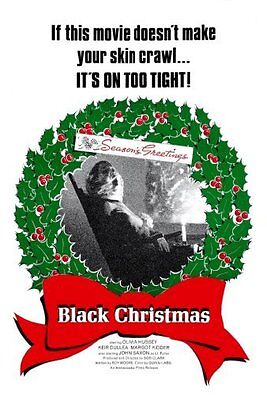
There has long been discussion about the relationship between Black Christmas and Halloween, but it is worth avoiding the exaggerated version in which John Carpenter simply copied Clark’s movie. Clark himself rejected that interpretation, acknowledging the possibility that Carpenter had been influenced by Black Christmas while making clear that Halloween was Carpenter’s film. The distinction matters because Halloween did something enormously important. It may not have invented every ingredient of the slasher, but it assembled them with such ruthless efficiency that the resulting formula became impossible for the film industry to ignore.
Halloween Creates the Template Everyone Wants
John Carpenter’s Halloween arrived in 1978 and transformed existing ideas into something brutally simple. Michael Myers escapes from Smith’s Grove Sanitarium, returns to Haddonfield and begins stalking Laurie Strode and her friends on Halloween night. Carpenter and co-writer/producer Debra Hill stripped the premise down beautifully. Michael doesn’t require elaborate machinery or supernatural dream powers. For much of the film, he barely requires an explanation. He watches his victims, follows them and waits until the opportunity arrives to attack.
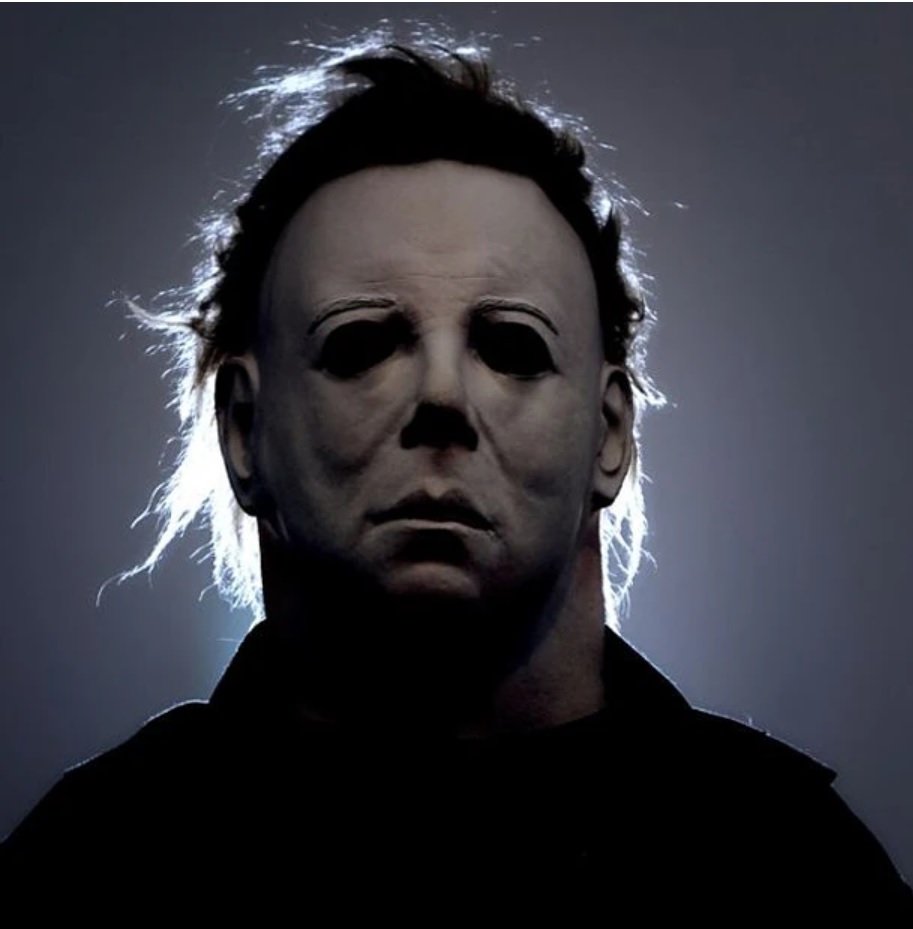
Most importantly, Halloween repeatedly places the audience in uncomfortable proximity to its killer. The opening murder is presented through young Michael’s point of view, while later sequences allow the adult Myers to exist somewhere within the frame before his intended victims notice him. Then the film became a major commercial success, and horror producers noticed. Friday the 13th, Prom Night and He Knows You’re Alone were among the films that followed as the format exploded during the early 1980s. Suddenly there were camps, schools, mines, hospitals, dormitories, birthday parties and seemingly every holiday that could reasonably support somebody carrying a knife.
The Killer Needs Victims, but He Also Needs a Hunting Ground
One of the genre’s most important characteristics is containment. Slashers generally establish a recognisable hunting ground and populate it with a limited group of potential victims. Camp Crystal Lake in Friday the 13th, Haddonfield in Halloween, Valentine’s Bluff in My Bloody Valentine, Springwood in A Nightmare on Elm Street and Woodsboro in Scream all provide worlds within which the killer can operate. The location establishes boundaries, tells us who is potentially in danger and frequently allows the characters to become increasingly isolated from outside help.
The killer then removes them one at a time, and that rhythm is crucial. A film containing a murderer and ten corpses isn’t automatically a slasher because much of the genre’s appeal comes from anticipation rather than the final body count. Somebody leaves the group, hears something suspicious and decides that the dark basement is definitely worth investigating despite possessing every piece of evidence necessary to conclude that it absolutely isn’t. The audience often knows that the killer is nearby while the victim doesn’t, allowing the filmmaker to stretch the moments before the attack. In other words, the stalking is every bit as important as the slashing.
Does a Slasher Need a Mask?
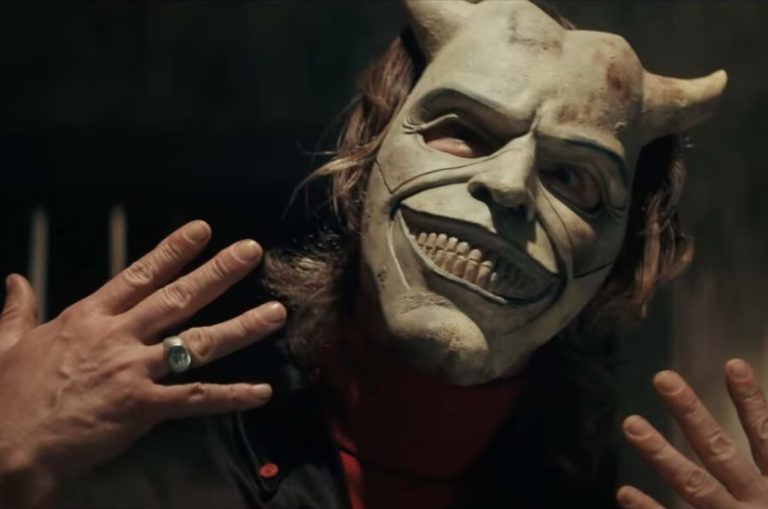
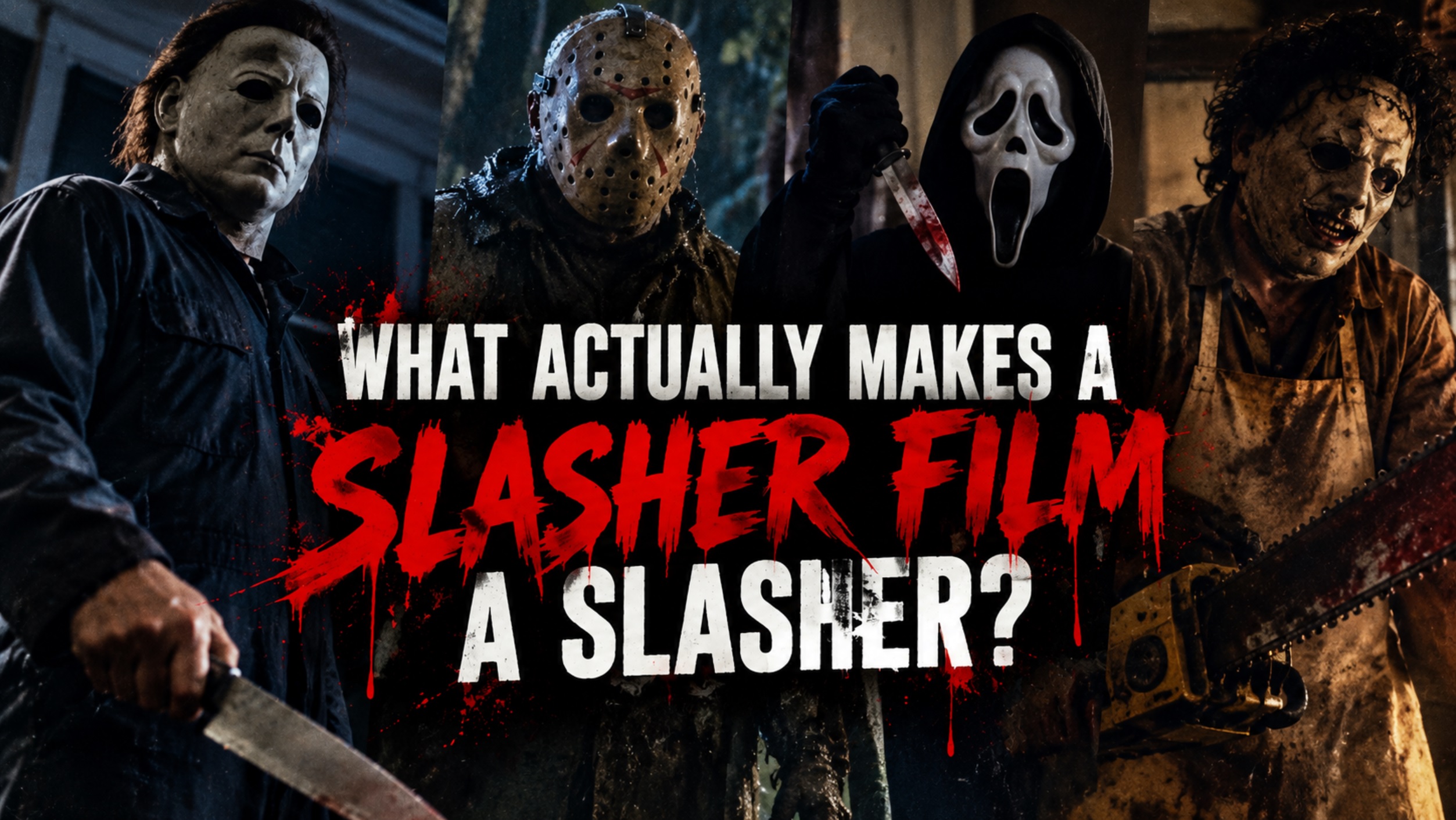
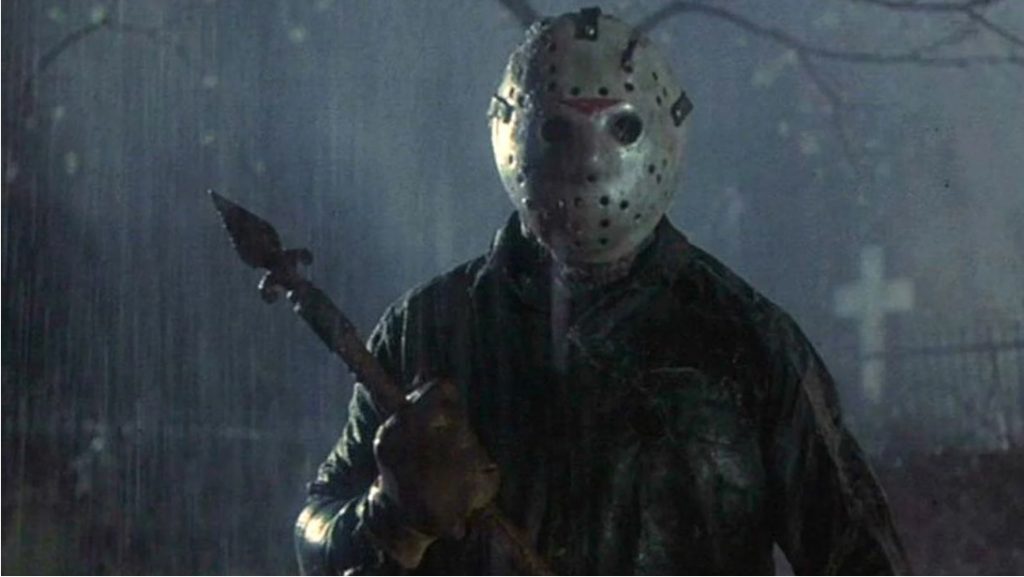
No, although you’d be forgiven for thinking there was a union rule requiring one. Michael Myers has his expressionless white face, Jason Voorhees eventually acquired his hockey mask, and Ghostface turned an elongated screaming face into one of modern horror’s most recognisable images. Other killers have used sacks, helmets, costumes and disguises, but plenty of slashers have managed perfectly well without hiding their villains behind an iconic piece of merchandise waiting to happen.
Pamela Voorhees spends the climax of the original Friday the 13th perfectly happy to show her face, for example. The important function is often anonymity rather than the physical mask itself. Concealing the killer’s identity can turn murder into mystery and allow the threat to appear less human, but it isn’t an essential requirement. Likewise, a slasher doesn’t technically need a knife. Pickaxes, axes, chainsaws, hooks, machetes and assorted household objects have all been pressed into service. What matters more is often the intimacy of the violence. Slasher murders tend to happen at close quarters. The killer isn’t sitting half a mile away with a rifle. They’re usually somewhere considerably closer, and preferably somewhere the victim really should have checked.
Enter the Final Girl
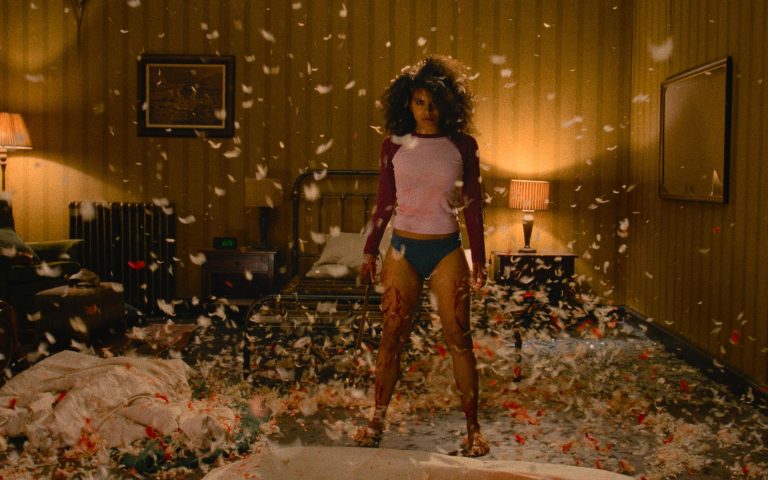
If the killer is one half of the classical slasher equation, the survivor is the other. The term Final Girl is inseparably associated with Carol J. Clover’s scholarship and her examination of the recurring female survivor who endures the killer’s attacks and ultimately confronts him. Laurie Strode became perhaps the most famous example, but the tradition encompasses characters including Sally Hardesty, Alice Hardy, Nancy Thompson and Sidney Prescott, even as the films surrounding them complicate or alter the formula.
The Final Girl isn’t simply “the woman who isn’t dead when the credits roll”. Her importance comes from the narrative progressively shifting towards her. As the supporting cast disappears, she increasingly recognises the danger, discovers evidence of what has happened and becomes the character through whom the audience experiences the final pursuit. Sometimes she defeats the killer and sometimes she merely survives him. Occasionally she does everything correctly and still discovers during the sequel that horror franchises have absolutely no respect for personal achievement.
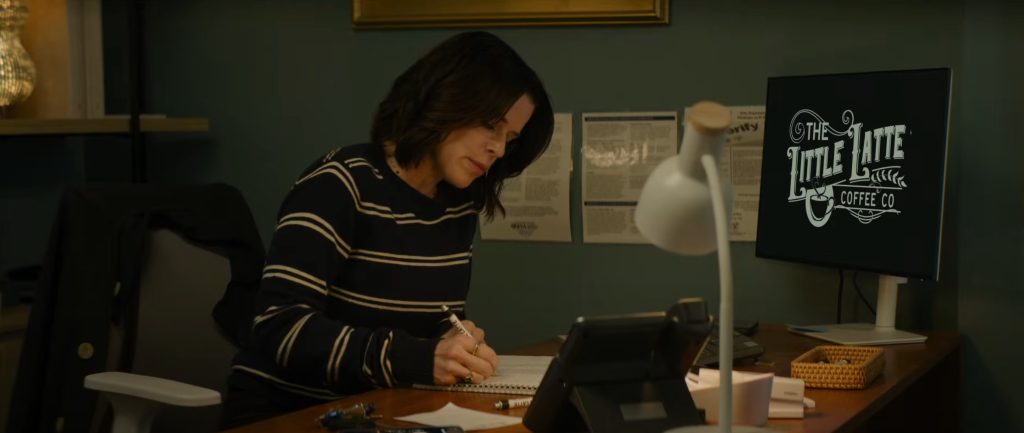
The concept has also evolved enormously. Later slashers deliberately interrogated the convention, with Scream being perhaps the most obvious example. Sidney Prescott exists inside a film whose characters have themselves watched horror movies and openly discuss the supposed rules governing them. Wes Craven and screenwriter Kevin Williamson could therefore use the familiar mechanics of the genre while simultaneously making jokes about them. By 1996, the slasher had become self-aware, and knowing the rules was no guarantee that Ghostface wasn’t waiting in the next room.
So What Are the Rules?
There aren’t any absolute ones. A slasher doesn’t cease being a slasher because it breaks one convention, and a horror film doesn’t automatically become one because somebody owns a large knife. Instead, it makes more sense to think of the genre as a cluster of characteristics. There is usually a killer stalking a specific collection of people, with victims eliminated individually and suspense generated through pursuit and anticipation. Murders are generally physical and intimate, while the story progressively isolates its survivors until one or a small number remain to confront the killer. Mystery may surround the murderer’s identity, motive or both.
Masks are optional, teenagers are optional and sex is certainly optional. A Final Girl, despite her enormous importance to slasher history, isn’t mandatory in every variation. Even supernatural elements aren’t disqualifying. Freddy Krueger can invade dreams and still operate within a recognisable slasher structure, while Jason can return from the dead and continue doing what Jason does. Once established, the genre proved remarkably capable of absorbing other forms of horror without completely losing its identity.
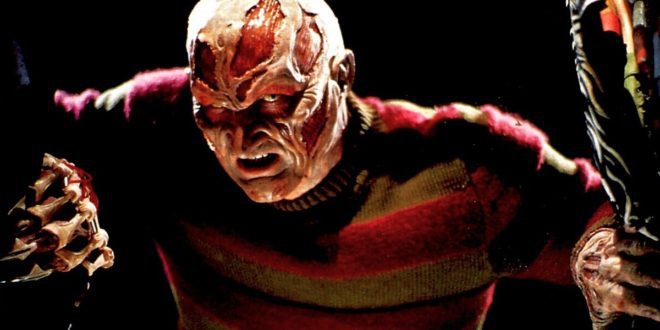
That flexibility is probably why the slasher refuses to stay dead. Halloween helped trigger the early-1980s boom, A Nightmare on Elm Street gave the formula a supernatural injection, and Scream revitalised it through self-awareness while helping to prompt another wave of teen horror. More recent filmmakers continue to borrow, dismantle and rebuild the same machinery because the basic idea remains wonderfully effective. Give an audience a group of characters, establish that something is hunting them, and make us wait for the moment when somebody discovers that they aren’t as alone as they thought.
More than sixty years after Psycho and Peeping Tom, and more than fifty years after Black Christmas, filmmakers are still finding people who really should know better wandering off alone. The weapons change, the locations change and the killers become increasingly difficult to permanently dispose of, but the fundamental appeal remains remarkably consistent. What actually makes a slasher film a slasher isn’t simply the knife, the mask or even the body count. It is the combination of pursuit, isolation, anticipation and survival that surrounds them. In the end, the clue was hiding in the name all along: before there can be any slashing, there has to be a hunt.