First Appearance: The Town That Dreaded Sundown (1976)
Portrayed By: Bud Davis
Inspired By: The real-life Texarkana Moonlight Murders of 1946
Kill Count: 5 confirmed murders in the film, with several survivors
Tier: Second Class Tier
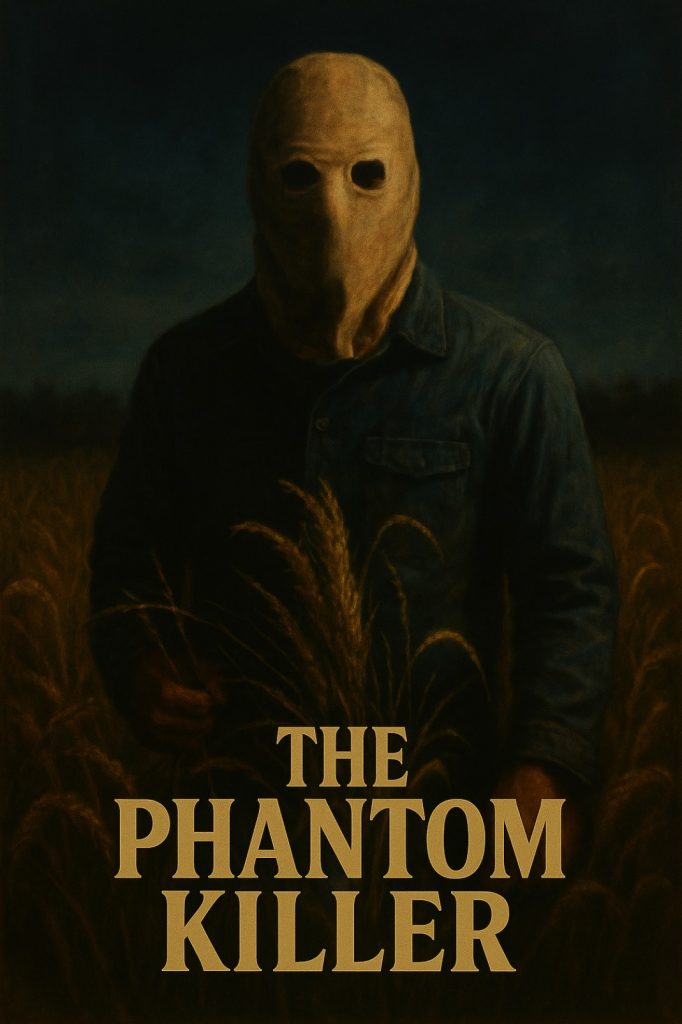
The Phantom Killer occupies a unique place in horror history. Unlike most slasher villains, he was not born entirely from fiction. The masked murderer who terrorises Texarkana in The Town That Dreaded Sundown is based on the still-unsolved Texarkana Moonlight Murders, a real series of attacks that left a community gripped by fear in 1946.
Long before Michael Myers stalked Haddonfield or Jason Voorhees prowled Crystal Lake, the Phantom Killer was already lurking in lovers’ lanes, targeting young couples under cover of darkness. His sack mask, unpredictable methods and chilling anonymity helped establish many of the foundations that later slashers would build upon.
Film Appearance
The Town That Dreaded Sundown (1976)
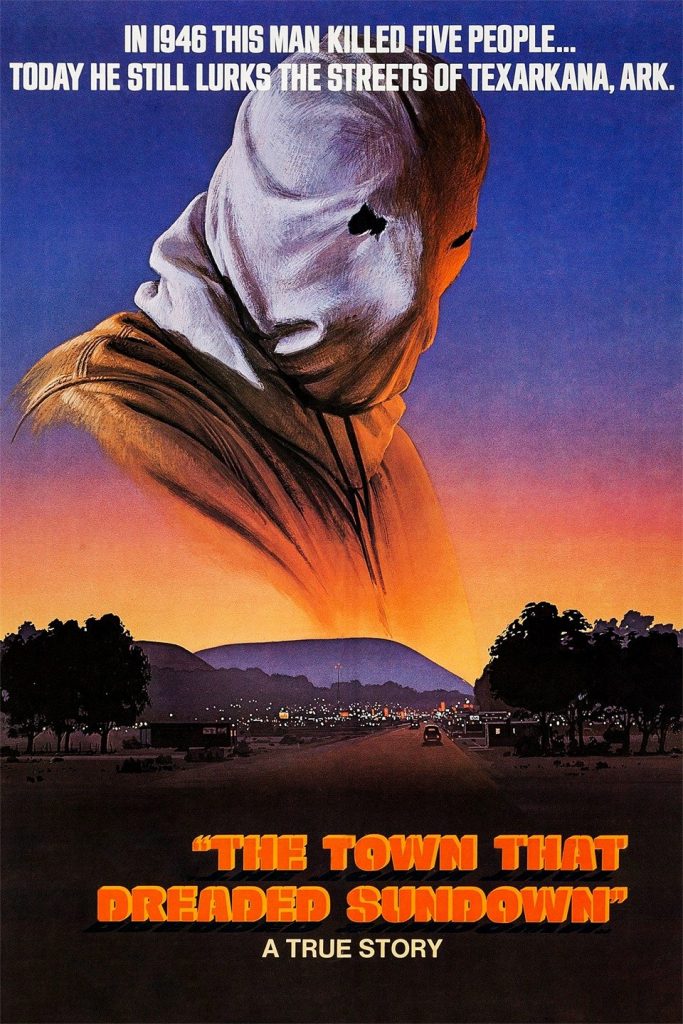
Set in the aftermath of World War II, the film follows a series of brutal attacks that transform the peaceful twin cities of Texarkana into a place consumed by fear.
The killings begin when a masked attacker assaults young couple Sammy Fuller and Linda Mae Jenkins at a secluded lovers’ lane. Both survive, though Linda suffers horrific injuries. Weeks later, Howard Turner and Emma Lou Cook are murdered, confirming that a serial killer is stalking the area.
As panic spreads, Texas Ranger Captain J.D. Morales arrives to assist local law enforcement. Despite an extensive manhunt, the Phantom continually stays one step ahead of the authorities.
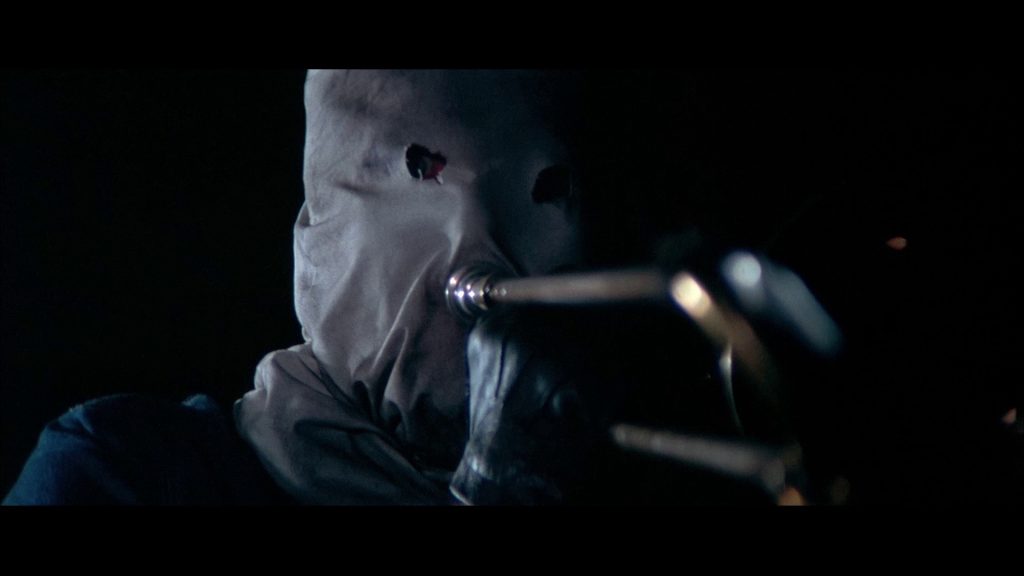
The killer’s most infamous crime comes when he murders Roy Allen and Peggy Loomis. After killing Roy, the Phantom ties Peggy to a tree and uses a knife attached to the slide of her trombone to stab her repeatedly while grotesquely “playing” the instrument. It remains one of the strangest and most memorable murder sequences in horror cinema.
The attacks culminate with the assault on Floyd and Helen Reed. Floyd is murdered in his own home, while Helen survives despite being shot twice in the face. Eventually Morales and local police corner the Phantom during a pursuit through the woods and manage to wound him, but he escapes once again.
The film ends with a chilling suggestion that the killer was never caught. Decades later, he is seen attending a screening of The Town That Dreaded Sundown itself, quietly watching a movie based on his crimes.
The Town That Dreaded Sundown (2014)
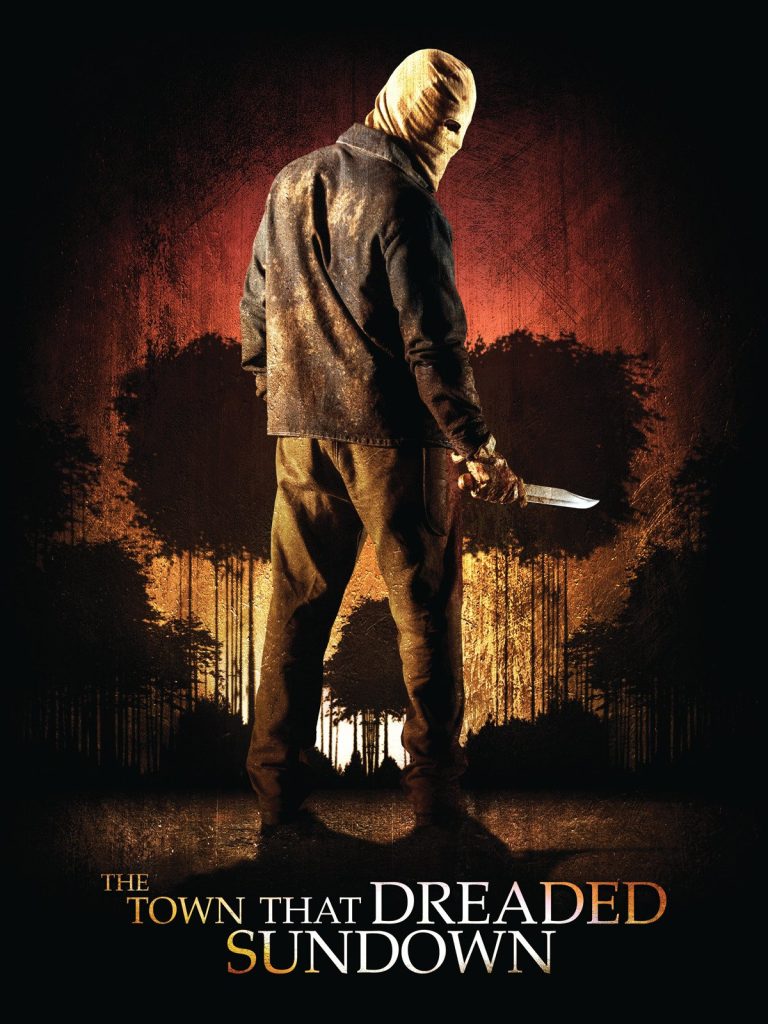
The 2014 film serves as both sequel and meta commentary, treating the 1976 movie as an actual film that exists within its world.
When a new string of murders begins in Texarkana, the killer adopts the identity of the Phantom Killer, directly recreating attacks from the original case and film. The legacy of the 1946 murderer looms over the entire story, turning the Phantom into a local urban legend whose influence survives long after the original crimes.
The film explores how fear, myth and obsession can keep a killer alive in the public imagination, even decades after the murders themselves.
Character and Legacy
What makes the Phantom Killer so effective is his realism.
Unlike supernatural monsters, immortal slashers or demonic entities, the Phantom is simply a man. There are no magical powers, no resurrection scenes and no elaborate mythology. He is frightening because someone like him could exist.
His attacks are methodical and opportunistic. He stalks isolated locations, cuts off escape routes and chooses vulnerable victims. The randomness of his violence creates a sense of unease that permeates the entire film.
The sack mask itself has become one of horror’s most distinctive images. While often overshadowed by later icons, it predates many famous slasher disguises and remains genuinely unsettling because of its simplicity.
The character also benefits from being rooted in a real mystery. The actual Texarkana killer was never conclusively identified, giving the Phantom an authenticity few horror villains can match. Audiences are left with the uncomfortable possibility that the real murderer escaped justice entirely.
Why He Belongs in Second Class
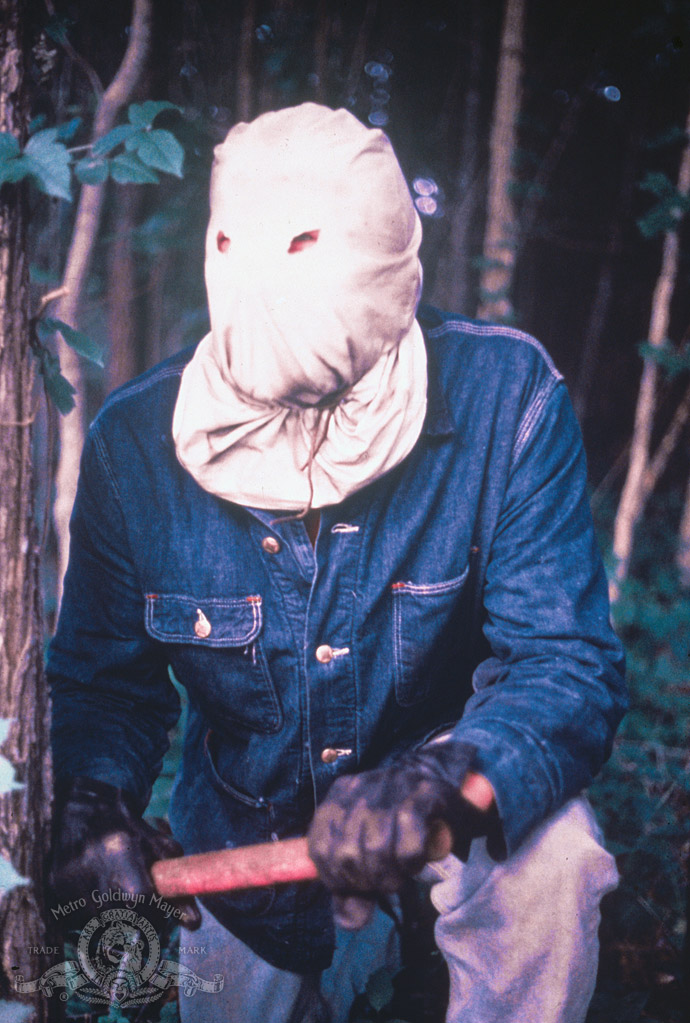
The Phantom Killer never achieved the mainstream fame of Michael Myers, Freddy Krueger or Jason Voorhees, but his influence on the slasher genre is undeniable.
The Town That Dreaded Sundown arrived years before the slasher boom of the late 1970s and 1980s and featured many elements that would become genre staples: masked killer, young victims, lovers’ lane attacks, police investigations and a terrifying sense that evil could strike anywhere.
Add in the unforgettable trombone murder, the eerie sack mask and the real-life inspiration, and you have one of horror’s most important proto-slashers.
The Phantom Killer may not be a household name, but horror history would look very different without him.
Hall of Killers Ranking
Second Class Tier
A pioneering slasher whose crimes blurred the line between true crime and horror fiction. The Phantom Killer helped pave the way for an entire generation of masked murderers.