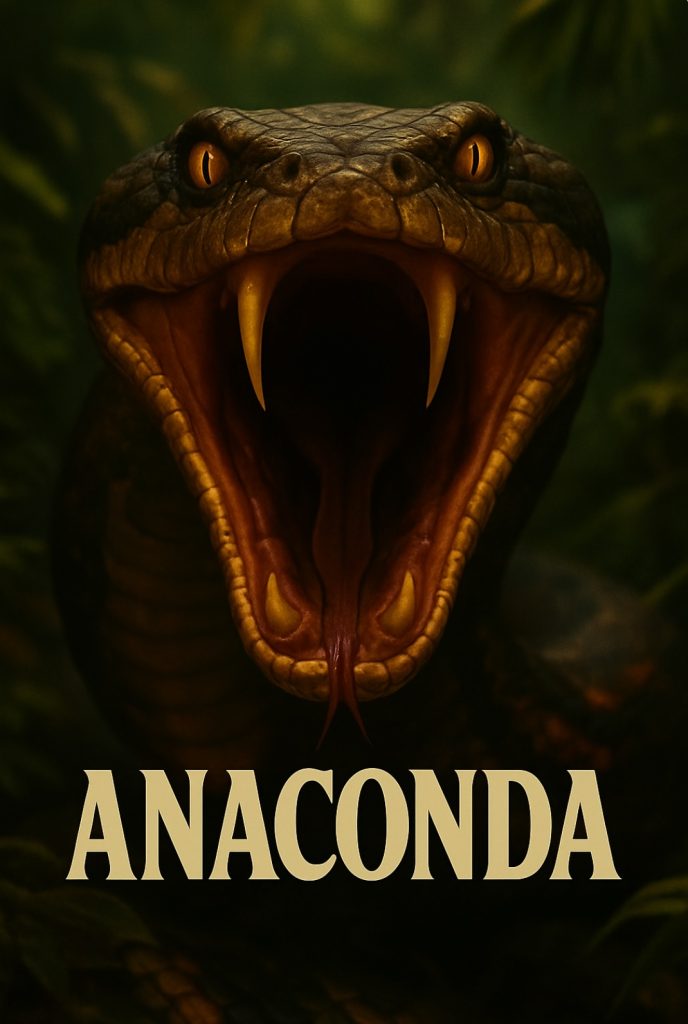
Also Known As: Anaconda, The Giant Anaconda, The Amazon Predator
First Appearance: Anaconda (1997)
Most Iconic Form: A massive man eating snake stalking prey through the Amazon rainforest
Kill Count: Numerous across the franchise including explorers, hunters, and civilians
Portrayed by: Animatronics and visual effects creature
Tier: First Class Tier
Anaconda (1997)
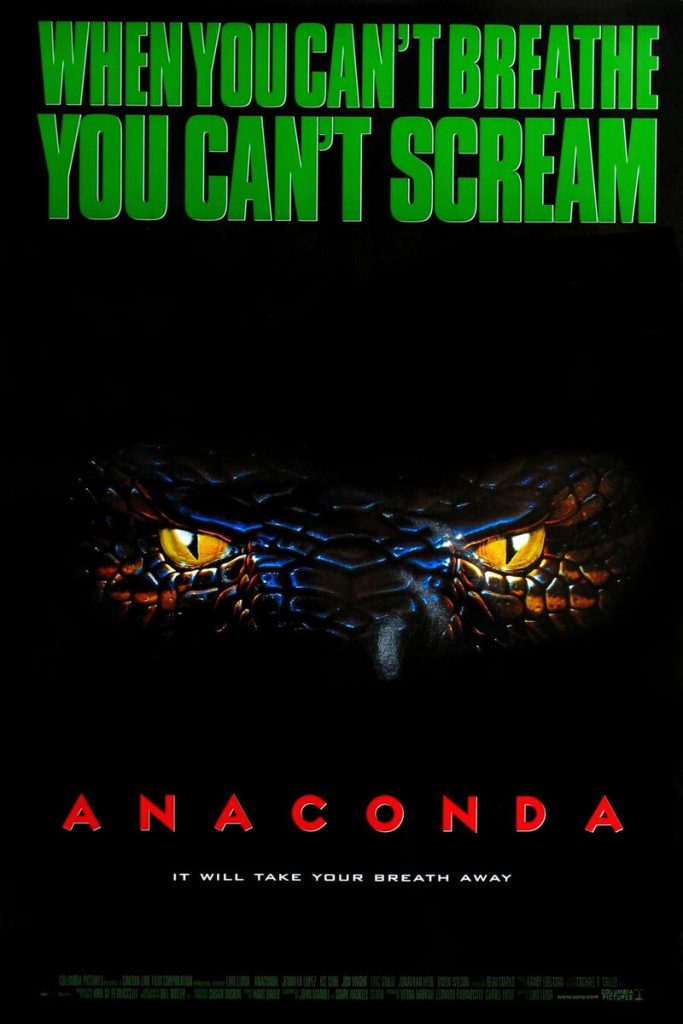
Directed by Luis Llosa, Anaconda introduced one of the most memorable creature killers of late nineties horror adventure cinema. The film follows a documentary crew travelling through the Amazon rainforest who are manipulated by poacher Paul Serone into hunting a legendary giant anaconda.
The snake in the original film is presented as both myth and apex predator. Unlike many creature features where the monster is purely accidental, this anaconda is deliberately hunted and repeatedly encounters humans, establishing it as an active and intelligent threat. It stalks boats, constricts victims, and ambushes prey from the water and dense jungle foliage.
Its attacks are brutal and methodical. Victims are crushed, swallowed whole, or dragged beneath the water. One of the film’s most iconic moments involves the snake regurgitating a partially digested victim before continuing its assault, reinforcing its monstrous resilience. The creature survives gunfire, explosions, and fire, giving it an almost unstoppable presence within the jungle environment.
Anacondas: The Hunt for the Blood Orchid (2004)
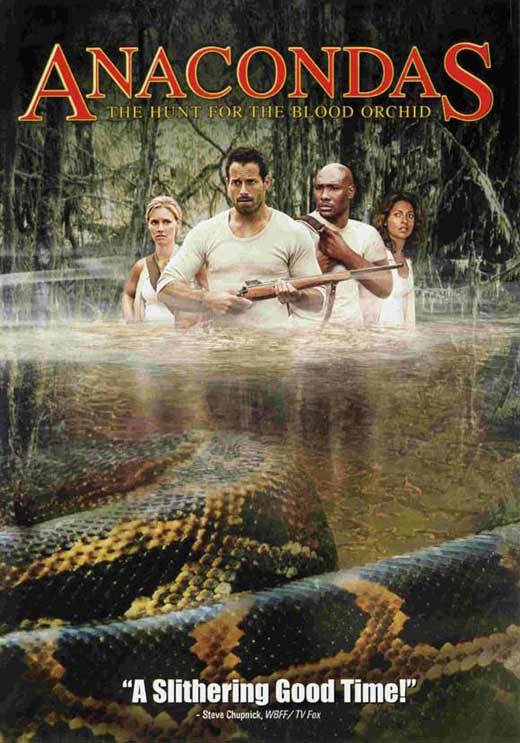
The sequel shifts the focus from a single legendary snake to a breeding population of oversized anacondas in Borneo. A scientific expedition searching for the mythical Blood Orchid discovers that the plant’s properties have extended the lifespan and size of the snakes, creating a nest of giant predators.
Here, the anacondas are more numerous and aggressive, functioning as territorial killers rather than a singular stalker. They attack in swamps, ruins, and rivers, using constriction and ambush tactics. The film expands the mythology by suggesting environmental and biological factors behind their abnormal growth, turning the creatures into a recurring ecological horror rather than a one off anomaly.
Anaconda 3: Offspring (2008)
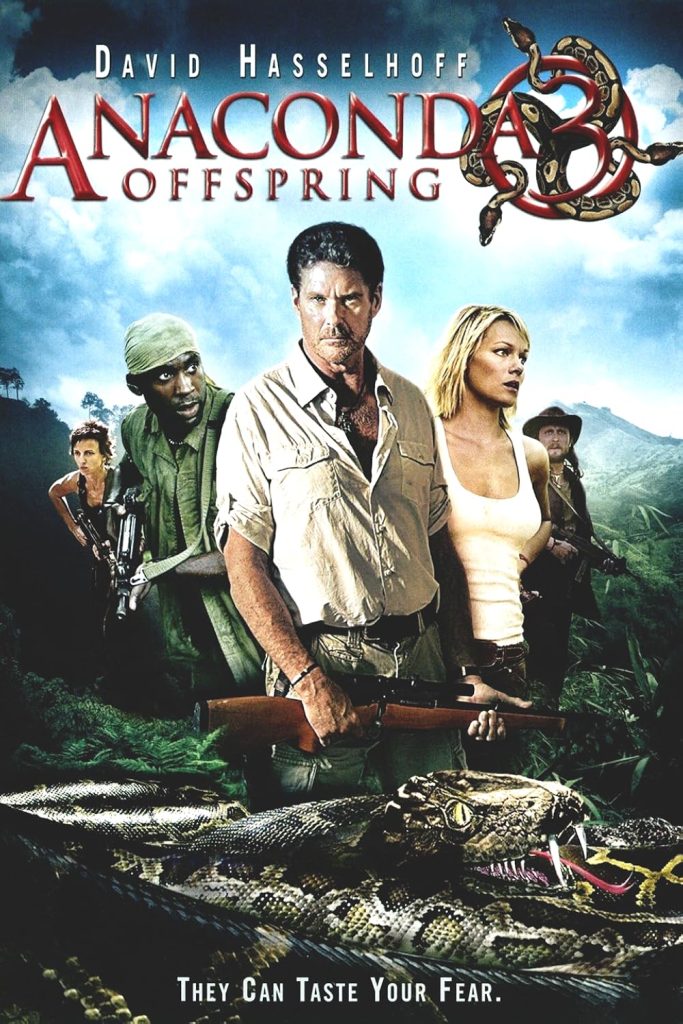
In this instalment, the anaconda becomes a product of human interference. A genetically modified snake escapes captivity and begins a killing spree across Eastern Europe. The creature is larger, faster, and more aggressive due to experimentation, blending science fiction with creature horror.
Unlike the earlier jungle setting, the snake now operates in more varied environments, proving its adaptability as a killer. Its ability to evade military pursuit and survive heavy weaponry reinforces its evolution into a near unstoppable biological weapon.
Anacondas Trail of Blood (2009)

Continuing directly from the third film, the surviving anaconda becomes even more dangerous due to regenerative properties linked to experimental research. The creature hunts both mercenaries and scientists, creating a body count driven by corporate greed and scientific hubris.
The film emphasises endurance as the creature’s defining trait. Injuries that would kill a natural animal only slow it, allowing it to continue hunting relentlessly. This further cements the anaconda as a persistent franchise killer rather than a single contained threat.
Lake Placid vs Anaconda (2015)

This crossover places the giant anacondas against another creature feature icon, escalating their threat level within a more exaggerated horror setting. The snakes are once again depicted as engineered and unnaturally large, capable of taking on heavily armed opposition and other apex predators.
Their role here leans more into spectacle, but the core identity remains the same: silent, constricting, opportunistic killers that dominate their environment through sheer size and strength.
Anaconda (2025)
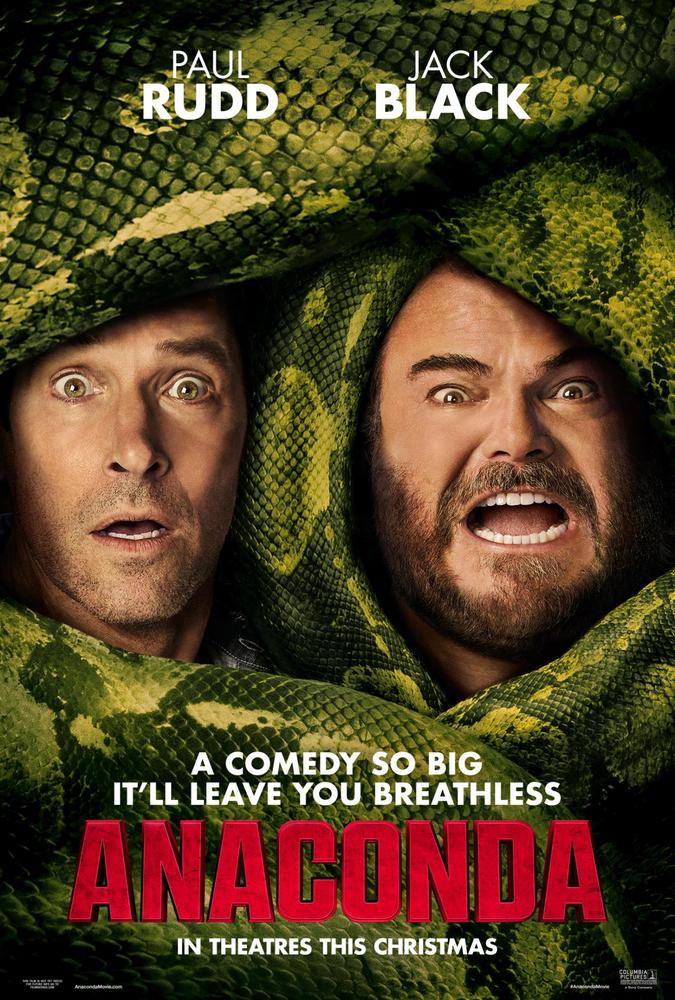
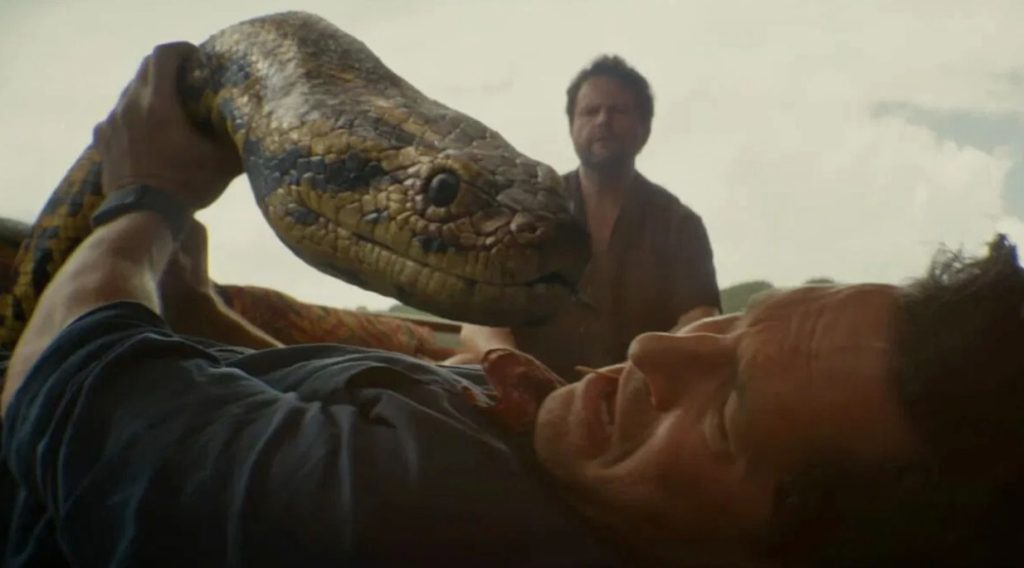
The 2025 film, directed by Tom Gormican and starring Paul Rudd and Jack Black, serves as a meta reboot of the original 1997 film and the sixth instalment in the series. The story follows a group of childhood friends who travel to the Amazon rainforest to make their own low budget remake of Anaconda, only to encounter a real giant snake that devastates both their production and a rival film crew.
In this version, the anaconda retains its status as a lethal jungle predator but is framed within a more comedic and self aware narrative. The snake attacks cast and crew members, destroys film sets, and terrorises the jungle expedition as the characters attempt to survive while their project collapses around them. Its methods remain consistent with the franchise, ambush attacks, constriction, and swallowing victims whole, including a sequence where a character is swallowed and later discovered alive.
The film blends action adventure comedy with creature horror, but the anaconda itself is still treated as a genuine physical threat rather than a joke monster. The group ultimately uses explosives and improvised tactics to defeat it, reinforcing the long standing franchise theme that extreme force is required to stop such a creature. Released in December 2025 by Sony Pictures Releasing, the film grossed over 133 million dollars worldwide and received mixed critical reception, with many noting its tonal shift toward comedy while still preserving the franchise’s central killer.
Nature And Behaviour
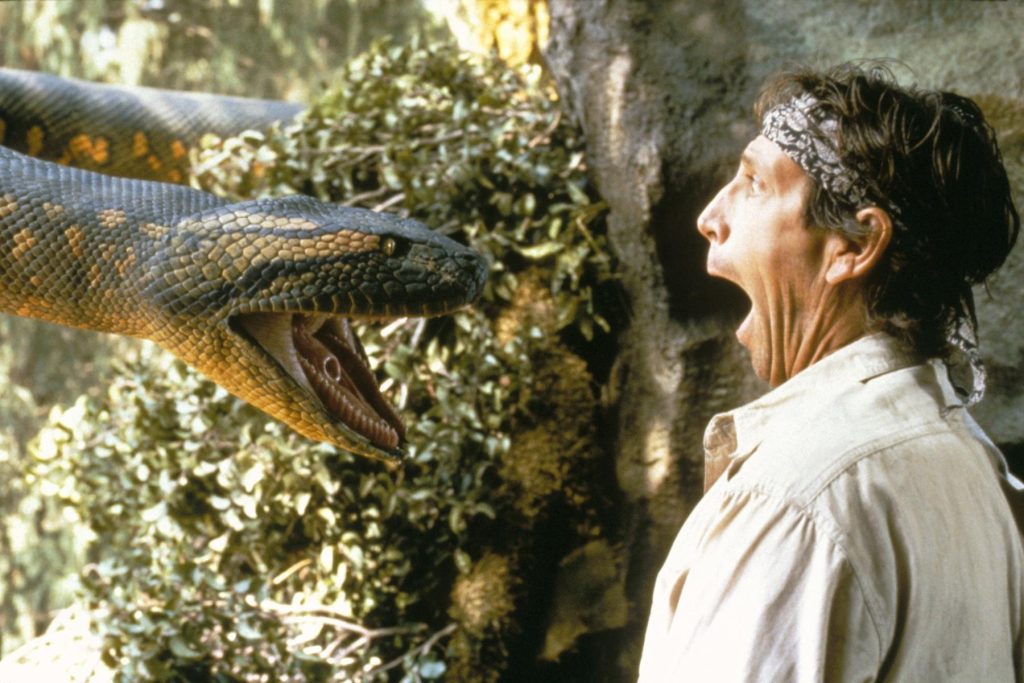
The anaconda functions as a primal predator rather than a symbolic villain. It does not stalk out of revenge or malice. It hunts because it is an apex creature in its domain. Waterways, dense vegetation, and confined spaces become natural hunting grounds where it can ambush prey with minimal warning.
Across the franchise, the snake is consistently depicted as unusually intelligent for an animal antagonist. It tracks movement, adapts to threats, and repeatedly targets vulnerable humans. Its preferred method of killing is constriction followed by consumption, though drowning and blunt force trauma also occur during attacks.
Legacy
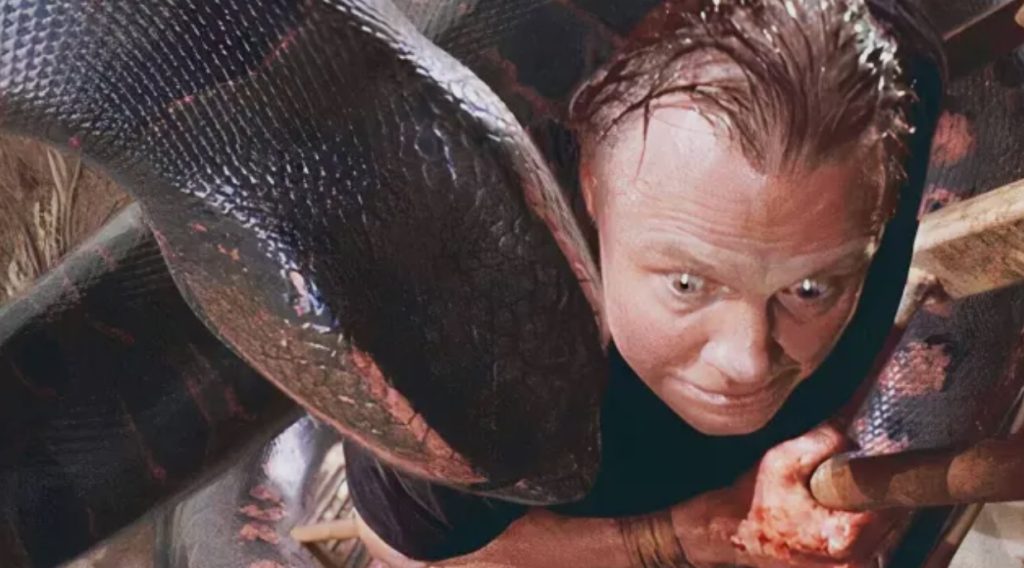
The anaconda became one of the most recognisable creature killers of the late twentieth century. The original 1997 film achieved cult status thanks to its jungle setting, memorable performances, and the sheer presence of the giant snake as a cinematic threat.
Over time, the creature evolved from a singular legend into a franchise icon, appearing across sequels, television films, and a modern reboot. While critical reception across the series has been mixed, the central monster has remained consistent as a staple of creature feature horror.
The 2025 meta reboot introduced the anaconda to a new generation, blending comedy and nostalgia while reaffirming its place in popular culture. Even when the tone shifts, the creature itself remains an enduring symbol of nature as an unstoppable killer.
88 Films brought out a killer boxset which can be purchased HERE.
League Placement
The Anaconda belongs firmly in the First Class Tier. It is a franchise defining killer with global recognition, multiple film appearances, and a lasting legacy in creature horror. Its combination of scale, persistence, and iconic jungle terror elevates it beyond standard monster status into a top tier Hall of Killers entry.