
First Appearance: It (novel, 1986) by Stephen King
Portrayed by: Tim Curry (1990 miniseries), Bill Skarsgård (2017, 2019, upcoming Welcome to Derry)
Estimated Kill Count: Hundreds over centuries (via direct kills and manipulation of mass tragedies in Derry)
It (1990 Miniseries)
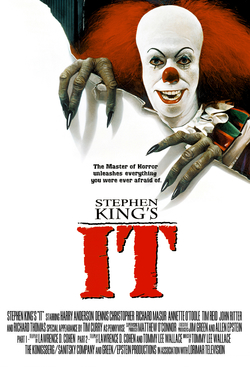
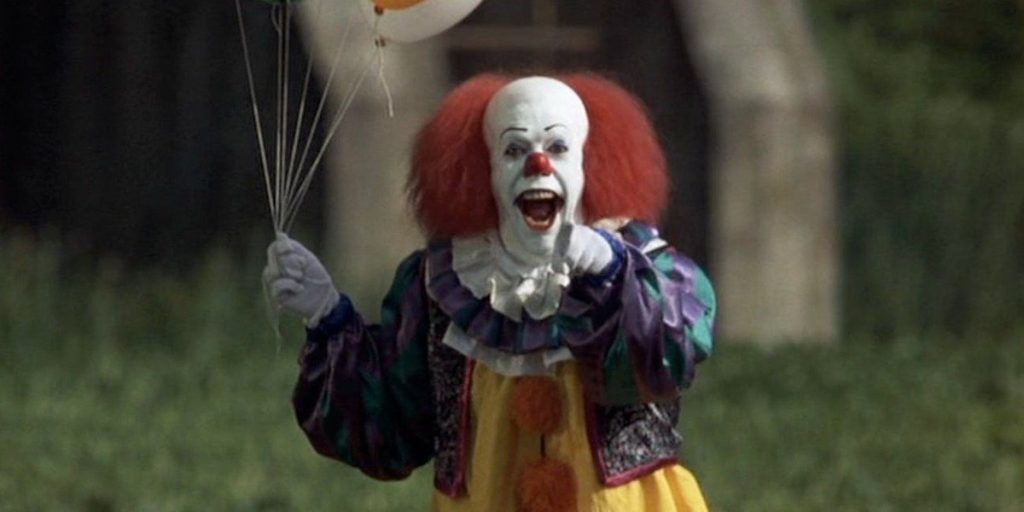
In the 1990 miniseries adaptation of It, Tim Curry’s Pennywise is the linchpin of the horror. Unlike later portrayals that lean into the alien and otherworldly, Curry’s version is far more grounded — and that’s what makes him unnerving. He presents himself as a typical circus clown: cheerful, loud, and over-the-top. But it’s an illusion that never quite holds. Beneath every laugh and exaggerated expression lies a quiet cruelty. His eyes narrow just a bit too long. His smile lingers too sharply. His humor is tainted with threat.
Curry plays Pennywise not as a monster mimicking humanity, but as something that understands humanity intimately and mocks it. He isn’t hiding behind the clown mask — he’s wearing it proudly, as a lure. This Pennywise doesn’t rely on special effects or jump scares. He relies on psychological warfare, taunting his victims from within sewers, drains, and dreams. Whether it’s softly whispering Georgie’s name or turning into a snarling beast mid-sentence, Curry gives the character a dynamic range that makes even his calmest moments feel dangerous.
Unlike the later Skarsgård portrayal, which emphasizes inhuman movements and unblinking stillness, Curry’s Pennywise is boisterous and chaotic — loud, sarcastic, and theatrical. He can be almost comical, which only makes the horror worse when he suddenly snaps into bloodthirsty rage. He doesn’t want to just feed — he wants you to scream first. In the 1990 version, Pennywise feels less like a cosmic entity and more like a sadistic spirit that enjoys watching people suffer — a performance-driven predator who finds joy in drawing out fear before the kill.
It (2017)
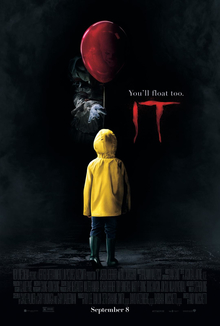
In the 2017 adaptation, Bill Skarsgård’s Pennywise is a complete departure from the brash, theatrical menace of Tim Curry’s version. This Pennywise is not humanlike at all — he’s a predator pretending to be a clown, wearing the persona like a poorly fitted skin. From the first scene, it’s clear this incarnation is more ancient, more alien, and far more sinister. His voice floats between babyish and demonic, his eyes drift independently, and his body moves in jerky, almost insect-like ways. Every part of him is designed to unsettle.
Skarsgård’s performance captures the essence of something that doesn’t truly understand humanity but mimics it enough to lure its prey. His smiles are wrong, his mannerisms are too rehearsed, and his emotional beats are mistimed — which makes them terrifying. When he speaks to Georgie in the opening scene, there’s a moment of eerie silence before he drools, breaking the illusion. It’s in these subtle cracks — the shift from stillness to sudden aggression — that this Pennywise thrives. He doesn’t just scare you — he disorients you.
Visually, this Pennywise is a gothic creation: pale as porcelain, adorned in a centuries-old, childlike clown outfit. The design feels ritualistic, like something from a forgotten era — a fairy tale that’s been twisted over time. The costume, combined with Skarsgård’s contorted facial expressions and unpredictable body language, creates a sense that this isn’t a clown who kills — it’s something cosmic that uses a clown to get close.
This version of Pennywise also leans heavily into physical transformation. He unhinges his jaw like a snake, sprouts spider limbs, and morphs into whatever terrifies his victims — from a leper to a headless child. But no matter the form, fear is his currency, and Skarsgård plays every scene as if he’s tasting it in the air. He doesn’t need to chase — he waits, he whispers, and then he strikes with devastating force.
It: Chapter Two (2019)
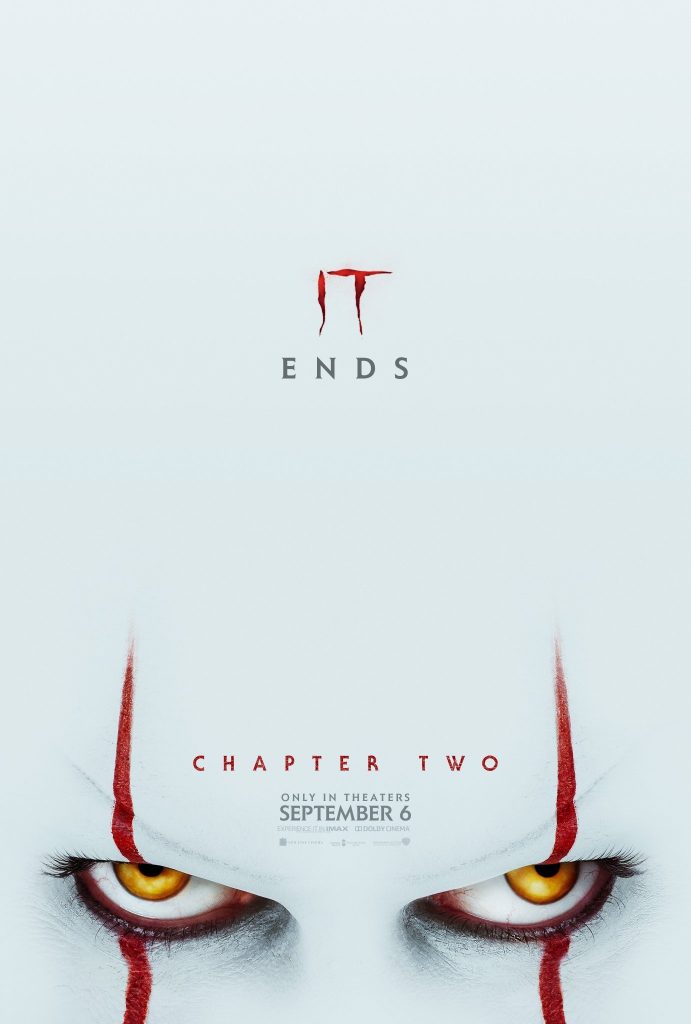
In Chapter Two, Pennywise evolves from a simple predator into a sadistic manipulator, targeting the adult Losers Club with more psychological sophistication than before. While the 2017 film focused on physical fear — grotesque transformations, jump scares, and overpowering presence — this sequel explores the emotional and spiritual scars left behind. Pennywise is fully aware that his prey has matured, and so his tactics adapt: instead of chasing children with fangs, he forces grown adults to relive their worst traumas.
Bill Skarsgård doubles down on the unsettling grace of his performance, but adds a new layer: cruel amusement. Pennywise isn’t just feeding — he’s enjoying the process, dragging out each torment with theatrical flair. His voice has more variance, sometimes soft and parental, other times echoing with rage. The playful stutter and giggle are still there, but now feel more mocking — as if he’s toying with memories as much as people. Whether it’s torturing Richie with his secret or replaying Bill’s guilt over Georgie, this Pennywise digs deeper than flesh — he infects identity.
Physically, Pennywise is even more otherworldly. His transformations are more elaborate and symbolic: a giant Paul Bunyan statue come to life, a disfigured Beverly soaked in blood, a spider-like final form that blends his clown head with monstrous limbs. These forms aren’t just to scare — they represent personal shame, regret, and guilt. His attacks are tailored. His lair — the bone-littered ruins under Derry — becomes a psychological arena where each Loser must confront not just him, but themselves.
In Chapter Two, Pennywise is less visible but more present. He doesn’t need to be in every scene to haunt them. The film reinforces that his true form isn’t the clown — it’s the fear he leaves behind. When he is finally confronted by the reunited Losers, they defeat him not with weapons, but by standing tall, refusing to fear him. His withering, shrinking form — desperately trying to hold onto power — is a final, tragic image of a god losing its grip.
This Pennywise, especially in his final moments, is not just a villain — he’s a decaying force of fear, crumbling under the weight of those who have grown beyond him.
Upcoming: Welcome to Derry
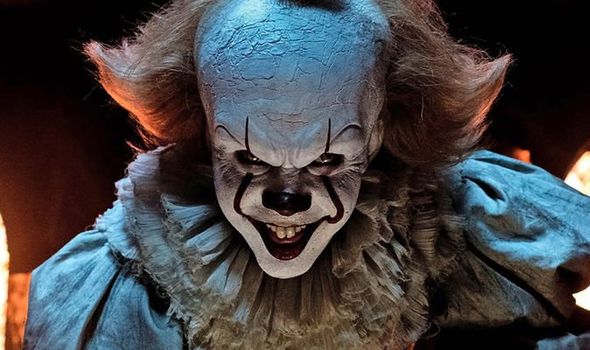
Welcome to Derry is the highly anticipated prequel to the modern It films, set to expand the mythology of Pennywise and the cursed town of Derry. While the series hasn’t been released yet, early details suggest it will explore the early 20th-century origins of Pennywise’s influence — potentially going as far back as his first known emergence in 1715 and the events leading to the town’s dark, cyclical pattern of violence.
Though not officially confirmed by Warner Bros. at the time of writing, Bill Skarsgård is expected to reprise his role, returning to the disturbing physicality and psychological nuance that defined his portrayal in the 2017 and 2019 films. If he returns, fans can expect a more primitive, perhaps less “polished” version of Pennywise — one still experimenting with how to wear the clown persona, and still learning how to manipulate humanity through fear.
The series is rumored to dive deeper into the cosmic horror hinted at in the films — possibly offering glimpses into Pennywise’s true form as “It”, the interdimensional being of deadlights that exists beyond human comprehension. We may also learn more about the history of the Laughter Circus, the rise of Derry as a cursed town, and how Pennywise established himself as a myth etched into the town’s subconscious.
More than anything, Welcome to Derry has the opportunity to shift Pennywise back into the shadows, portraying him not only as a killer but as an ancient force weaving horror into the town’s foundation. If the show leans into this slow-burning dread — showing the evolution of the clown from spectral figure to dominant persona — it may offer the most detailed, terrifying origin story for Pennywise yet.
Whether or not the series follows the metaphysical threads from the novel — including the true cosmic form of It or the Turtle (Maturin) — remains to be seen. But one thing is certain: Welcome to Derry will further elevate Pennywise from a recurring threat to a generational curse, deeply tied to Derry’s DNA.
Nature & Abilities
Though he most often appears as “Pennywise,” this entity is truly a cosmic predator — an ancient shapeshifting being from outside time and space. He feeds on fear, taking the form of whatever scares his victim most. Pennywise is merely a mask — beneath the ruffled costume lies something closer to a god or demon. His true form is hinted to be incomprehensible, with aspects glimpsed only as “deadlights” — beams of pure madness.
Merch & Legacy
- NECA & Collectibles: Pennywise has been immortalized in action figures, statues, Funko Pop!s, and detailed replicas — with versions from both the 1990 and 2017 interpretations.
- Costumes & Props: Pennywise costumes are a staple of Halloween culture, with both Curry’s and Skarsgård’s styles inspiring cosplay worldwide.
- Video Games: Pennywise-inspired content has appeared in horror game mods and fan projects. Though not officially included in Dead by Daylight yet, fans continue to campaign for his inclusion.
- Cultural Impact: Pennywise has become one of the most recognized horror figures ever — triggering waves of “creepy clown” sightings in real life and spawning generations of coulrophobia (fear of clowns).
Trivia
- Stephen King based Pennywise on a combination of childhood fears, especially clowns, and the predatory nature of ancient mythological creatures.
- Bill Skarsgård improvised several of his character’s most terrifying elements — including the infamous eye drift and the childlike voice that slips into growling menace without warning.
- Tim Curry’s portrayal is still celebrated for its balance of camp and dread — a masterclass in unsettling charisma.
League Placement
Infamous Class
A predator cloaked in innocence, Pennywise is the nightmare that wears a smile. He is fear incarnate — and feeds on it with delight.