Se7en – Thirty Years Of Rain, Sin, And Trauma
Thirty years. That is how long it has been since David Fincher crawled out of the blasted crater left by Alien 3 and said, “Right, now I am making a film my way.” And the world, still blissfully unaware of what was coming, kindly responded, “Sure, kid, what harm can a stylish crime thriller do?” Then Se7en arrived, slapped audiences in the face with a gluttony victim full of cockroaches, and cinema has been quietly crying in the shower ever since.
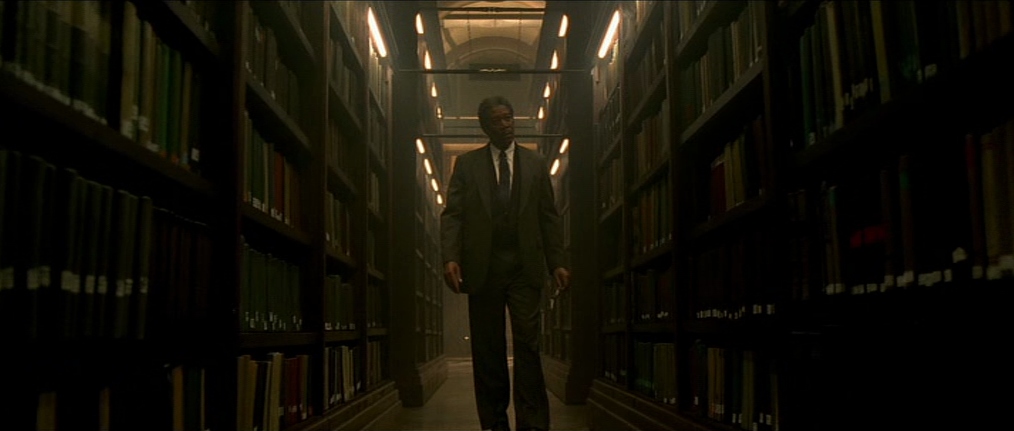
It is impossible to overstate how unlikely the success of Se7en looked on paper. You had Fincher, the music video wunderkind whose first feature was so studio-handled he once joked he would rather die of colon cancer than go through that experience again. You had Brad Pitt, then best known for looking dreamy in Legends of the Fall and not yet crowned Hollywood royalty. And you had Morgan Freeman, coming straight off the theatrical underperformance of The Shawshank Redemption, which would later go on to become “the film everyone names as their favourite because it sounds intellectually respectable.”
No one expected a masterpiece. No one expected a cultural phenomenon. And absolutely no one expected a pitch-black serial killer procedural to become the definitive horror thriller of the decade.
But it did.
A film that announces itself with shredded fingertips and NIN
Even the opening credits of Se7en arrive like a warning label. All scratchy handwriting, razor blades, and John Doe carefully slicing off his fingerprints, set to that unsettling remix of Nine Inch Nails’ Closer. Fincher wanted titles that looked like a killer scribbled them on the film stock, and boy, did we get it. Those jittery, grimy credits have been copied so many times that entire generations of film students believe it is illegal to make a thriller opening that does not look like a serial killer’s scrapbook.
The film drops us into a nameless city where it rains so much the clouds should get their own SAG card. Detective Somerset (Freeman) is counting down to retirement, while Mills (Pitt) has just arrived with a box full of enthusiasm and self delusion. The pair stumble into a series of murders based on the seven deadly sins, staged with such grotesque artistry the film earned its reputation as a stylish nightmare.
And then there is the casting sleight of hand. Kevin Spacey, who had just won an Oscar for The Usual Suspects, insisted his name be scrubbed from the marketing, so his sudden appearance halfway through the story felt like a live grenade tossed into the audience. Love him or loathe him now, his cold, quiet performance as John Doe remains one of the most terrifying ever put on screen.
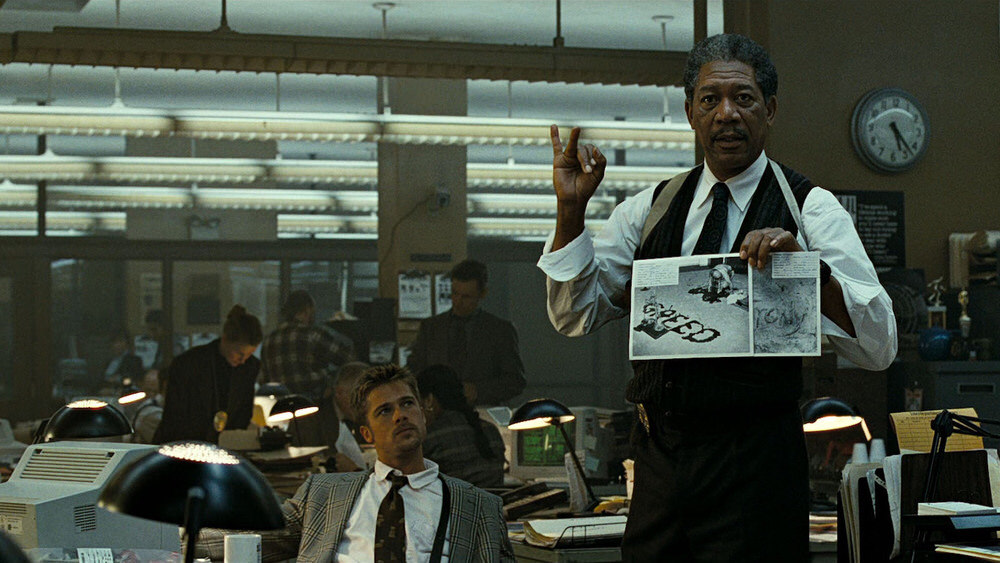
A production held together by rain machines, method acting, and Brad Pitt bleeding everywhere
If Se7en feels authentic in its grime and exhaustion, it is because the production was absolute chaos in the most delightful way.
Leland Orser, who plays the trembling man in the Lust scene, deliberately hyperventilated and refused to sleep for days so his nervous breakdown would look real. Meanwhile, prosthetics for the Sloth victim took over fourteen hours to apply, turning the actor into the world’s most committed human raisin.
Brad Pitt, not to be outdone, decided to contribute by accidentally smashing his hand through a windshield during the chase scene. The injury required surgery, and rather than slow production, Fincher simply wrote it into the film. Ever notice how Mills keeps his hand in his pocket a lot? That is Pitt doing what Fincher affectionately called “pocket acting.”
Fincher himself, possibly traumatised by his Alien 3 battles, refused to let the studio tamper with his ending. Executives wanted something lighter, something friendlier, something that did not involve a certain box. Pitt flat out refused to make the movie if they changed it, and Freeman backed him. That ending, now one of the most famous in film history, exists purely because two actors threatened to walk.
Good for them. Bad for Gwyneth Paltrow’s character, obviously.
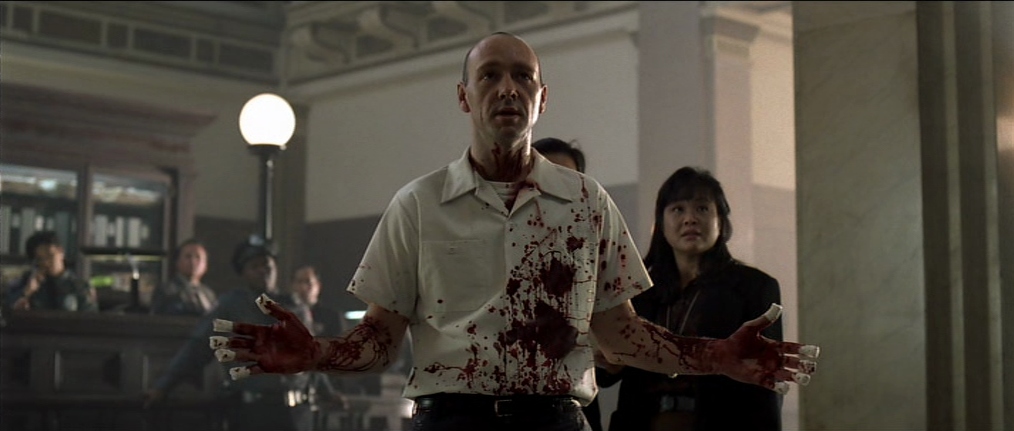
A film grim enough to make Denzel Washington say “no thanks”
One of the funniest pieces of trivia from Se7en’s tortured road to production is this: several huge actors turned it down for being “too dark.” Among them were Denzel Washington and Sylvester Stallone, both of whom later admitted they regretted it.
Guillermo del Toro was offered the chance to direct but rejected the film because it clashed with his inherently romantic worldview. The irony here is that del Toro now owns enough jars full of monster organs to qualify as a John Doe understudy.
And in a twist that would make John Doe proud, Fincher and the writers deliberately kept the city unnamed to create a sense of urban pessimism that could apply anywhere. This decision has confused audiences for decades. A trivia system in US bars once asked, “What city does Se7en take place in?” and it became the most incorrectly answered question in the system’s history. Everyone said New York. Only a few sages answered correctly: “none.”
Somerset would be proud.
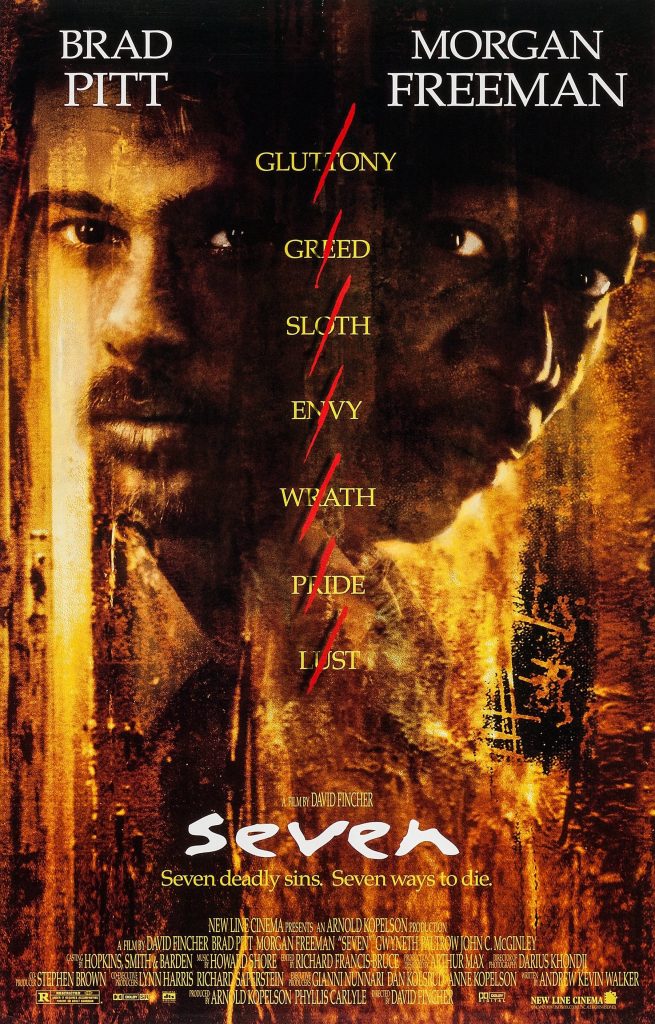
Se7en turns thirty, and nothing has matched it
Three decades later, Se7en still has no real rival in the serial killer thriller space. Sure, The Silence of the Lambs is classier and Jonathan Demme probably owns fewer rain machines. Manhunter is icy brilliance. Zodiac, also from Fincher, is a procedural masterpiece. But none match Se7en’s oppressive dread, its grimy aesthetic, or its willingness to push mainstream cinema into the gutter and say, “Come look at something upsetting.”
It is stylish but not glamorous, bleak but not hopeless, shocking but not exploitative. And somehow, through all that murk and misery, it launched Fincher into the stratosphere, turned Pitt into a superstar, redefined Freeman as the sagely detective archetype, and influenced thousands of films, shows, and music videos.
If a director tried to make Se7en today, a streaming service executive would slap the script shut halfway through and ask, “Can we at least make the killer hot?” Fortunately, Se7en arrived before those dark days.
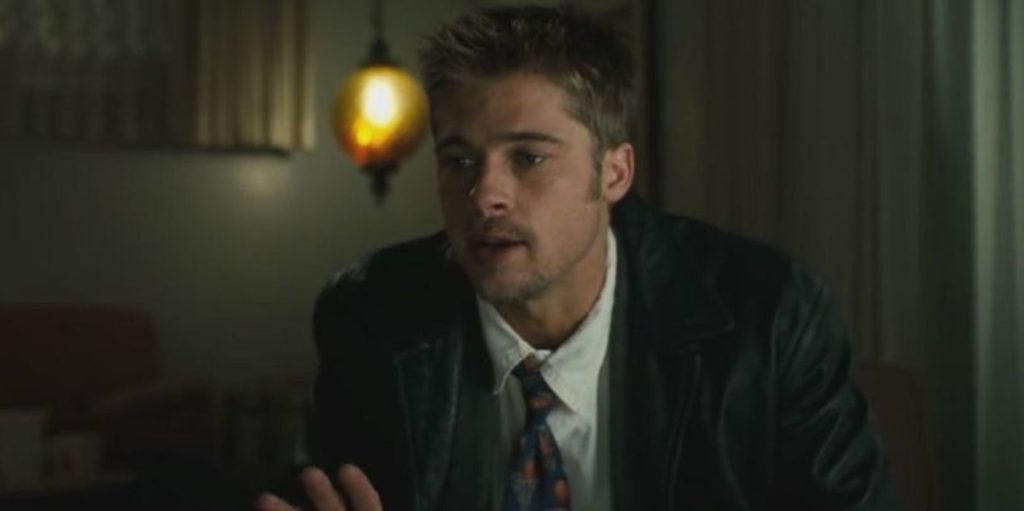
Happy 30th birthday, Se7en. You miserable, brilliant masterpiece.
Thirty years on, Se7en remains a film nobody forgets. For some, it is the serial killer classic. For others, it is the movie that made them sleep with the lights on. For many, it is the reason they avoid cardboard packages entirely.
And for the rest of us? It is a reminder that sometimes, lightning strikes twice. First you get Alien 3. Then you get Se7en.
Pain, then glory.
Sloth, then wrath.
Rain, then more rain.
Here is to thirty more years of people whispering:
“What is in the box?”
(We all know. But we will still watch.)