
First Appearance: Hellraiser (1987)
Portrayed by: Doug Bradley (1987–2005), Stephan Smith Collins (2011), Paul T. Taylor (2018), Jamie Clayton (2022)
Estimated Kill Count: 45+ (varies across timelines and films)
Hellraiser (1987)
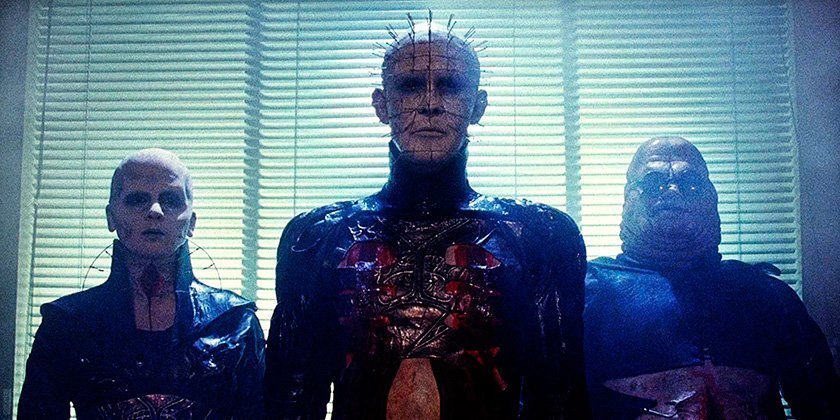
In his debut, Pinhead is less a traditional slasher villain and more a cold, otherworldly enforcer of metaphysical law. He does not stalk victims or act out of personal vengeance; rather, he serves a cosmic role — a gatekeeper of pleasure and pain who appears only when summoned through the Lament Configuration. His demeanor is methodical, emotionless, and almost surgical. When confronted with Frank’s escape from their realm, Pinhead is not enraged — he is concerned with order being violated. Doug Bradley’s calm, deliberate performance, coupled with the character’s gothic leather costume and the nails driven into his skull, create a villain who is more priest than predator, terrifying not for what he says, but for what he implies.
What makes Pinhead’s presence in Hellraiser so unsettling is his restraint. He speaks in chilling aphorisms, referring to himself and the Cenobites as “explorers in the further regions of experience” and “demons to some, angels to others.” He is not portrayed as evil in a traditional sense — he is a function of a moral universe where the seeking of extreme sensation comes at a price. That moral detachment, his indifference to human suffering unless protocol is broken, makes him uniquely terrifying. In this first outing, Pinhead isn’t the main antagonist — but he is the film’s ultimate authority, and every moment he’s on screen feels like a reckoning.
Hellbound: Hellraiser II (1988)

In Hellbound, Pinhead shifts from a distant enforcer to a more complex and emotionally nuanced figure, revealing the depth behind the mask and grid-lined skin. For much of the film, he maintains his chilling composure — appearing alongside his Cenobite brethren with the same reverence for the order of Hell and the sanctity of the Lament Configuration. However, it becomes increasingly clear that Pinhead is more than just a servant of punishment — he is a soul with a buried past. He’s no longer simply the judge; he is someone whose humanity still lingers beneath layers of transformation.
When Kirsty confronts Pinhead with a photograph of his former self — British Army Captain Elliott Spencer — we witness a subtle but powerful shift. Rather than deny or retaliate, Pinhead pauses. There’s no outburst, no declaration, just a quiet recognition of truth. His acknowledgment of his past doesn’t redeem him, but it reintroduces morality into a figure previously defined by cruel neutrality. In his final moments, as Dr. Channard’s grotesque Cenobite form attacks, Pinhead resists. He fights back — not as a demon protecting dominion, but as a man reclaiming a sliver of agency. That resistance costs him his existence, but it also redefines him. Pinhead becomes more than a horror icon in this sequel — he becomes a tragic character, caught between duty and identity, damnation and memory.
Hellraiser III: Hell on Earth (1992)

In Hellraiser III, Pinhead undergoes his most dramatic shift to date — from enigmatic arbiter of pain to a fully unleashed force of malevolent chaos. Separated from his human soul, Elliott Spencer, Pinhead is now pure Cenobite essence: cold, sadistic, and unbound by Hell’s rules. For the first time, he exists fully in the mortal world, no longer tethered to the puzzle box or the moral framework that once defined him. This version of Pinhead delights in suffering — not to restore cosmic balance, but for the sheer pleasure of it. Gone is the disciplined priest of torment; in his place is a god of carnage.
Doug Bradley takes full advantage of this evolution, delivering a more theatrical and expressive performance. Pinhead now mocks religion, desecrates a church, and delivers grand monologues about flesh, faith, and power. His kills are showier, more sadistic — no longer ritualistic, but indulgent. Yet even in this chaos, the film doesn’t abandon his complexity. The separate soul of Elliott Spencer, now a ghostly remnant, serves as a foil — a reminder of the man Pinhead once was. Their eventual reunion in the dream world is the film’s emotional core. In reabsorbing Spencer, Pinhead regains control but also reawakens the pain of his dual existence. Hellraiser III presents Pinhead not just as a villain, but as a fractured being: half demon, half man — and wholly tormented by what he’s become.
Hellraiser: Bloodline (1996)

In Hellraiser: Bloodline, Pinhead transcends his earthly bindings and becomes something far more ambitious: a philosophical conqueror. Spanning three time periods — 18th-century France, modern-day America, and a futuristic space station — the film explores the lineage of the Lament Configuration’s creator, while Pinhead becomes increasingly focused on the institutionalization of suffering. No longer content with individual victims, he now desires to make Earth itself a hellish domain — not for chaos, but for controlled, eternal torment.
Doug Bradley leans into this version of Pinhead as an articulate and calculating figure, with his speeches growing longer, colder, and more imperious. In the modern timeline, he speaks of order through agony, scolding the human race for seeking freedom and pleasure without consequence. In space, his plans become godlike — manipulating technology and Cenobite forces to construct a permanent gateway to Hell. This film reinforces the idea that Pinhead doesn’t just enforce Hell’s rules — he seeks to rewrite them.
Despite the sci-fi setting, Bloodline manages to stay true to Pinhead’s essence: he is still the methodical judge of transgressors. But now, his view of damnation has evolved from intimate punishment to global scale — he wants to rule, not just serve. His eventual demise via the Elysium Configuration (the final form of the puzzle box) is spectacular — obliterating him in the vacuum of space — but his presence lingers. Bloodline marks the last time the character was portrayed with high-concept ambition, and it’s a farewell (of sorts) to the classic, theatrical Pinhead that Doug Bradley had perfected over four films.
Hellraiser: Inferno (2000)

In Inferno, Pinhead takes on a new, almost mythological role — not as a flesh-and-blood villain, but as a manifestation of guilt, consequence, and moral decay. He appears only briefly in the film, but his presence is felt throughout. The story follows corrupt detective Joseph Thorne, whose investigation of a mysterious murder leads him into a surreal descent through psychological torment. As Thorne spirals deeper, the lines between reality, hallucination, and punishment blur — and at the center of it all is Pinhead, waiting to pass final judgment.
When Pinhead finally appears, it is not to kill in rage or theatrics. He speaks calmly, patiently, and with terrible clarity. He reveals to Thorne that everything he has experienced has been part of an endless, looping punishment — a personal Hell crafted from his own sins. In this film, Pinhead is less a character and more an eternal warden, sentencing souls to live with the pain they caused others. He doesn’t stalk or slash — he punishes from within, making Inferno one of the most thematically faithful entries to Clive Barker’s original vision, despite its smaller scale.
Doug Bradley’s portrayal here is minimalist but powerful — reserved, philosophical, and surgical in his condemnation. Pinhead isn’t here to scare with gore; he’s here to hold up a mirror to a man who has lived without remorse. This shift from external villain to moral reckoner repositions Pinhead as the embodiment of earned damnation, and it proves that his power lies not in how often he appears, but in how deeply he resonates when he does.
Hellraiser: Hellseeker (2002)

In Hellseeker, Pinhead returns to a more classical role as both manipulator and punisher, while retaining the introspective weight he carried in Inferno. His presence is sparse yet surgical — he doesn’t stalk the screen, but rather lurks in the shadows of Trevor’s fractured reality, orchestrating a moral trap. As Trevor spirals through a surreal nightmare of memory loss, infidelity, and guilt, Pinhead becomes the silent overseer, ensuring each step leads the man closer to damnation.
Doug Bradley’s Pinhead is once again calm and philosophical, but in Hellseeker, he’s colder than ever — less merciful, more judgmental. He reappears in full force during the climax, revealing to Trevor that all of the events he has experienced were illusions designed to expose the truth of his character. Trevor learns he tried to murder his wife, Kirsty Cotton — the original final girl from the first two Hellraiser films. Unbeknownst to him, Kirsty struck a deal with the Cenobites: five souls in exchange for her freedom. Trevor was one of them.
Pinhead doesn’t rage or gloat — instead, he delivers his judgment with chilling finality. “You have condemned yourself,” he says, reiterating that the Cenobites don’t punish the innocent — they simply balance the scales. In Hellseeker, Pinhead acts as executioner and philosopher — the final voice of morality in a story about betrayal and consequence. His quiet cruelty is more terrifying than any bloodshed, and his restrained presence reinforces the idea that the worst damnation is often the one you bring upon yourself.
Hellraiser: Deader (2005)
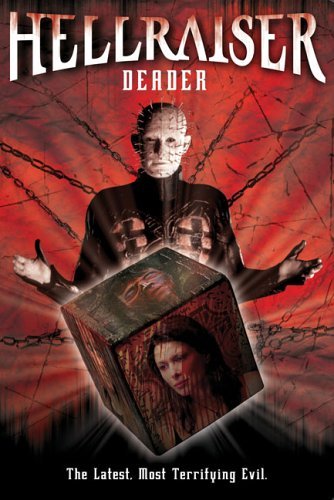
In Deader, Pinhead returns to a role that’s both menacing and symbolic — less physically active, but sharply focused on preserving the order of damnation. The story revolves around Amy Klein, a journalist investigating a Romanian death cult known as the “Deaders,” who have discovered how to return from the dead using a modified version of the Lament Configuration. Their leader, Winter, claims lineage from the puzzle box’s creator, and he aims to usurp the Cenobites’ power over death and resurrection.
Pinhead’s appearances are limited but surgically precise. He does not act randomly — he waits, overseeing the breaking of sacred rules before intervening. Once Winter’s manipulation of life and death becomes clear, Pinhead acts with swift, righteous fury. He isn’t merely protecting Hell’s turf — he’s enforcing a divine hierarchy. When Amy hesitates to fully embrace her role as the next conduit, it is Pinhead who makes the final call, confronting her in the liminal space between death and rebirth.
Doug Bradley portrays Pinhead with classic restraint here — quiet, commanding, and filled with contempt for mortals who try to play god. He condemns the Deaders not for curiosity, but for arrogance. “You opened the box. We came. Now you must come with us,” he declares — a line that recalls the original film but now resonates with deeper judgment. In Deader, Pinhead reasserts himself as more than a killer — he is a guardian of Hell’s law, and he punishes not simply out of duty, but out of a need to correct those who dare warp the sacred balance.
Hellraiser: Hellworld (2005)

In Hellworld, Pinhead becomes a phantom of fear and myth, woven into a meta-narrative where the Cenobites are fictionalized in a popular online game. At first, he appears only in hallucinations and jump-scares — an illusion within an elaborate prank targeting a group of teens obsessed with the “Hellworld” game. These early moments feel uncharacteristic: Pinhead as a dream demon or game mechanic. But that is the point — for the majority of the film, he isn’t really there.
However, when the final act arrives, reality breaks — and so does the illusion of safety. The host of the party, driven mad by grief and vengeance, has buried his victims alive, drugged and hallucinating the Cenobites. Yet once he opens the Lament Configuration himself — arrogantly dismissing its mythos — the real Pinhead appears. And this time, he’s not bound by any game. The true Cenobites manifest, including Doug Bradley’s Pinhead, who returns with all his original poise and menace. With a subtle smirk and minimal words, he executes swift, brutal justice, dispatching the killer without fanfare.
In Hellworld, Pinhead plays two roles: the imagined terror of fan obsession, and the very real final consequence of disbelief. He’s not the antagonist throughout the story — he’s the cosmic punchline, a cruel reminder that Hell doesn’t care if you think it’s just a story. Even in a self-aware film, Pinhead remains untouchable: he is myth, he is truth, and when truly summoned, he does not forgive mockery.
Hellraiser: Revelations (2011)

Revelations marks the first time Pinhead is portrayed by someone other than Doug Bradley in an official capacity. Here, Stephan Smith Collins takes over the physical role, while Fred Tatasciore provides his voice. Unfortunately, the transition is jarring. Gone is the calm, deliberate presence and calculated cruelty of the original Hell Priest — replaced with a version that feels more like a grotesque imitation than a continuation. This Pinhead lacks the measured authority that made the character so terrifying. His movements are stiffer, his delivery more aggressive, and his overall presence diminished by an awkward redesign that’s bulkier, glossier, and less precise.
In terms of behavior, this version of Pinhead is more traditionally sadistic and overtly evil — a departure from the neutral, cosmic adjudicator of earlier entries. He appears more frequently, often delivering generic threats or indulging in violent outbursts. While the character still follows the logic of enforcing the consequences of opening the Lament Configuration, this film lacks the philosophical or thematic weight that gave Pinhead depth. Instead, he’s portrayed as a snarling executioner rather than a high priest of pain and order.
Despite these shortcomings, Revelations attempts to return to the franchise’s roots — centering around two young men who open the box and trade one another’s souls for power and escape. In that context, Pinhead remains a gatekeeper, punishing those who seek to cheat Hell. But without the gravitas of Bradley’s performance or a deeper exploration of the character’s motives, this Pinhead feels like a hollow echo — present in name and appearance, but not in spirit.
Hellraiser: Judgment (2018)
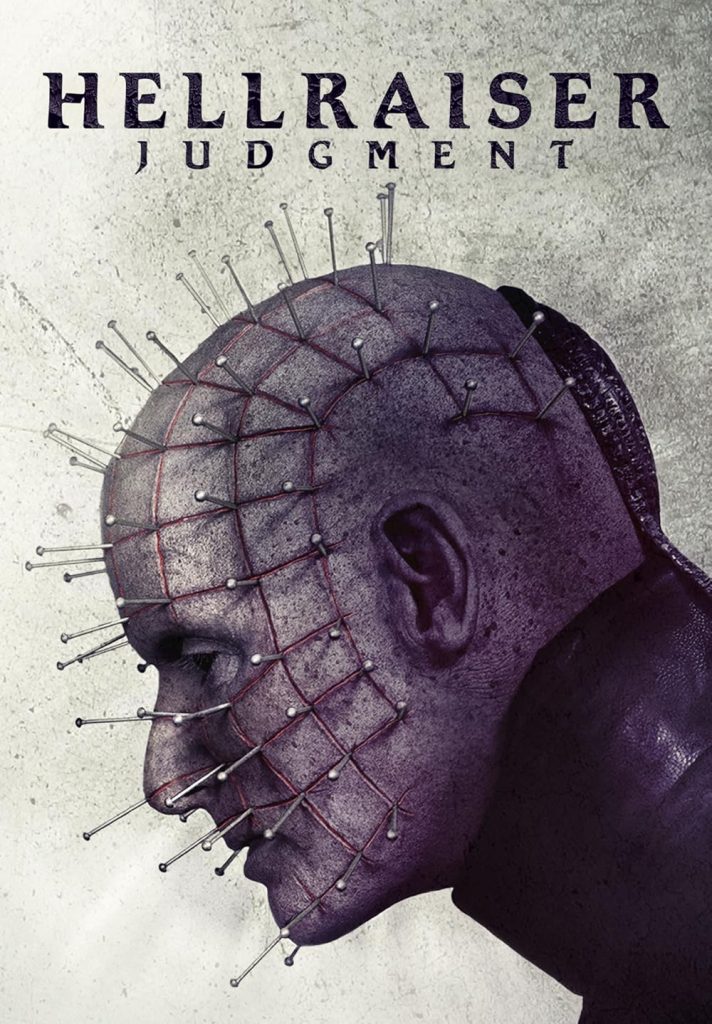
Hellraiser: Judgment introduces a new Pinhead, portrayed by Paul T. Taylor, who brings a colder, more composed energy to the role. While his interpretation lacks the poetic flair of Doug Bradley’s iconic performance, Taylor’s Hell Priest is more regal, judicial, and methodical — restoring the character’s role as a judge of moral transgression rather than a mindless killer. This Pinhead isn’t concerned with gore or theatricality. He functions as part of a dark bureaucracy — a chilling blend of religious ritual and Lovecraftian structure that governs damnation.
In this film, Pinhead is presented as a senior figure in a system of infernal justice, working alongside other entities like the Auditor, Assessor, and Jury — each performing a grotesque part in evaluating a sinner’s soul. His interactions are brief but commanding, and he speaks with cold logic rather than sadistic glee. His role in the plot revolves around the investigation of a serial killer, with the Cenobites acting as higher powers waiting to claim those beyond earthly law. In a twist of irony, he is even punished by Heaven — cast out and forced to walk the Earth — for overstepping his authority when he acts without divine permission.
While Judgment is a low-budget entry, it adds depth to Pinhead’s mythos. He’s less a villain here and more a cog in a terrifying cosmic order — a dispassionate, ancient power that answers only to Hell and its strict sense of balance. Paul T. Taylor’s Pinhead may not redefine the character, but he does restore a sense of grim dignity and ceremonial horror, steering the character back toward his roots as a figure of consequence, not chaos.
Hellraiser (2022 Reboot)
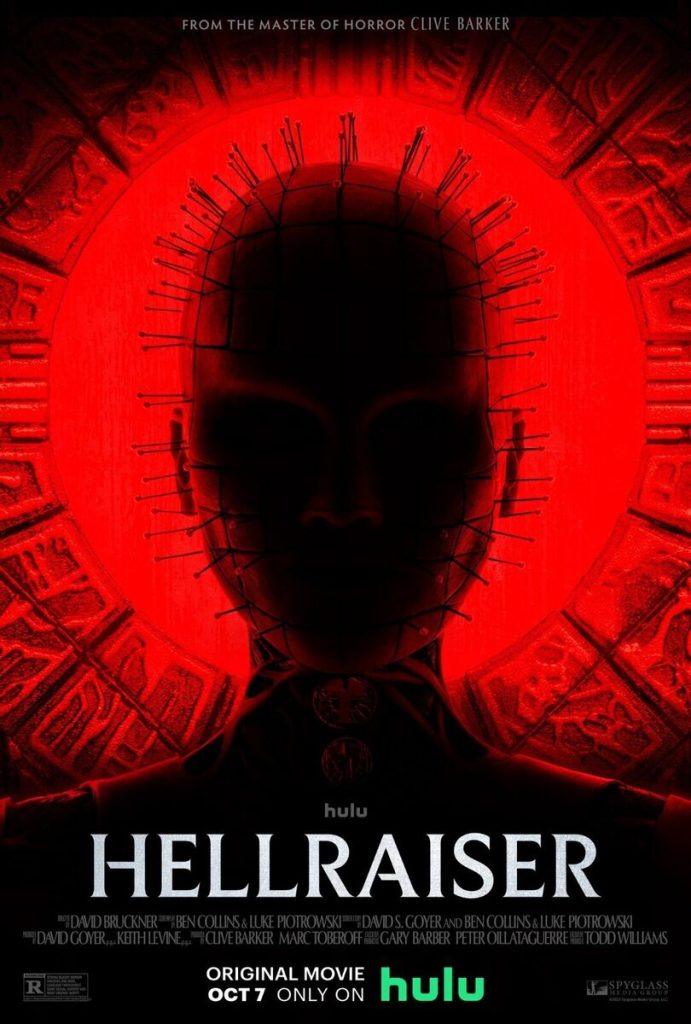
In the 2022 Hellraiser reboot, Jamie Clayton takes on the mantle of Pinhead — officially referred to as “The Priest” or “Hell Priest” — becoming the first woman to portray the role. This iteration is not merely a recasting, but a full reinterpretation of the character, hewing closer to Clive Barker’s original novella The Hellbound Heart, where the Hell Priest was described as androgynous, ethereal, and beyond traditional gender. Clayton’s portrayal embodies this with chilling precision: calm, intellectual, and disturbingly serene — never raising her voice, never betraying emotion.
Visually, this Pinhead is a masterwork of horror design. Instead of leather garments, her “clothing” is carved directly into her flesh — skin peeled and arranged into ornate patterns across her body. The nails in her head are thinner, longer, and more elegantly placed, giving her a more ceremonial, almost regal appearance. Her voice is soft, measured, and mesmerizing — less monstrous, more divine. She speaks with the gravity of a deity, and her dialogue is layered with double meaning: promises of “gifts” that are, of course, curses. She doesn’t threaten — she offers — making her infinitely more terrifying.
Narratively, this version of Pinhead plays a more active role in the story. She manipulates Riley, the protagonist, guiding her through a series of sacrifices tied to the puzzle box’s shifting configurations. Each form of the box corresponds to a different “reward” — such as power, sensation, resurrection, or knowledge — but all roads lead to torment. The Priest grants wishes like a demonized genie, enforcing the Cenobites’ twisted sense of “balance.” In a climactic scene, when Riley refuses her reward (knowing it will come with pain), the Priest coldly observes that choosing regret is just another form of suffering — a more human one.
In Hellraiser (2022), Pinhead is no longer just an icon of 1980s horror — she is once again a terrifying metaphysical force. Jamie Clayton’s performance redefines the character: not as a slasher villain, but as a deity of pain, transformation, and judgment, timeless and absolute.
Other Media
Hellraiser: Origins (2013 Pitch Trailer)
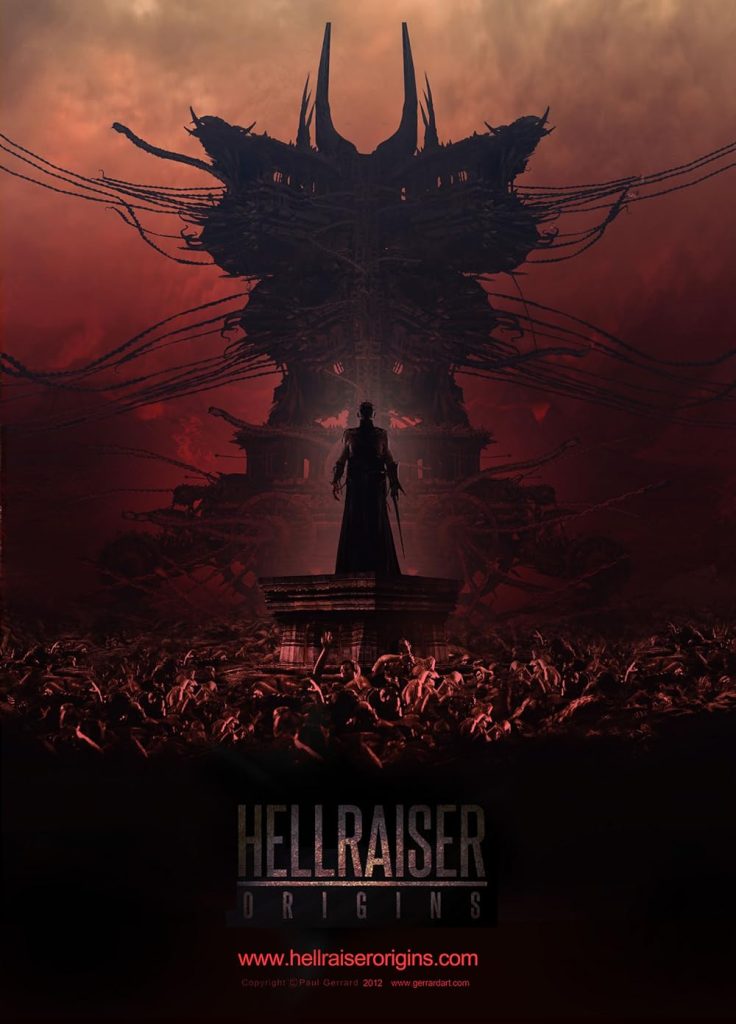
Hellraiser: Origins was not an official entry in the franchise, but rather an independently produced concept trailer — created as a passion project by director Mike Le Han and concept designer Paul Gerrard. Released in 2013, the trailer was designed to pitch a reboot of the franchise that would expand the mythology of the Cenobites and reimagine Pinhead as something even more ancient and cosmic than ever before.
In this vision, Pinhead was not simply the transformed Captain Elliott Spencer, but a godlike entity — a metaphysical force embedded within the fabric of reality, governing pain, transformation, and submission. Gerrard’s new design replaced the familiar grid-like nail pattern with a crown of embedded needles and deep, symbolic scars, drawing inspiration from religious iconography and ancient ritual. This version of the character was less human and more elemental, evoking terror through sheer presence, not personality.
The atmosphere of the trailer was steeped in oppressive dread — ash-covered landscapes, monolithic Cenobite architecture, and a strong visual emphasis on ritual and suffering. Though only a few minutes long, Origins introduced a restructured Hell: one that functioned more like a twisted hierarchy or religious cult. Pinhead stood at its center — not speaking, but radiating authority. The Cenobites around him were grotesque, biomechanical, and beautifully nightmarish — suggesting a return to Barker’s raw, poetic horror.
Despite its enormous fan reception and media buzz, Hellraiser: Origins was never greenlit by Dimension Films, who instead rushed the production of Hellraiser: Revelations to retain the franchise rights. Still, Origins became a landmark in horror fan filmmaking — and an example of how Pinhead could evolve into something even more mythic. For many fans, it remains a haunting “what-if” — a glimpse at a darker, more cerebral future for the Hell Priest.
Video Games
- Dead by Daylight (2021): Pinhead appeared as “The Cenobite” in Behaviour Interactive’s multiplayer horror game. Voiced by Doug Bradley (briefly), he used chains and portals to ensnare survivors. In 2025, he was removed due to licensing expiration.
- Terrordrome: A fan-made horror fighting game featuring Pinhead alongside Freddy, Jason, and Michael Myers.
Toys & Collectibles
- NECA has released multiple detailed action figures of Pinhead in both 7″ and 12″ scales, including alternate heads and Lament Box accessories.
- Sideshow Collectibles produced high-end statues, while Mezco’s Living Dead Dolls line released a stylized Pinhead edition.
- Costumes and replica puzzle boxes have become staples at horror conventions and Halloween retailers.
League Placement
Infamous Class
Pinhead is the philosopher of pain, a judge of souls, and the embodiment of elegant horror. Calm, cold, and intelligent, he stands not only as a killer — but a priest of punishment.