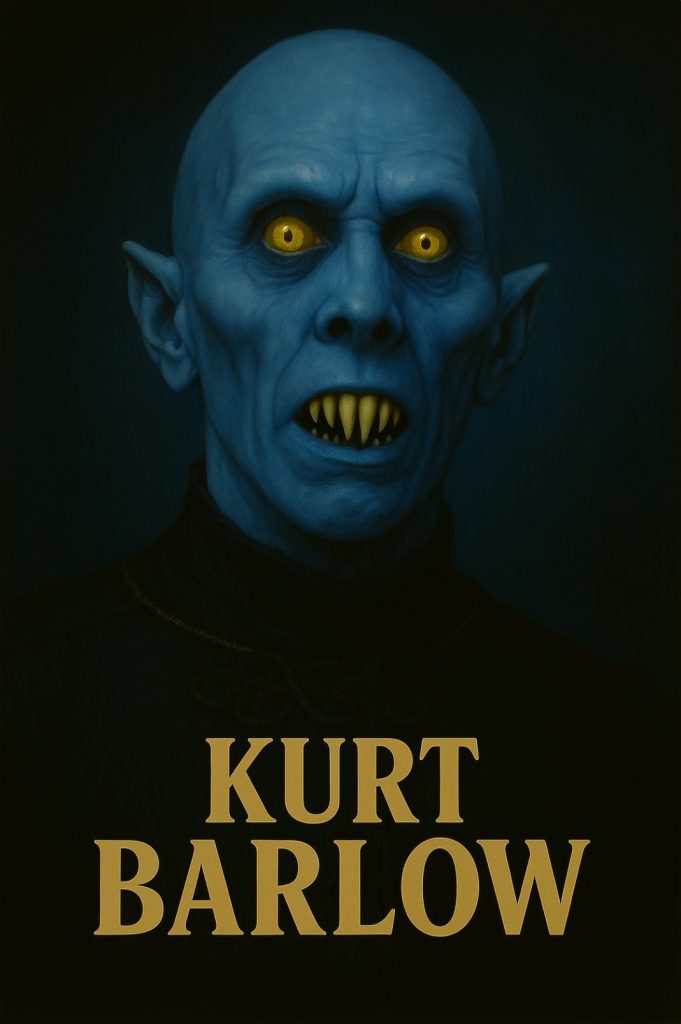
Also Known As: Kurt Barlow, The Master, The Vampire of Salem’s Lot
First Appearance: Salem’s Lot (1975, novel)
Most Iconic Form: A centuries-old vampire feeding on the souls of a small New England town
Kill Count: Dozens across adaptations
Portrayed by: Reggie Nalder (1979), Rutger Hauer (2004), William Sadler (2024)
Tier: First Class Tier
Salem’s Lot (1979 Miniseries)
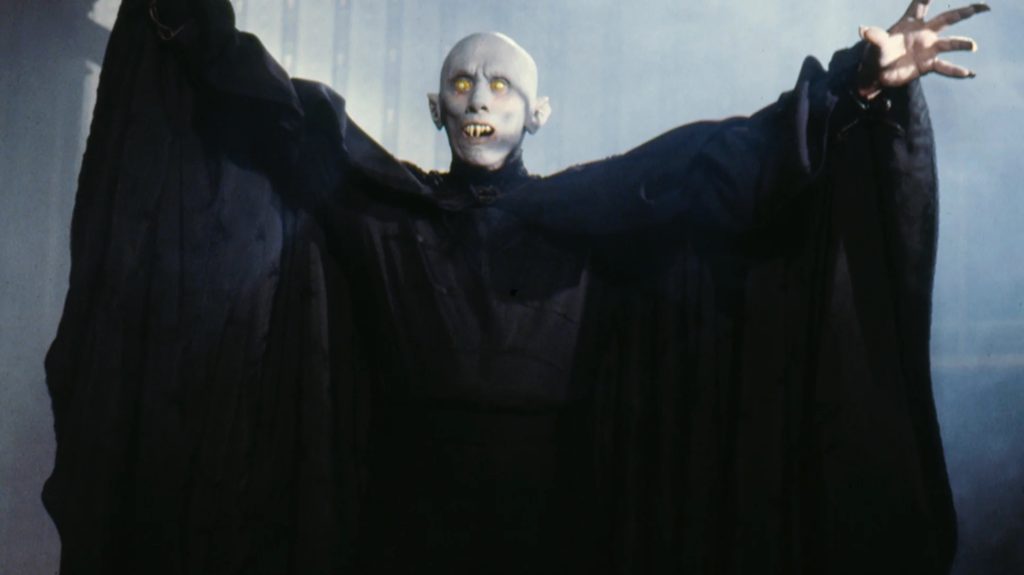
Directed by Tobe Hooper, the 1979 television adaptation of Salem’s Lot transformed King’s novel into one of the most frightening broadcasts in television history. The production reimagined Kurt Barlow as a silent, corpse-like figure in the image of Nosferatu, diverging sharply from King’s original portrayal of a cultured European vampire.
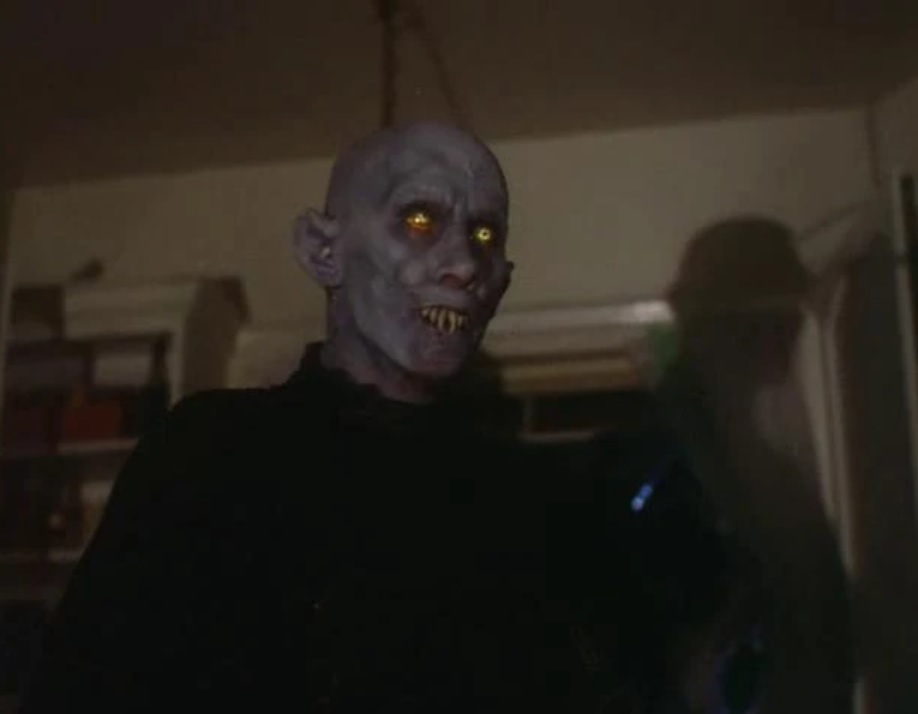
In this version, Barlow is an ancient creature of pure malice. His skin is a ghostly blue-grey, his fangs are elongated, and his eyes burn with inhuman light. He does not speak, and yet his presence dominates every frame. Accompanied by his human familiar Richard Straker (James Mason), Barlow arrives in the quiet town of Jerusalem’s Lot under the guise of an antique dealer.
As night falls, the town begins to rot from within. People vanish, livestock die, and whispers of sickness spread. Barlow’s feeding is systematic and infectious, transforming the townsfolk into his undead servants. His attacks are among the most memorable in television history — a child scratching at his friend’s bedroom window, mist curling through the streets, and the chilling reveal of Barlow’s corpse-white face emerging from the dark.
The miniseries presents Barlow as an unstoppable force of corruption, a plague dressed in the shape of a man. When he finally confronts author Ben Mears, the scene plays out like a battle between faith and oblivion. Barlow is staked through the heart and burned, but his infection endures. Salem’s Lot remains a dead town, emptied but never clean.
Salem’s Lot (2004 Miniseries)
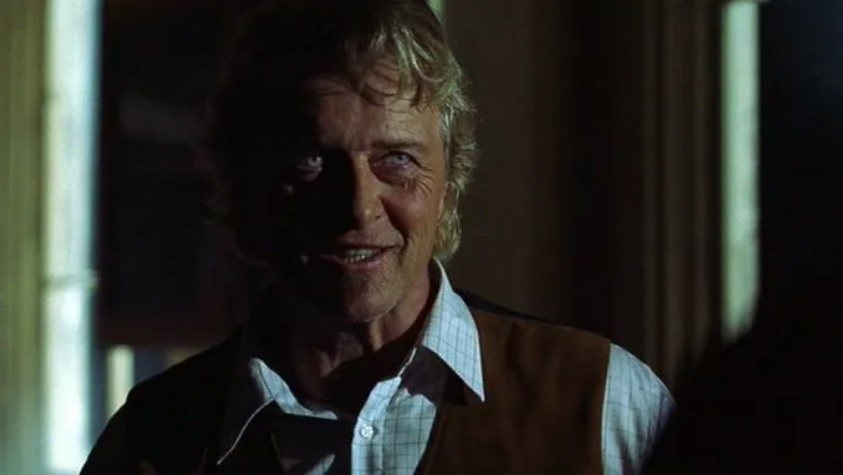
The 2004 adaptation, directed by Mikael Salomon, returned to Stephen King’s original conception of Barlow as a charismatic and intelligent aristocrat. Played by Rutger Hauer, this version restores his voice and presence, giving him a blend of sophistication and cruelty.
Here, Barlow is not a beast but a manipulator. He infiltrates Salem’s Lot slowly, seducing its people with promises of comfort, power, or salvation. His relationship with Straker is more equal, their dynamic a sinister reflection of loyalty and devotion. Hauer’s portrayal lends Barlow an air of tragic grandeur — a predator who understands humanity intimately but views it only as prey.
The violence is sharper and more deliberate. Barlow kills with the confidence of a ruler reclaiming his territory, each act of feeding both ritual and performance. His dialogue drips with superiority, and yet behind it lies the loneliness of immortality. The film’s tone is colder and more philosophical, portraying vampirism as both disease and ideology — a contagion of apathy spreading through the town.
Salem’s Lot (2024)
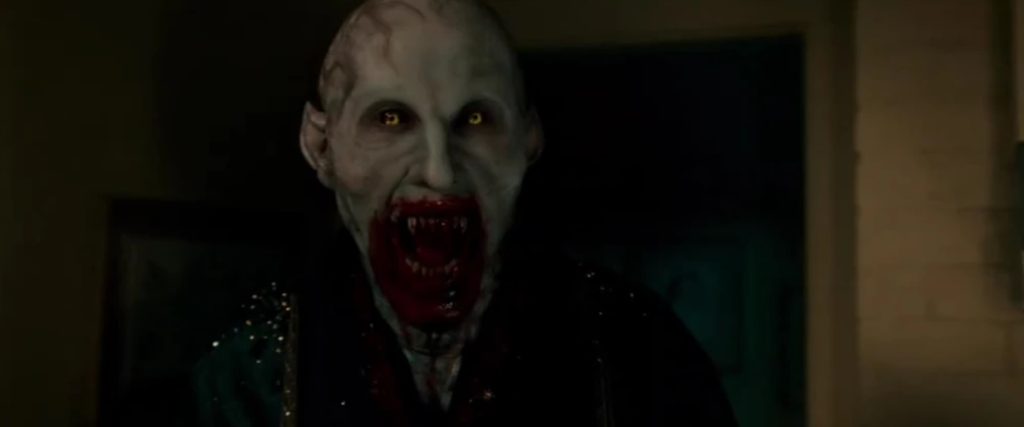
In the 2024 adaptation directed by Gary Dauberman, Barlow is reimagined once again, this time portrayed by William Sadler. This version strikes a balance between the monstrous silence of the 1979 portrayal and the articulate menace of Hauer’s interpretation.
Sadler’s Barlow is ancient and decayed but carries a haunting intelligence. His presence is less theatrical and more existential — a ghost of old-world evil haunting the American dream. The film returns to the tone of creeping dread, focusing on the gradual collapse of Salem’s Lot as the vampire’s influence spreads unseen.
The new adaptation pays homage to Hooper’s imagery — the mist, the windows, the slow corruption — but adds modern weight to the story’s themes. Barlow represents decay in every form: moral, spiritual, and environmental. His feeding is symbolic of the town’s decline, a hunger that consumes everything once good and familiar.
By the film’s end, Barlow is once again destroyed, but his shadow lingers. Salem’s Lot remains a ghost town, another American settlement swallowed by its own darkness.
Nature and Symbolism
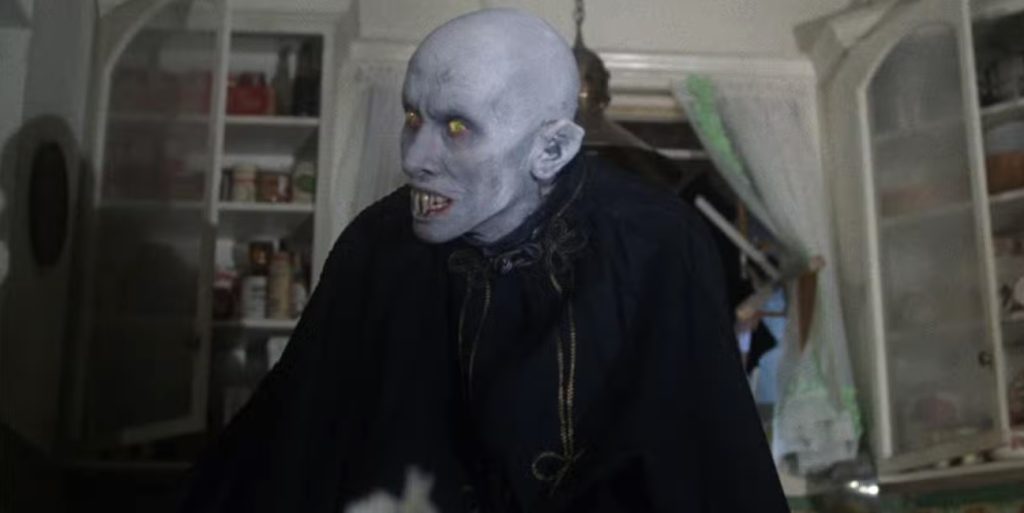
Kurt Barlow is the quintessential vampire of modern literature — ancient, patient, and entirely without remorse. Whether silent or eloquent, he feeds not just on blood but on faith itself. His arrival in Salem’s Lot turns the town’s complacency into decay, transforming a quiet community into a graveyard.
In King’s mythology, Barlow is both predator and prophet, a reminder that evil thrives where vigilance fails. He represents not romanticised immortality but the inevitability of corruption.
Visually, he is unforgettable. The 1979 version’s gaunt blue visage has become iconic, his chalk-white hands and predatory eyes capturing the essence of cinematic fear. Yet in every form, his true power lies in his influence — turning friends into servants, lovers into monsters, and hope into ash.
Legacy
Salem’s Lot remains one of Stephen King’s most enduring works, and Barlow its dark heart. The character bridges literary horror and visual nightmare, influencing depictions of vampires for decades to come.
His DNA can be traced in 30 Days of Night, Midnight Mass, and Let the Right One In — all tales of isolation and infection in small, godless communities. Barlow’s legacy is not glamour but despair. He is the vampire stripped of charm, the mirror held up to civilisation’s decay.
League Placement
Kurt Barlow belongs in the First Class Tier. A predator of both body and soul, he is the embodiment of infection, silence, and the inevitable return of ancient hunger.