Also Known As: The Bride In Black, Parker Crane, The Old Woman, Marilyn Crane’s Son
First Appearance: Insidious (2010)
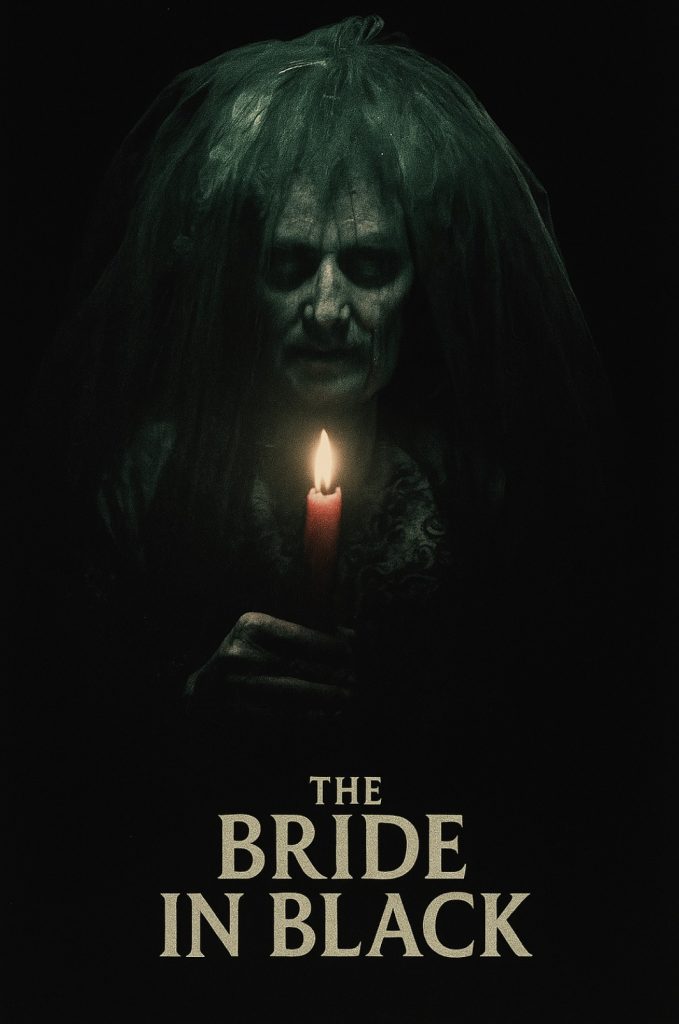
Most Iconic Form: A tall figure in a black funeral gown with a lace veil concealing a withered face and cold smile
Kill Count: Several implied victims during life and multiple possessions after death
Portrayed by: Philip Friedman and Tom Fitzpatrick
Tier: Second Class Tier
Insidious (2010)
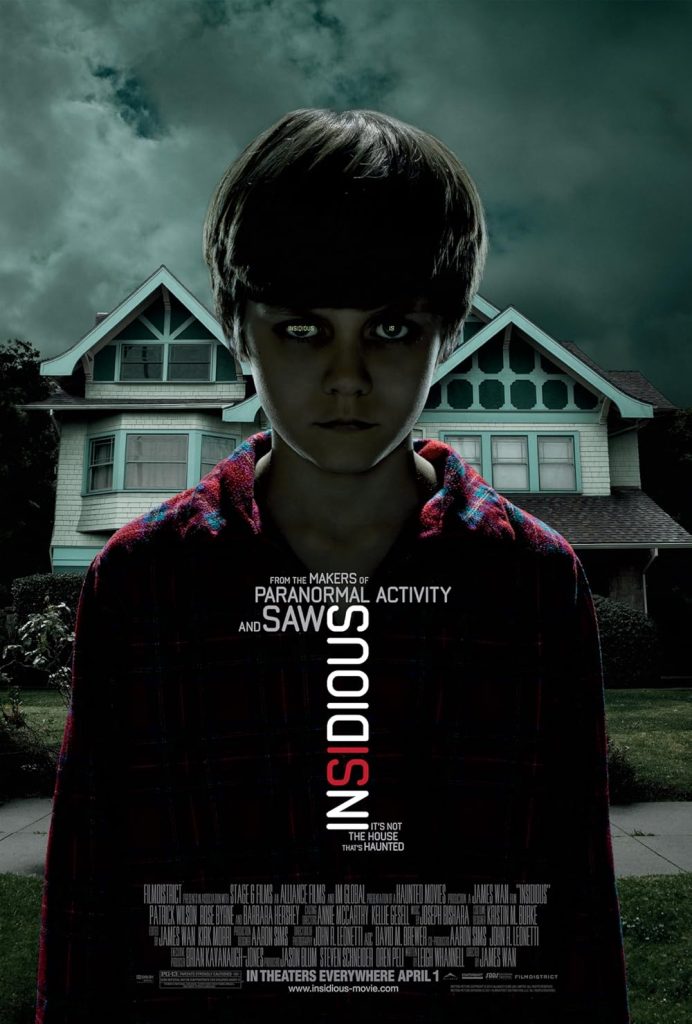
The Bride in Black first appears in Insidious as a spectral presence haunting the Lambert family. At first, the ghost is glimpsed in brief, chilling moments — standing in a corner, appearing in photographs, and manifesting beside Josh Lambert. Her presence grows stronger as the film unfolds, until it becomes clear that she is fixated on Josh himself.
In the film’s climax, when Josh ventures into the astral realm known as The Further to retrieve his son Dalton, he encounters the Bride directly. Her identity is shrouded in mystery, but her intent is clear. She wishes to claim Josh’s body as her own, to escape the realm of the dead and live again. When the Lamberts return to the real world, it is revealed that she has succeeded. The final moments show Josh smiling in a way that no longer belongs to him — the Bride in Black has taken his place.
Insidious: Chapter 2 (2013)
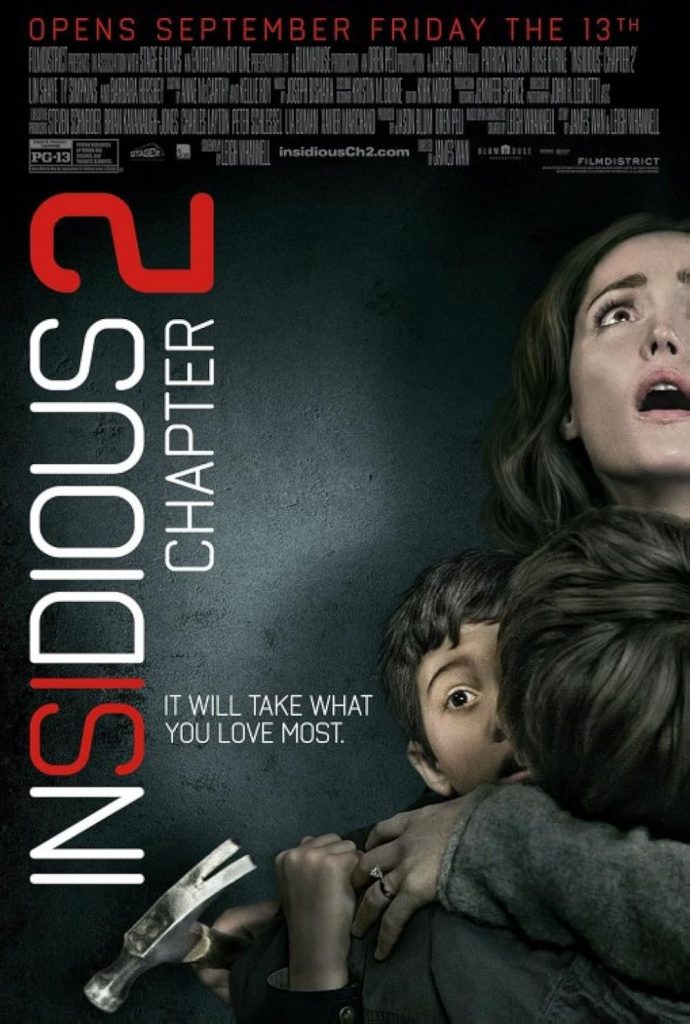
Chapter 2 delves into the tragic and terrifying backstory of the Bride in Black, revealing that the figure was once Parker Crane, a disturbed man who lived under the domination of his abusive mother, Marilyn. Marilyn raised him to believe that he was a girl, forcing him to dress in black gowns and attend funerals under the name “The Bride in Black.” This psychological torment fractured Parker’s mind and drove him to murder.
As an adult, he became a serial killer, preying on women who resembled his mother’s idealised vision of purity. After his death, Parker’s spirit remained bound to the world of the living, obsessed with continuing the control his mother exerted in life. His possession of Josh Lambert in the first film becomes a reflection of his lifelong desire for identity and power — he no longer wants to be Parker, or even the Bride, but someone free of his past.
Throughout Chapter 2, Parker’s ghost battles with both Josh’s soul and the lingering influence of Marilyn’s spirit. The film’s climactic scenes reveal that the Bride in Black was never the true evil, but rather the victim of his mother’s cruelty. Marilyn Crane is shown as the dominant, manipulative force, her spirit using Parker even after death.
The resolution sees Josh reclaiming his body and Parker’s soul banished to The Further once again, finally stripped of his mother’s control. The Bride in Black’s shriek fades into silence, but the horror of his story lingers.
Later Appearances and Legacy
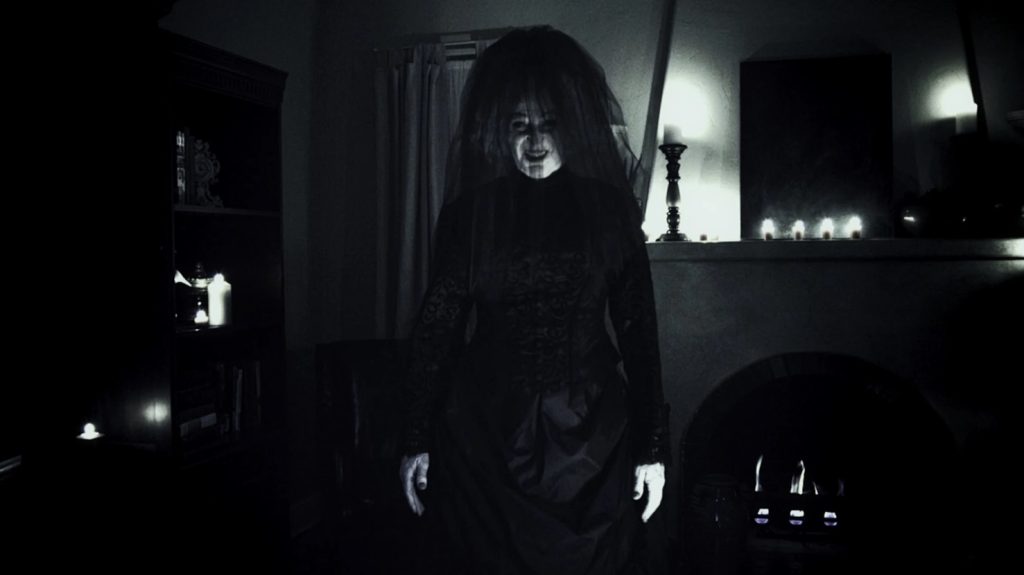
The Bride in Black continues to appear in later Insidious films as part of the series’ spectral lore. Even when not central to the plot, his shadow looms over the franchise as a reminder that the most frightening spirits are often born from human cruelty rather than supernatural power.
His brief cameos in Insidious: The Last Key and Insidious: The Red Door reinforce his place as one of the franchise’s most recognisable entities. In The Red Door, subtle echoes of Parker’s presence appear in Josh’s lingering fear of possession, symbolising that such trauma never truly fades.
Psychology and Behaviour
As Parker Crane, the Bride in Black was both killer and victim. His murders were not motivated by sadism but by compulsion and identity conflict. He killed to quiet the voice of his mother, whose influence had consumed his sense of self. In death, this compulsion transformed into possession.
The figure’s silence and stillness are as unnerving as his appearance. The black veil hides not only his face but his identity. He exists as an echo of repression, a ghost bound by the lies forced upon him in life. The mask and the dress become extensions of that false identity, turning his haunting into an endless performance.
Symbolism and Themes
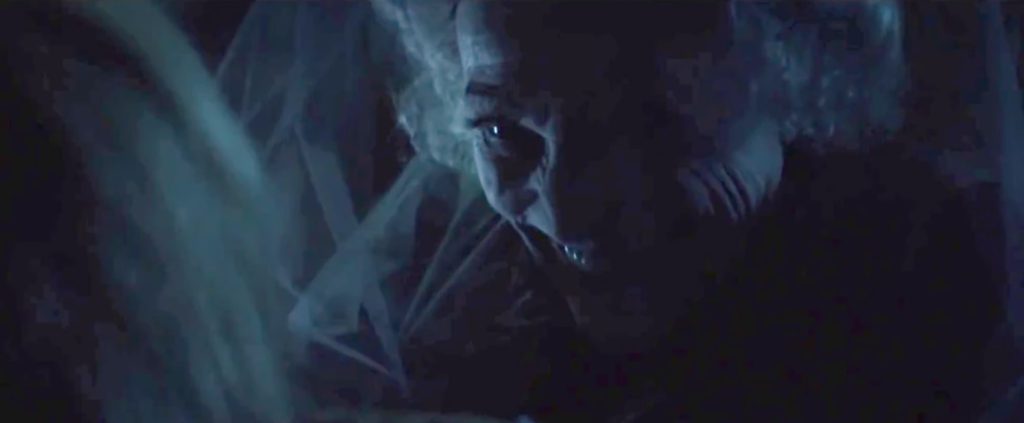
The Bride in Black embodies themes of control, repression, and inherited trauma. His story blurs the boundary between human evil and supernatural torment, illustrating how emotional abuse can create monsters that endure beyond death.
In contrast to the red-faced demon who represents raw power and chaos, the Bride’s horror is intimate and psychological. His haunting of Josh Lambert reflects the way trauma can pass between generations, resurfacing through fear and memory.
Cultural Impact
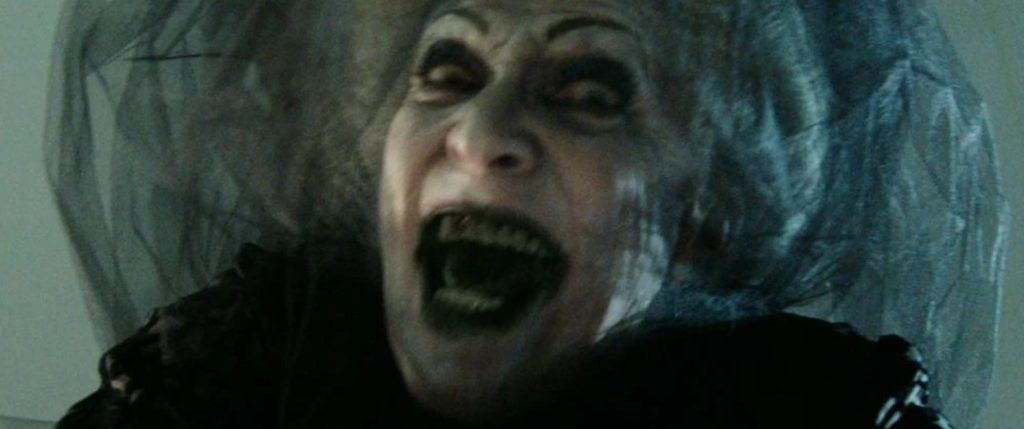
The Bride in Black became one of the most iconic images in modern horror. His funereal silhouette and veiled face appeared in promotional materials and haunted attractions, symbolising the gothic tone of the Insidious series.
Audiences were drawn to the tragedy behind the terror. The revelation that the ghost was once Parker Crane deepened his impact, transforming him from a mere spectre into a cautionary figure about identity and the violence of control.
The design — created by Joseph Bishara and Leigh Whannell — combined classic Victorian mourning attire with surreal stillness, evoking both the ghost stories of the past and the psychological horror of modern cinema.
League Placement
The Bride in Black belongs in the Second Class Tier. Though his story is one of pain and possession rather than domination, his presence defines the Insidious mythos. A murderer, a victim, and a haunting all at once, he remains one of horror’s most tragic spirits.