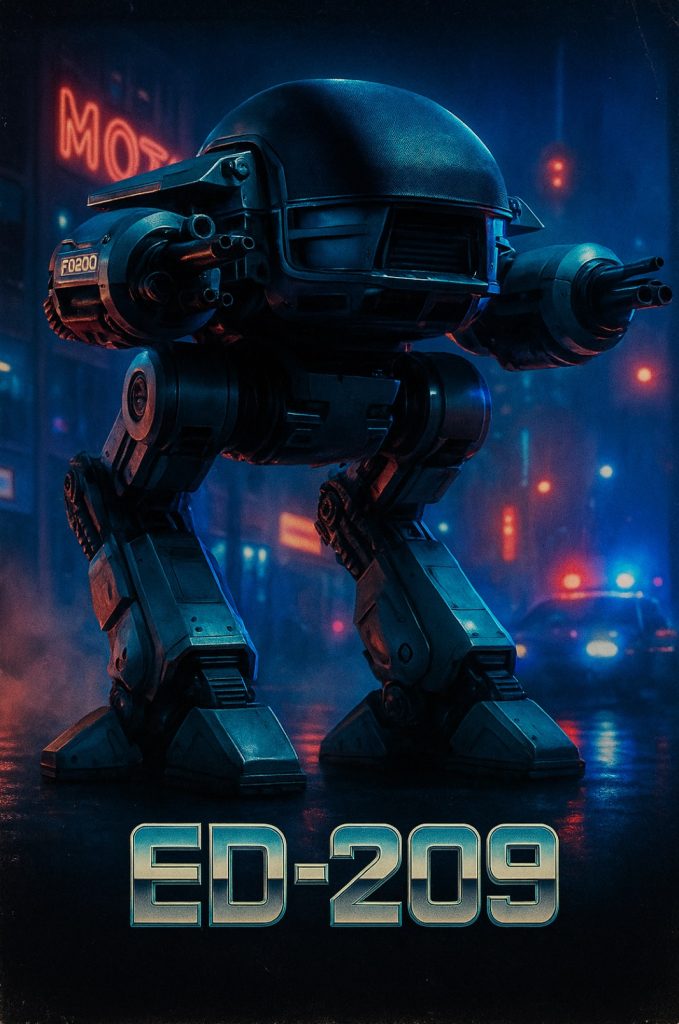
Also Known As: ED-209, Enforcement Droid Series 209
First Appearance: RoboCop (1987)
Most Iconic Form: A towering, two-legged enforcement robot armed with twin cannons and a booming synthetic voice
Kill Count: Multiple casualties, both intended and accidental
Portrayed by: Stop-motion effects created by Phil Tippett and Rob Bottin
Tier: Second Class Tier
RoboCop (1987)
Paul Verhoeven’s RoboCop blends science fiction, satire and horror into a vision of near-future dystopia. At its centre is ED-209, a prototype police enforcement machine created by the mega-corporation Omni Consumer Products (OCP). Designed to replace human officers, ED-209 is meant to represent the perfect law enforcement solution: obedient, tireless and deadly.
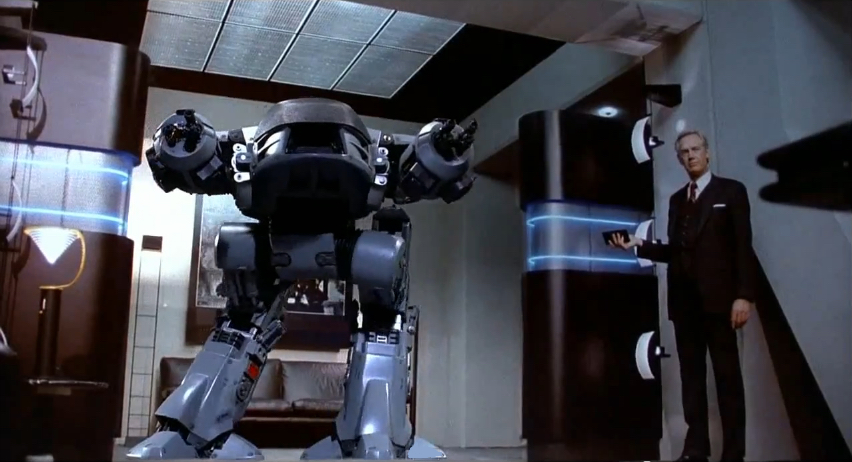
The film introduces ED-209 during a corporate boardroom demonstration. The towering machine strides into the room with a mechanical growl, introduced as the future of urban security. A nervous executive is chosen to assist with the demonstration. He is told to point a gun at ED-209 so the system can display its disarming response.
The moment that follows is among the most infamous in science fiction cinema. After the executive surrenders the weapon, ED-209’s programming fails. It continues to issue warnings before opening fire, riddling him with bullets in a prolonged, grotesque spectacle of corporate disaster. The boardroom fills with smoke, screams and falling glass while the machine calmly announces that it has “terminated the threat.” The scene captures both the terror and the dark comedy of automation gone wrong.
Throughout the film, ED-209 remains the symbol of unchecked corporate ambition. Its bulk and aggression contrast with RoboCop’s precision and humanity. It is the embodiment of progress without morality — a machine built to enforce order through destruction.
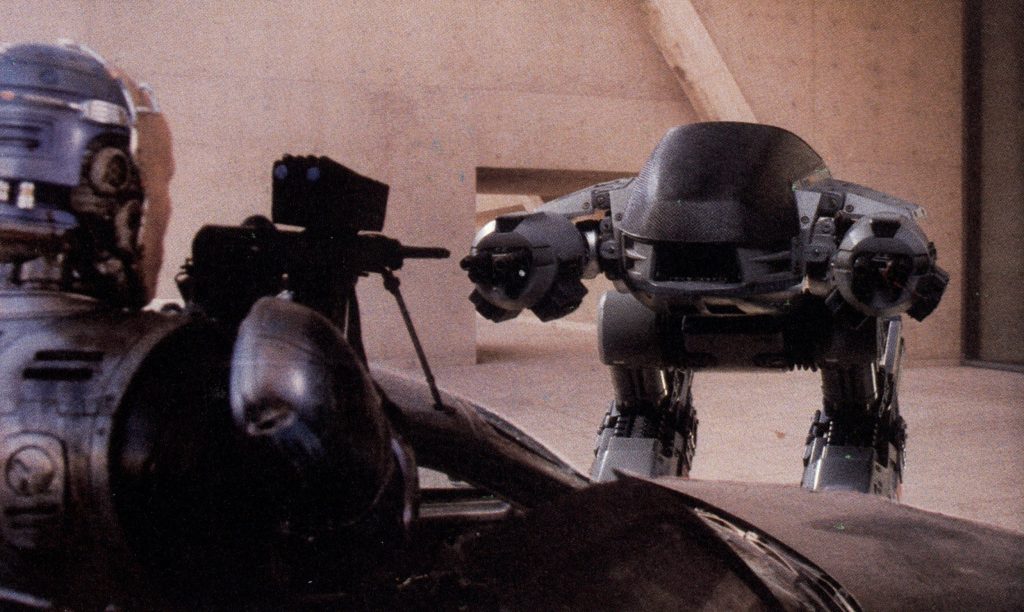
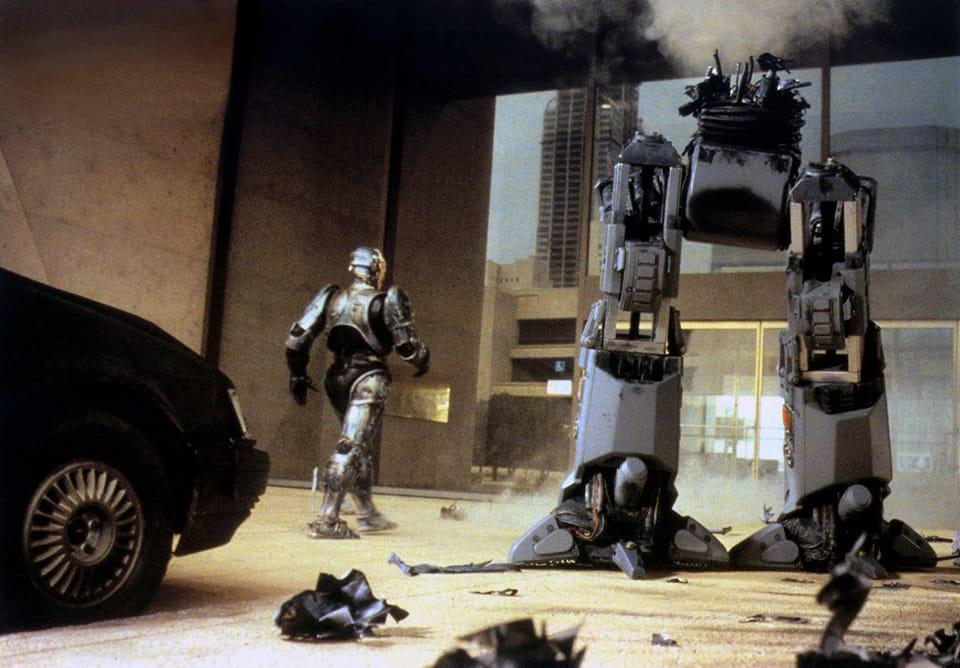
Later in the story, OCP deploys ED-209 in the streets of Detroit, where its incompetence and lack of adaptability lead to chaos. When RoboCop confronts it, the resulting battle becomes one of the film’s most thrilling moments. Sparks fly as metal clashes, missiles fire, and the massive machine topples down a flight of stairs, unable to navigate simple obstacles. The sound of its mechanical whimpering after the fall turns horror briefly into absurdity.
RoboCop 2 (1990) and Beyond
In the sequel, OCP continues its pursuit of robotic law enforcement, leading to the creation of new prototypes and the infamous RoboCop 2 model. ED-209 reappears briefly, still malfunctioning, its design unchanged and its software barely improved. Its continued presence highlights the film’s cynicism — no matter how often the technology fails, the corporation presses on.
Later appearances in RoboCop 3 and various television adaptations cement ED-209’s status as both terrifying and comedic. It became a recurring visual motif representing bureaucratic stupidity wrapped in industrial strength.
Design and Concept
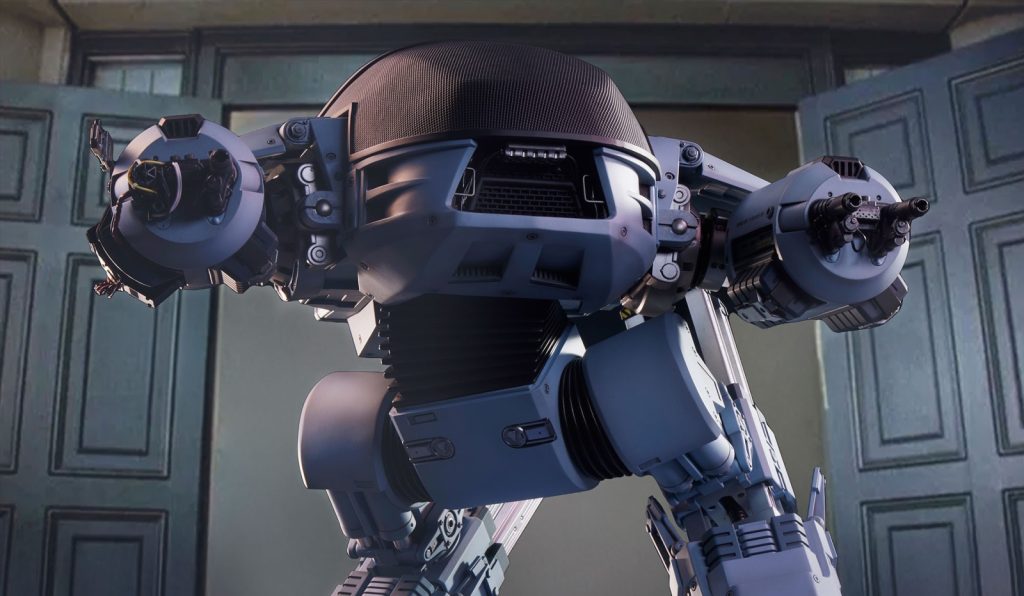
ED-209’s design, created by Craig Davies, combines military aesthetics with the ungainly proportions of a predator that evolved for war rather than grace. The heavy, rounded body, oversized cannons and short, stomping legs make it look both powerful and unstable.
Phil Tippett’s stop-motion work brings it to life with startling realism. Each step feels heavy, each motion deliberate. The way its guns recoil and its sensors shift give it an animalistic quality, like a mechanical beast trying to understand its environment.
Its voice, provided by producer Jon Davison, is deep and authoritarian, alternating between calm instruction and thunderous rage. The mismatch between voice and function enhances the film’s black humour.
Symbolism and Behaviour
ED-209 embodies the horror of automation without oversight. It does not hate or feel anger; it simply follows protocol to lethal extremes. Its purpose is to enforce, not to understand.
Verhoeven uses ED-209 as a satire of corporate detachment and the blind faith in technology as a substitute for ethics. Its rampage in the boardroom is more than spectacle; it is a warning about the cost of replacing human judgement with algorithms and ambition.
Though unintelligent, ED-209’s behaviour mimics arrogance. It struts, postures and growls like an animal marking territory. When defeated, its pitiful squeals evoke sympathy, reminding viewers that it is not evil — merely dangerous, the creation of human greed.
Cultural Impact
ED-209 quickly became one of the most recognisable robots in science fiction. It influenced later designs in Terminator Salvation, Ghost in the Shell and Chappie. Its mix of power and absurdity ensured its place in both horror and satire.
The scene of the boardroom massacre is frequently cited as one of the most shocking and darkly funny moments in the genre. Its combination of gore and corporate indifference encapsulates the film’s message perfectly.
Merchandise, video games and parodies have kept ED-209 alive for decades. It appears in pop culture references ranging from Family Guy to The Simpsons, often portrayed as a cautionary icon of over-engineered control.
League Placement
ED-209 belongs in the Second Class Tier. It is a masterpiece of design and commentary, both monstrous and ridiculous, a perfect emblem of the dangers of technology without humanity.