
Also Known As: Julia Cotton, The Scarlet Mistress, The Woman Who Loved Frank
First Appearance: Hellraiser (1987)
Most Iconic Form: Elegant, blood-spattered seductress luring men to their deaths in the attic of 55 Ludovico Street
Kill Count: 6+ victims (across two films)
Portrayed by: Clare Higgins
Tier: Second Class Tier
Hellraiser (1987)

Clive Barker’s Hellraiser introduced one of the most distinctive villains in horror: Julia Cotton, a woman whose lust and deceit become the catalyst for the entire nightmare.
The story begins when Julia moves with her husband Larry into his childhood home, unaware that her former lover — Larry’s brother, Frank — has unleashed the Cenobites and been torn apart by their hooks and chains. When Larry accidentally spills blood on the attic floor, the drops resurrect Frank in a grotesque, half-formed body. Julia discovers him while exploring the house and, despite her initial horror, is overwhelmed by forbidden desire.
Frank, the embodiment of carnal addiction, begs Julia to help him regenerate. She agrees — and begins luring men to the house under the guise of seduction. In the attic, she bludgeons them to death, offering their blood to reconstitute Frank’s flesh. Each kill brings him closer to human form, and Julia’s transformation is equally striking. Once a bored housewife, she becomes a predatory accomplice, dressing with newfound confidence and power as she feeds her lover’s resurrection.
Her scenes are chilling not just for their violence but for their intimacy: the way she wipes blood from her cheek, the quiet satisfaction in her gaze as she watches Frank grow stronger. Julia embodies Hellraiser’s core themes — the merging of pain and pleasure, the moral decay that comes from obsession.
By the time her stepdaughter Kirsty discovers the truth, Julia is fully complicit in damnation. Yet her control begins to slip. Frank kills her without hesitation, using her body to complete his restoration. Her death — brutal and ironic — marks her as both victim and villain, consumed by the man she worshipped.
Hellbound: Hellraiser II (1988)
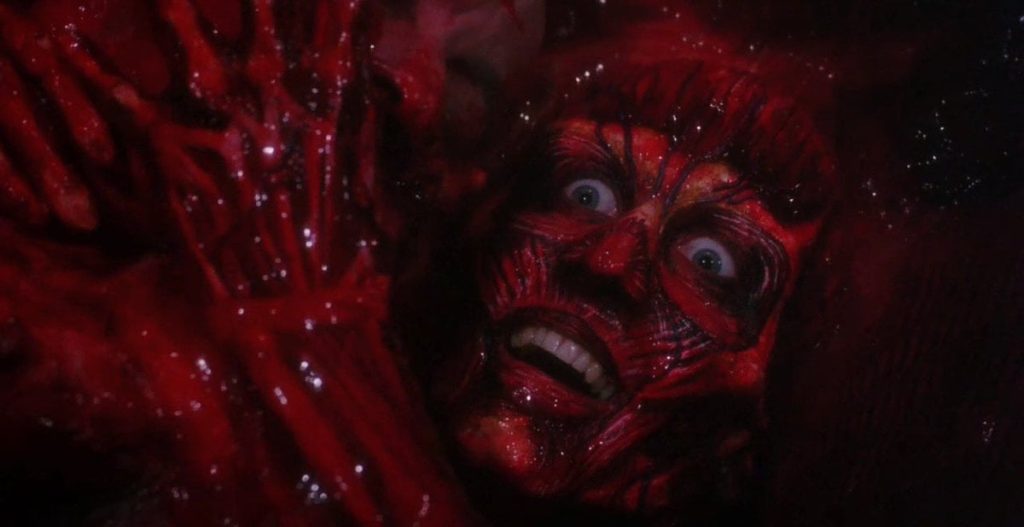
Julia returns in the sequel, resurrected by Dr. Channard through blood spilled on her mattress — a direct inversion of Frank’s resurrection. This time, she is reborn skinless, wrapped in bandages like a living corpse. Her return is accompanied by a new self-awareness: Julia is no longer the pawn.
Her manipulation of Channard is masterful. She seduces him with both intellect and cruelty, convincing him to open the Lament Configuration and summon the Cenobites once more. Beneath her charm lies utter contempt for humanity — she refers to the world as “a skin game,” mocking those who still cling to morality or fear.
Now fully aligned with Leviathan, Julia serves as an emissary of Hell. Her vengeance on Channard is swift and poetic; once he has served his purpose, she tears him apart without hesitation. When Kirsty and Tiffany confront her within the labyrinth of Hell, Julia’s arrogance proves her undoing. A gust from the shifting walls strips her skin away — leaving her lifeless once again, a hollow echo of her former vanity.
Her final words — “Nothing personal, baby” — cement her as one of the most coldly charismatic villains in horror.
Psychology and Behaviour
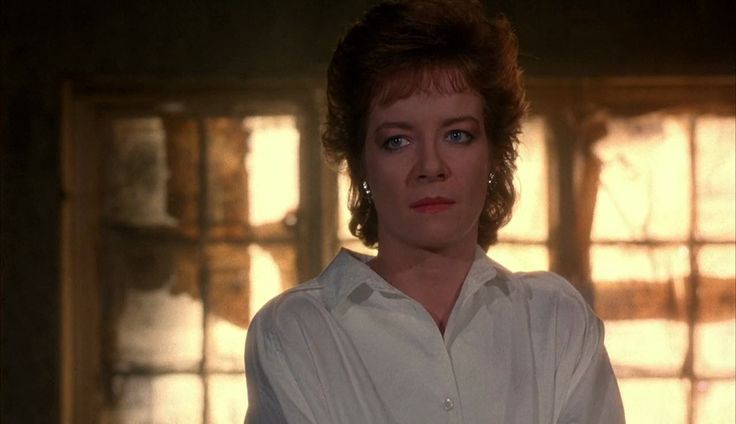
Julia Cotton is one of horror’s most complex human monsters. Her cruelty is born not from madness, but from disillusionment. Beneath her sophistication lies a bottomless hunger — not for power, but for sensation. She kills for love, lust, and self-fulfilment, finding purpose in blood when ordinary life fails her.
Julia represents the seductive face of damnation. While Frank embodies carnal addiction, Julia embodies the rot of emotional dependence — willing to kill, lie, and die for a man who sees her as expendable. Her arc is one of tragic empowerment, evolving from repressed housewife to confident predator to self-aware queen of Hell.
Cultural Impact
Although Pinhead became the franchise’s icon, Julia was Clive Barker’s intended villain for Hellraiser II, envisioned as the true “Bride of Hell.” Clare Higgins’s performance balances elegance, vulnerability, and menace, giving Julia an unsettling realism.
She remains one of horror’s few female villains driven by agency rather than victimhood, influencing later characters like Annie Wilkes (Misery), Catherine Tramell (Basic Instinct), and Jennifer Check (Jennifer’s Body). Julia’s image — descending the attic stairs in a blood-soaked white dress — is one of horror cinema’s most striking visuals.
Her absence from later sequels is often lamented by fans and scholars alike; many argue that without Julia, the Hellraiser series lost its emotional and psychological edge.

League Placement
Julia Cotton belongs in the Second Class Tier. She is elegant, intelligent, and terrifyingly human — the perfect mirror to the inhuman Cenobites she helped unleash. Her legacy endures as one of horror’s most complex and tragic femme fatales.