
Also Known As: Professor Franz, The Perugia Strangler, The Scarf Killer
First Appearance: Torso (I corpi presentano tracce di violenza carnale, 1973)
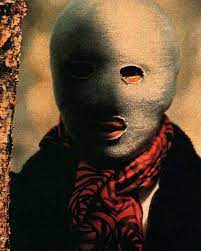
Most Iconic Form: A faceless, black-gloved killer cloaked in darkness, strangling victims with a red-and-black silk scarf
Kill Count: 8+ confirmed victims
Portrayed by: Roberto Bisacco
Tier: Third Class Tier
Torso (1973)
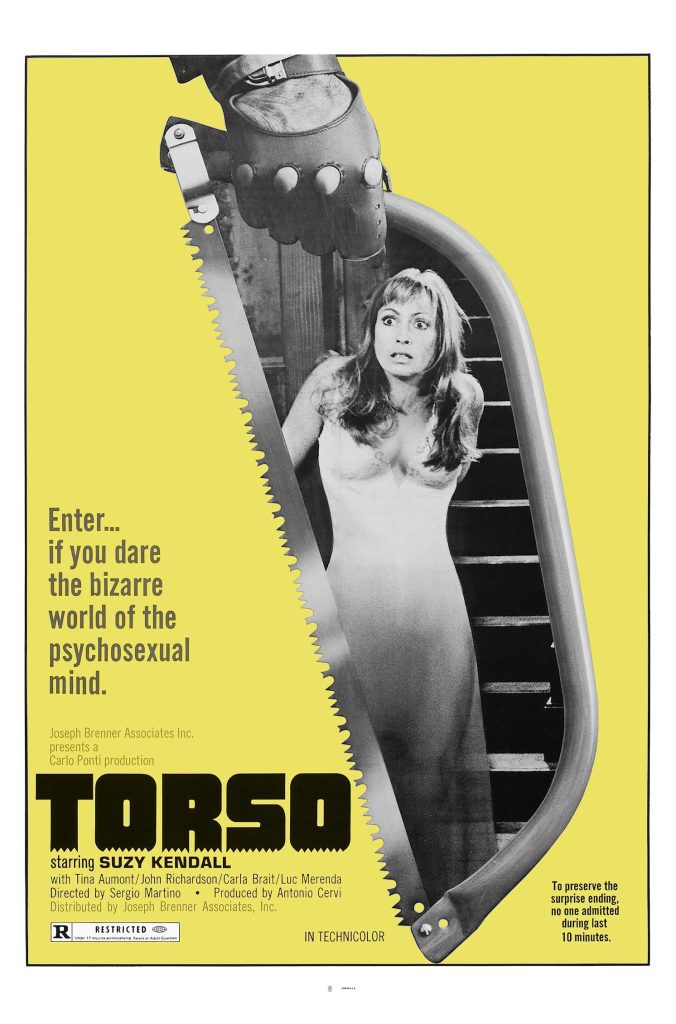
Sergio Martino’s Torso stands as one of the defining works of Italian giallo horror — an atmospheric blend of eroticism, mystery, and unflinching brutality. Released at the height of Italy’s murder-mystery wave, the film bridges the gap between the stylised tension of giallo and the raw, visceral horror that would later define the American slasher genre.
Set in the idyllic yet claustrophobic town of Perugia, a string of savage murders terrifies the local student community. The victims are all young women, strangled with a distinctive red-and-black scarf. The press dubs the perpetrator “The Perugia Strangler,” though his true identity remains shrouded in mystery.
Among those caught in the growing hysteria is Jane, an American exchange student, and her friends, who decide to escape the chaos by retreating to a remote countryside villa. Unbeknownst to them, the killer has followed.
Martino directs the film with patient dread. Rather than relying on constant violence, he uses voyeurism and tension to keep the audience off-balance. The killer — revealed only in fragmented glimpses of gloved hands, boots, and shadowed silhouettes — becomes a living embodiment of paranoia. The countryside, once a place of escape, becomes a prison of isolation and silence.
When the killer finally reveals himself, it is not a deranged stranger or faceless maniac, but Professor Franz, a respected art history lecturer known to the girls. His transformation from mild-mannered intellectual to moralistic murderer shocks precisely because of its plausibility. Franz’s motivations lie in sexual repression and distorted morality. Scarred by a youthful trauma, he believes he must “purify” the world of immorality — targeting young women who represent the freedom he fears and desires.
The film’s final act is an extended exercise in tension and terror. Jane, trapped and terrified, hides in the villa as Franz methodically cleans up after his murders, humming to himself as he folds sheets and tidies the carnage. Forced to remain absolutely silent, Jane’s terror is internal, conveyed through breath and stillness. When she finally makes her escape, Franz’s composed façade cracks, revealing the unstable fanatic beneath the polite exterior.
The use of the silk scarf — an object of elegance turned into an instrument of death — perfectly encapsulates the duality of Franz’s character: refinement masking rot, civilisation concealing barbarity.
Psychology and Behaviour
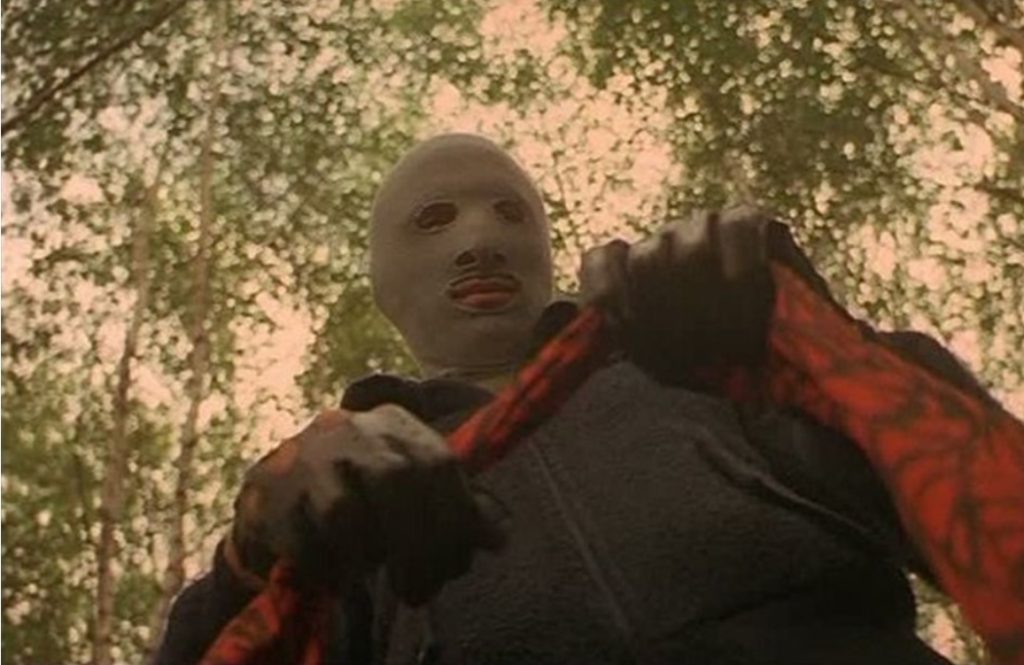
Professor Franz represents one of the quintessential archetypes of the giallo killer — an educated man driven to homicidal obsession by repressed sexuality and moral hypocrisy. His violence is ritualistic and methodical, carried out with both erotic charge and religious fervour.
His calm demeanour conceals festering disgust for the world around him. The women he murders are not random victims but symbols of the freedom and sensuality he both covets and condemns. His meticulousness — the gloves, the scarf, the cleaning of the crime scenes — reflects both shame and ritual, a need to control what he perceives as filth.
Franz’s crimes are not simply acts of killing; they are confessions of weakness. Each murder reasserts his illusion of order, his warped attempt to impose morality upon a world he cannot reconcile with his own desires.
Influence on the American Slasher
Torso was released five years before Halloween (1978), and its influence on the American slasher genre cannot be overstated. The isolated setting, the sexually active victims, the voyeuristic perspective, and the concept of a lone surviving “final girl” all prefigure the tropes that would later define the subgenre.
John Carpenter, Sean S. Cunningham, and other American directors of the late 1970s cited Italian giallo as a key inspiration, and Torso is one of the clearest precursors. Martino’s use of first-person camera angles to mirror the killer’s point of view directly anticipates Halloween’s opening sequence. The countryside villa, surrounded by nature yet claustrophobic in its isolation, foreshadows Friday the 13th’s camp setting.
Franz’s maskless anonymity is equally significant. Unlike later killers such as Michael Myers or Jason Voorhees, Franz wears no literal mask — but his gloved, faceless presentation and lack of visible emotion achieve the same effect. He becomes an idea rather than a man: repression incarnate.
His presence also helped shape the thematic underpinnings of the slasher — particularly the moralistic undertone that punishes sexuality and indulgence. In Torso, this concept is grounded in character psychology; in later slashers, it becomes structural, a pattern encoded into the genre’s DNA.
Cultural Impact
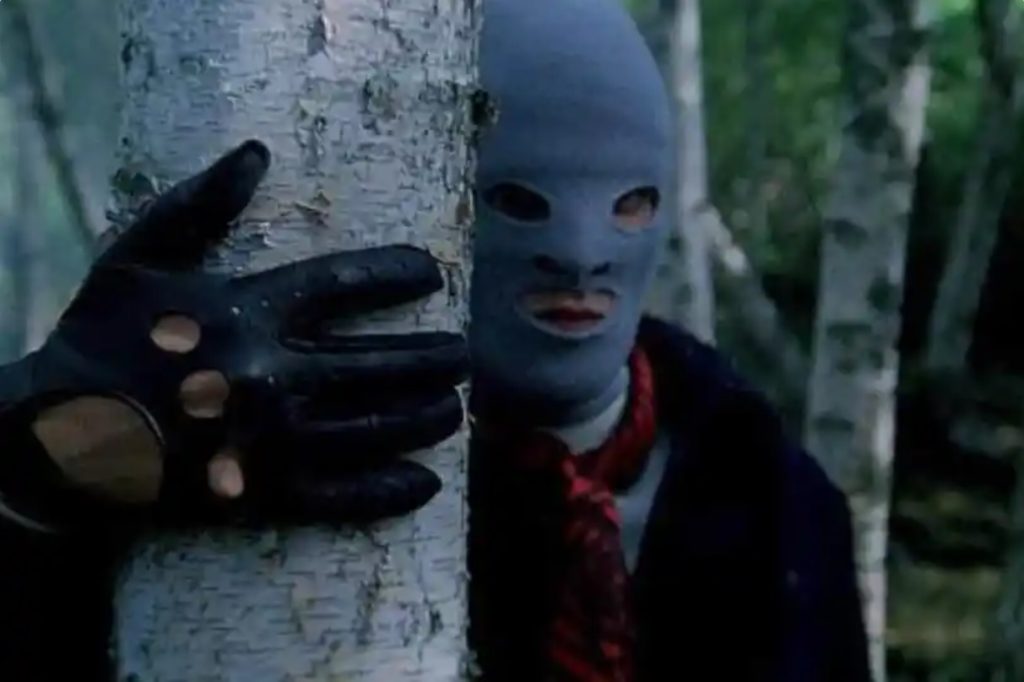
Though overshadowed by Dario Argento’s Deep Red and Lucio Fulci’s more graphic horrors, Torso has earned enduring recognition as one of the most influential gialli ever made. Critics and filmmakers alike now see Professor Franz as a transitional figure — bridging the stylised mystery of early 1970s Italian horror with the primal terror of 1980s slashers.
Roberto Bisacco’s understated performance gives Franz an unnerving realism, while Martino’s cinematography and Guido & Maurizio De Angelis’s haunting score lend the film an oppressive sensuality. Today, Torso is often cited in retrospectives as “the first true slasher,” its DNA embedded in everything from Black Christmas to Halloween and beyond.
League Placement
Professor Franz belongs in the Third Class Tier. His legacy lies not in repetition or franchise appeal, but in influence — a single, perfectly realised expression of moral decay and voyeuristic terror that helped define decades of horror storytelling.