
Ranking the Psycho Movies: From Mother’s Basement to Murderous Masterpiece
When Alfred Hitchcock dropped Psycho in 1960, audiences lost their collective minds — and possibly their trust in showers. Alongside Peeping Tom (which, for the record, beat Psycho to cinemas by a few months), Hitchcock’s classic is often considered the granddaddy of slasher films. It gave us creepy motels, taxidermy side hobbies, and one of the most infamous twist endings in cinema history.
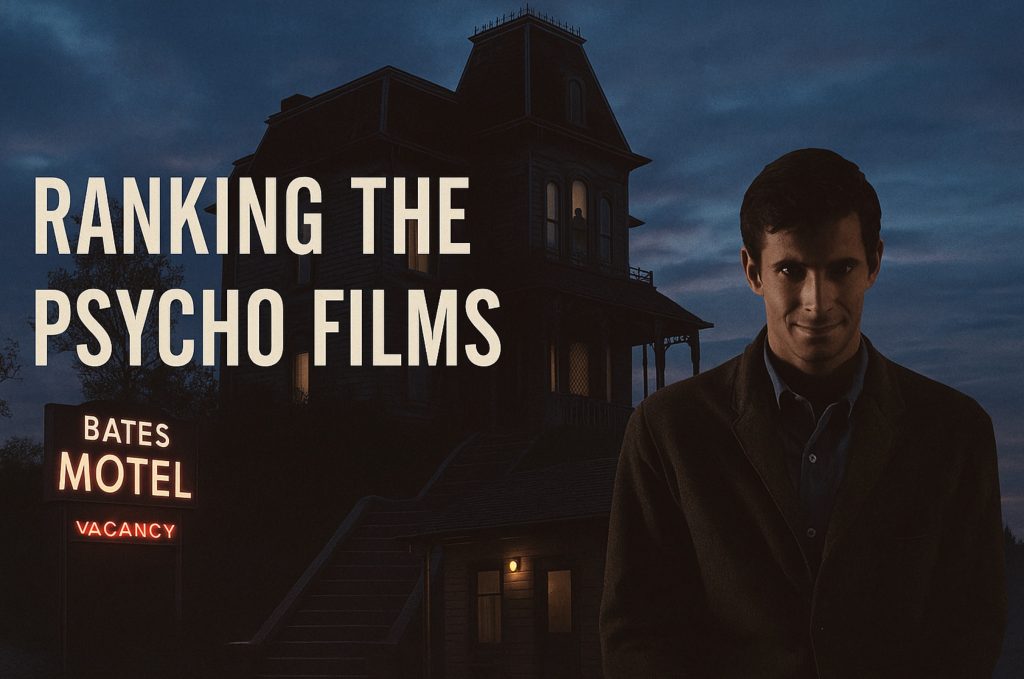
But the story didn’t end with Marion Crane and that suspiciously quiet house on the hill. Oh no. Psycho spawned sequels, a made-for-TV prequel, an acclaimed TV series (which we’re ignoring here), and a baffling shot for shot remake that someone somewhere still insists was a good idea. So grab your keys, check in at the Bates Motel, and try not to talk to your mother too much — here’s our definitive ranking of the Psycho movies.
6. Bates Motel (1987)
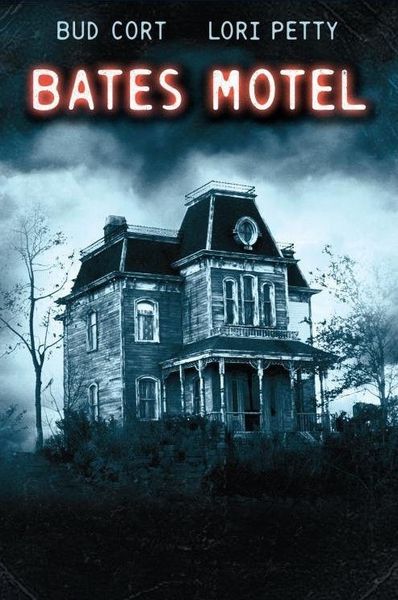
You know you’re scraping the bottom of the knife drawer when the best part of a Psycho movie is that Jason Bateman pops up in it… briefly. Bates Motel is a made-for-TV movie that aired in 1987 and was meant to be a pilot for a series that never happened. And after watching it, you’ll understand why. It stars Bud Cort as Alex West, a mentally unwell man who once roomed with Norman Bates at the state hospital. After Norman dies, Alex inherits the infamous motel and sets about renovating it into something respectable. Of course, nothing says “respectable business” like a murder house with a corpse in the fruit cellar.
This oddball entry ignores all the Psycho sequels and functions as a kind of alternate reality follow-up to the original. That means no Anthony Perkins, no creepy mother in the rocking chair, and not much suspense to speak of. Instead, we get Lori Petty breaking into the house like a punk-rock Goldilocks, a banker who looks like he wandered in from Dynasty, and a weird detour where a suicidal woman is cheered up by a ghost or maybe just some Scooby-Doo nonsense.
The film can’t decide what it wants to be — horror, quirky comedy, or inspirational TV movie of the week. It ends up being none of the above. Add in a strange subplot involving a party of teens, an odd funeral, and enough loose ends to knit a new taxidermy sweater, and you’ve got a forgettable footnote in the Psycho legacy. One watch is enough, and even that might be pushing it.
5. Psycho (1998)

Every now and then, Hollywood makes a decision so baffling it feels like performance art. Case in point – the Psycho remake of 1998, directed by Gus Van Sant. On paper, it sounded intriguing. A new take on Hitchcock’s classic, updated for modern audiences, with full colour, more violence, and a fresh cast. Sounds alright, right? Then we all watched it.
Rather than reimagine or reinterpret the original, Van Sant decided to copy and paste the entire film. Literally. Shot for shot. Line for line. Every camera movement, every angle, even the awkward pauses were replicated with eerie devotion. It’s the cinematic equivalent of tracing someone else’s artwork and signing your name at the bottom. But instead of Anthony Perkins’ twitchy charm, we got Vince Vaughn trying not to smirk. Instead of Janet Leigh’s iconic vulnerability, we got Anne Heche doing her best with what she was given. Which wasn’t much.
The result is a bizarre, soulless exercise that leaves you wondering, “Why does this exist?” You’ll finish the film feeling like you’ve just watched someone rehearse a school play version of a masterpiece. Yes, you could add it to your collection to say you’ve seen them all, but don’t expect anything other than mild confusion and full-bodied regret.
4. Psycho IV: The Beginning

This one was tough to place. It teetered between third and fourth, but we landed here, and honestly, we’re good with that. Psycho IV: The Beginning sees Norman Bates, now out of the institution and seemingly stable, phoning into a late-night radio show to share his charming tales of childhood trauma and murder. As you do.
The majority of the film unfolds through flashbacks, with a young Norman suffering under the thumb of his deeply unwell mother, played by the late Olivia Hussey, who is absolutely magnetic in the role. We watch him spiral as she parades her lovers and exerts a suffocating control over her son, planting the seeds for one of horror’s most infamous personalities. Anthony Perkins returns one last time as Norman, but spends most of the film talking into a phone rather than stabbing people in motels.
Directed by Mick Garris, who gave us Critters 2 and Sleepwalkers, this prequel is better than it has any right to be. It’s not a classic, but it’s an oddly compelling origin story that adds some welcome depth to Norman’s madness, even if it does sometimes feel like a very dark episode of This Is Your Life.
3. Psycho III

This is where the quality starts to wobble and reality begins to feel a little more cable television than Hitchcock classic. But hold your kitchen knives — it is not without its weird little pleasures.
Psycho III sees Norman Bates return once more to his motel of madness, only this time with Anthony Perkins not just slipping into the cardigan again, but also stepping behind the camera as director. Yes, Norman himself called the shots, which is kind of cool, even if the end result feels more like a murder-themed soap opera than a tightly wound thriller. Still, credit where it’s due — Perkins throws himself into it with gusto and a suspicious smile.
The plot kicks off with a nun running away from her convent after a traumatic event and ending up at the Bates Motel. Norman, forever romantically challenged, instantly falls for her. Naturally, Mother is not pleased. And when Mother is not pleased, people die. Throw in a sleazy journalist sniffing around the property, a nosy town, and a growing body count, and you have all the ingredients for a decent horror follow-up.
What makes this entry stand out — besides Perkins directing — is the tone. It is stranger. Campier. More self-aware, but also less refined. The kills are nastier, the visuals have an eerie neon vibe, and Norman begins to unravel in a way that’s both unsettling and strangely sympathetic. And the score? Forget the classic strings from the original. This time it is an eighties synth-fest that actually works way better than it should. Seriously, it is worth watching for the soundtrack alone.
While it never reaches the heights of the first two films, Psycho III is still an entertaining ride. It’s a little messy, a little sad, and just bizarre enough to stay with you long after you’ve checked out of the motel. You will never look at a key rack the same way again.
2. Psycho II

Now this is more like it. While we could never bring ourselves to rank Psycho II above the original classic, it absolutely deserves a seat at the same table. We’re going to say it — this might just be one of the greatest horror sequels ever made. A film that didn’t need to exist, but somehow managed to be smart, surprising, and unsettling in all the right ways.
Set twenty two years after the events of Hitchcock’s masterpiece, Norman Bates is declared legally sane and released back into the world. What could possibly go wrong? He returns to his childhood home and the adjacent Bates Motel, only to discover that the place has become a haven for party animals, drug users, and anyone else who makes Mother spin in her grave. Not ideal. He tries to get his life back on track by working at a local diner, where he meets a kind waitress named Mary, played by Meg Tilly — yes, the sister of Jennifer Tilly, aka Tiffany from the Child’s Play series.
Mary has nowhere to go after a falling out with her boyfriend, so Norman — ever the gentleman — offers her a room at the house. See? He is reformed. He is normal now. He makes sandwiches. But then things get strange. People start turning up dead. Norman begins receiving notes from his mother. Sightings of an old woman in a wig and dress start to pop up again. Norman swears he’s innocent, but the ghosts of the past are creeping up fast.
Director Richard Franklin, a student of Hitchcock, does an impressive job maintaining the suspense and classy style of the original while updating it with an eighties slasher edge. And Anthony Perkins — back in full neurotic glory — gives one of his best performances as a man unsure whether he’s being haunted or hunted. The film weaves in multiple twists and a final reveal that is genuinely jaw dropping and completely changes what we thought we knew about the Bates family history.
Psycho II is that rare sequel that respects the original, expands the story in meaningful ways, and works as a damn good horror movie in its own right. It does not top the original, but it gets terrifyingly close.
1. Psycho (1960)

Well, of course it’s this one. Psycho is not just the best film in the franchise, it’s one of the most important horror films of all time — scratch that, one of the most important films full stop. It’s the kind of movie even people who hate horror will admit is a masterpiece. Because it is. An actual, genuine, undeniable masterpiece.
By 1960, Alfred Hitchcock was already the most famous director in the world, but he wasn’t done shaking things up. Adapting Robert Bloch’s novel (which itself was loosely based on real-life killer Ed Gein), Hitchcock took a risk, ditched the lavish technicolor style of his recent hits, and filmed this low-budget black-and-white thriller in secret — using his TV crew to save money. Then he added one very strict rule: no one would be admitted after the film had started. Not even a minute late. And honestly? That should still be the rule for every movie.
You probably already know the story. Marion Crane (Janet Leigh, iconic) steals a pile of cash from her employer and skips town. On the run and exhausted, she checks into a quiet little roadside motel run by a soft-spoken young man named Norman Bates. He seems sweet, maybe a little odd, but harmless enough. That is, until the shower scene — a moment that changed cinema forever. Cue the screeching strings, the slashing blade, the falling body. And then… we follow a completely different story. And that’s part of what made Psycho so revolutionary — the way it pulled the rug from under you and changed everything halfway through.
What follows is a tense, twisty thriller as Marion’s sister, her boyfriend, and a private detective begin to unravel the mystery behind the Bates Motel and Norman’s mysterious “mother.” The final reveal remains one of the most famous endings in movie history.
Anthony Perkins delivers an astonishing performance as Norman Bates — equal parts charming, awkward, and quietly unhinged. Janet Leigh is equally unforgettable, and yes, that’s Jamie Lee Curtis’s mum right there. The score by Bernard Herrmann? Legendary. The direction? Flawless. The influence? Eternal.
Psycho isn’t just the top of this ranking. It’s a foundational piece of horror cinema, the slasher blueprint, and a film that genuinely changed the rules of storytelling forever. If you’ve somehow never seen it, correct that mistake immediately. Simply brilliant.