
Full Name: Patrick Bateman
First Appearance: American Psycho (2000)
Most Iconic Form: Yuppie in a designer suit, face splattered with blood, business card in pocket
Kill Count: 10+ on-screen or implied — though the true number (or reality) is debatable
American Psycho (2000)
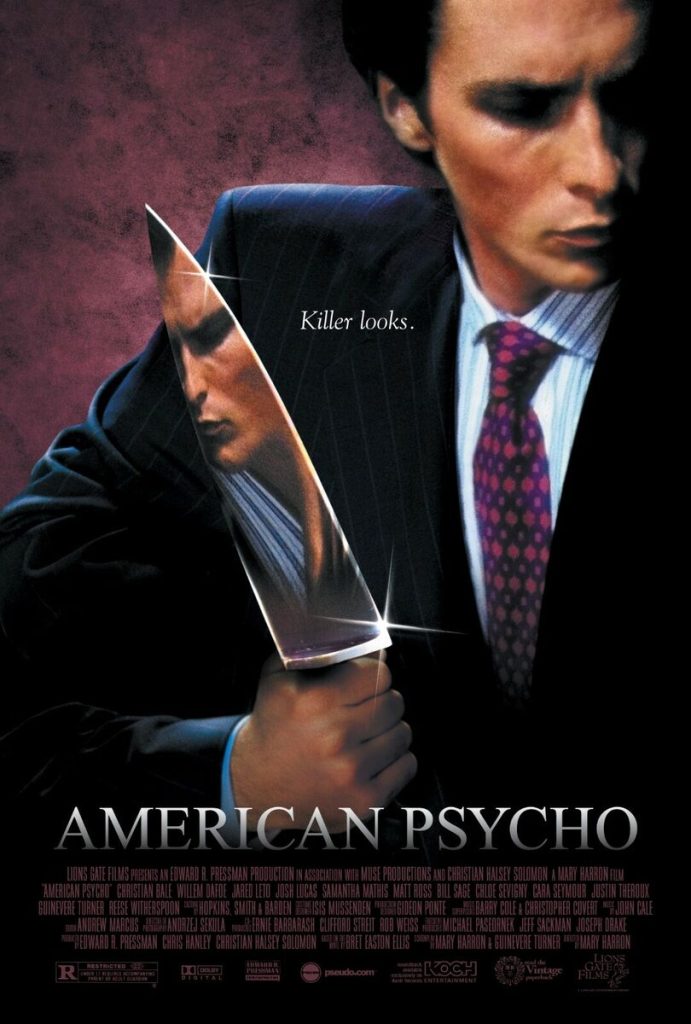
Directed by Mary Harron and based on the novel by Bret Easton Ellis, American Psycho introduces Patrick Bateman: a 27-year-old Wall Street investment banker with a flawless skincare routine, a luxury apartment, and a deeply fractured psyche.
By day, he obsessively critiques restaurant reservations, fashion labels, and the margins on business cards. By night, he descends into increasingly surreal and sadistic violence: axe murders, stabbings, chainsaws, and philosophical rants about Huey Lewis & the News.
But here’s the twist: Did any of it actually happen?
Bateman’s world is so hollow, performative, and emotionally disconnected that his violent acts may be fantasies born from repression and narcissism. Even when he confesses everything, no one believes him — or cares. His final line?
“This confession… has meant nothing.”
Christian Bale’s performance is iconic — veering between icy restraint and operatic mania. He transforms Bateman into a living contradiction: a man obsessed with appearances, yet smeared with blood; craving identity, yet lost in imitation.
Expanded Legacy – From Novel to Meme Icon
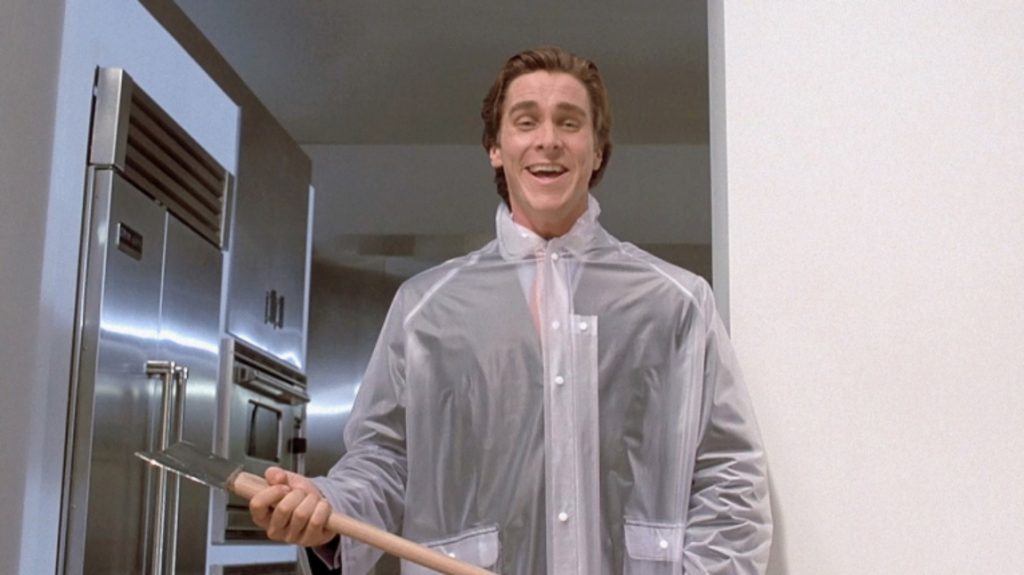
While Bateman only appears in one official film, his influence is massive. The original novel (1991) was banned in multiple countries and labeled misogynistic, but also praised as a brutal satire of capitalist emptiness. Over time, Bateman has become:
- A pop culture meme, especially in Gen Z media
- A stand-in for toxic masculinity, performative identity, and capitalist rot
- Referenced in shows like You, BoJack Horseman, Mr. Robot, and Succession
Bale’s Bateman has also been endlessly remixed into viral content — especially the “Sigma male” aesthetic, where his calculated charm is taken out of context and idolized by the very personalities the film critiques.
Psychology & Behavior
- Highly intelligent, calculating, and articulate, but lacks empathy
- Suffers from narcissistic personality disorder and possible psychosis or dissociation
- Kills for power, pleasure, and emotional release — or possibly doesn’t kill at all
- Obsessed with control, perfection, and appearances — his internal monologue often critiques others’ fashion, skin, and behavior
- Uses music, luxury brands, and routine as both armor and mask
- Struggles with identity: “There is an idea of a Patrick Bateman… but I simply am not there.”
- Symbolizes the horror of a society where value is external and violence is aestheticized
Cultural Impact
- One of horror cinema’s most complex, unreliable narrators
- Christian Bale’s breakout role — now considered one of the greatest performances in modern horror
- Quotes like “I have to return some videotapes” and “Do you like Huey Lewis and the News?” are deeply embedded in internet culture
- Often cited in discussions of:
- Corporate sociopathy
- Yuppie-era satire
- Psychological thrillers with ambiguous realities
- Inspired later characters like Joe Goldberg (You) and Tom Ripley (Ripley series)
- Weaponized in both critique and glorification — making him a polarizing figure
League Placement
Patrick Bateman belongs in the First Class Tier — not because of his body count, but because of what he represents. He is the horror of self-awareness in a world that has no soul. Whether he kills or merely dreams of it, Bateman is a mirror: glossy, empty, and edged in blood.